
Homeowners near Lake Stevens researching roof replacement usually hit the same wall fast: contractors won't quote a firm number over the phone, and every website they check gives a different range. That's not evasion — a roof price genuinely can't be pinned down until someone gets on the roof and looks at the decking, the pitch, the number of layers already up there, and how the valleys and flashing were handled the last time around. What follows is an honest look at the price range homeowners in this part of Western Washington typically see, the variables that push a job toward the low or high end, and what should be sitting inside a written quote before anyone signs it.
For a typical single-family home in the Lake Stevens area, a full roof replacement most often lands somewhere in the low-to-mid five figures, with the spread mostly explained by roof size, pitch, and material choice. A straightforward asphalt composition shingle roof on a simple gable roof sits at the low end of that range. Add steep pitches, multiple valleys, a detached shop or garage roof done at the same time, or a switch to a heavier or longer-lived material, and the number climbs. Metal roofing and higher-end architectural shingles push toward the top of the range or beyond it, but they also tend to shed the region's near-constant winter rain more cleanly and hold up better where moss is a recurring problem.
| Cost Factor | Low End | High End |
|---|---|---|
| Asphalt composition shingles (materials + labor, per square) | Lower mid-range | Upper mid-range |
| Architectural / dimensional shingles | Mid-range | High |
| Standing-seam metal roofing | High | Very high |
| Tear-off and disposal (single layer) | Modest add | Moderate add |
| Tear-off and disposal (two or more layers) | Moderate add | Significant add |
| Decking repair or replacement (per section found rotted) | Modest add | Substantial add |
| Steep pitch or difficult access surcharge | Modest add | Significant add |
| Permit, code-required ventilation, and flashing upgrades | Modest add | Moderate add |
These are directional ranges, not a quote — no two roofs in Snohomish County are priced the same way, and a contractor who gives you an exact number without an inspection is guessing along with you. Alpine Exteriors walks the roof and the attic before naming a number, because the things that actually move the price — soft decking, undersized ventilation, buried moss damage — are almost never visible from the driveway.
A handful of conditions specific to this part of Washington show up again and again in the estimates that come in high, and it's worth understanding them before a crew ever shows up.
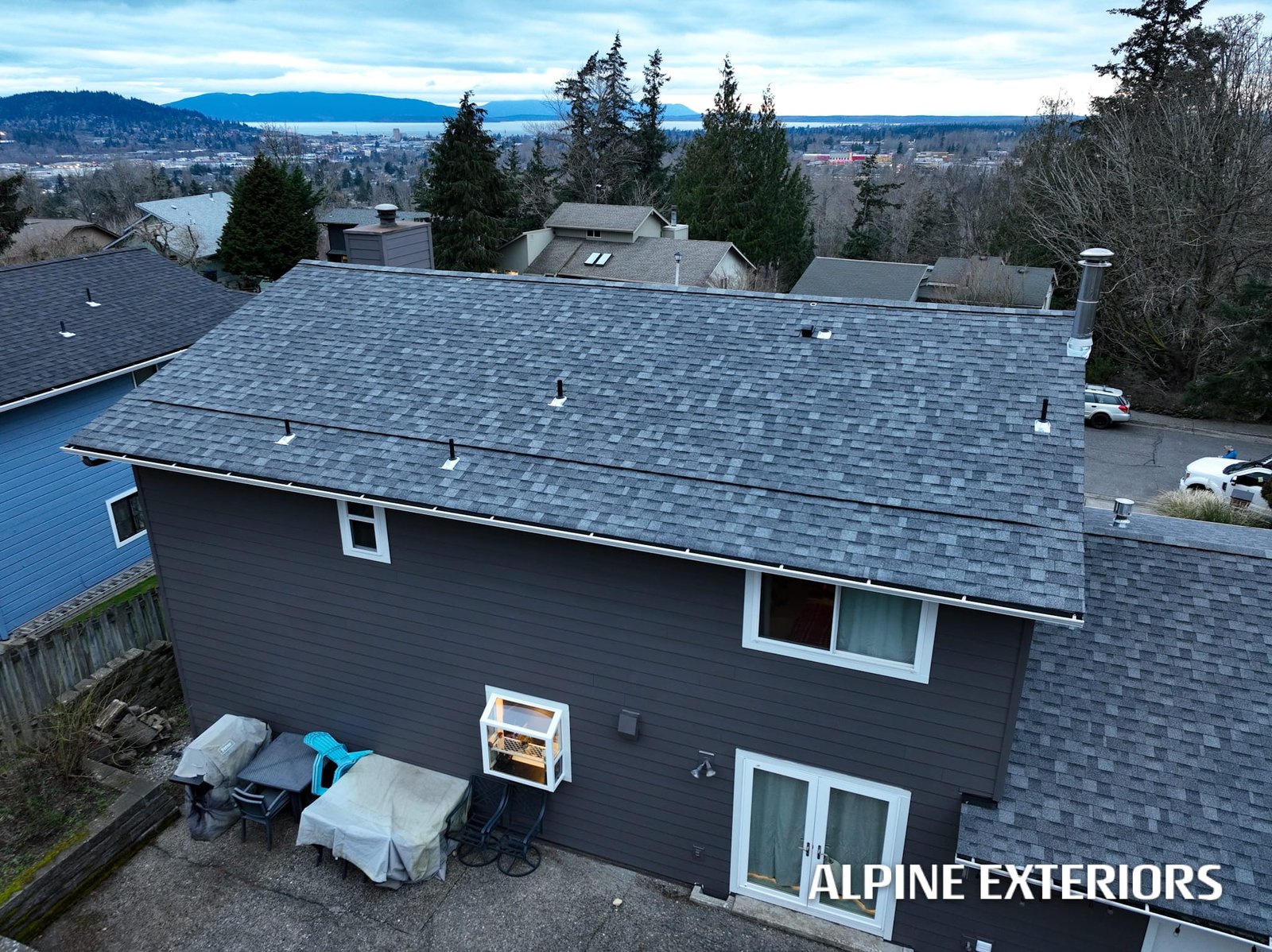
A written roof replacement quote that's actually worth comparing should spell out, at minimum: full tear-off versus overlay, disposal and haul-away, an allowance (or per-piece rate) for decking replacement if rot is found, the specific shingle or metal product and its wind and warranty rating, underlayment type, and where ice-and-water shield membrane will be installed. It should also cover ventilation — whether existing ridge and soffit vents are adequate or need upgrading, since proper attic ventilation is part of what the Washington State Energy Code expects for moisture control and energy performance in a home's building envelope. Flashing replacement at valleys, chimneys, skylights, and sidewalls should be itemized rather than lumped in as "as needed," and the quote should state who pulls the building permit and confirm the contractor carries current WA state licensing and insurance. Alpine Exteriors builds its quotes this way on purpose, because a vague one-line total is where surprise change orders come from later.
The instinct to take the lowest number is understandable, but roof quotes are only comparable when the scope behind them is identical. Before ranking bids by price, line up each proposal against the others on: the exact shingle or metal product specified (not just "30-year shingles," which varies by manufacturer and line), whether tear-off is full or partial, what's included for decking repair versus billed as a change order, what underlayment and ice-and-water shield coverage is specified, the length and terms of both the material warranty and the separate workmanship warranty, and the payment schedule. A bid that's noticeably lower than the others is often missing one of these line items rather than representing a genuine bargain. It's also worth confirming a contractor's Washington state license is active and asking to see it — Alpine Exteriors holds WA contractor license ALPINI751OW, and any homeowner can look up a contractor's license status directly with the state before signing a contract.
Many roofing contractors, including Alpine Exteriors, offer financing options for homeowners who'd rather spread a roof replacement over monthly payments than pay the full cost up front; terms and qualification vary by lender, so it's worth asking what's available during the estimate rather than assuming one option fits every budget. On the insurance side, it helps to understand what typically is and isn't covered. Damage from a specific, dateable event — a windstorm that tears off shingles, a fallen limb that punctures the roof deck — is the kind of thing homeowners insurance is generally built to address, and it's worth documenting damage with photos and filing a claim promptly after a storm. Gradual wear, moss damage that built up over years, and roofs that are simply at the end of their expected service life are typically treated as maintenance issues rather than insurable losses, since insurance is designed around sudden events rather than age and upkeep. An adjuster's assessment and a contractor's inspection don't always agree, so getting an independent look from a roofer before accepting an insurance settlement is a reasonable step when storm damage is involved.
Most single-family roofs are torn off and replaced within a few working days once the crew starts, weather permitting. Steeper or larger roofs, homes with detached structures being done at the same time, or decking repairs discovered mid-project can extend that timeline. Because winter rain is frequent in this region, contractors often schedule closely around forecasts and may pause a job briefly rather than leave a roof partially open in wet weather.
Not necessarily. Moss on an otherwise sound, structurally intact roof can often be treated and controlled with cleaning and preventive zinc or copper strips, buying more useful life out of the existing shingles. The concern is what moss hides — if it's been left to grow for years, especially on a shaded or north-facing slope, it's worth having a contractor check for lifted shingles and soft decking underneath before assuming a simple cleaning will solve the problem.
It depends entirely on the cause. Sudden storm or wind damage is the kind of loss homeowners insurance is generally intended to cover, while a roof that's simply old, worn, or moss-damaged from years of exposure is usually considered a maintenance issue and isn't covered. If a storm is involved, documenting the damage and contacting your insurer promptly matters, and an independent roofing inspection can help confirm what actually happened.
There's no single right answer, but materials that shed water quickly and resist moss growth tend to perform well given the region's frequent winter rain and shaded, tree-heavy lots. Quality architectural shingles with proper ventilation do well for most homes, while standing-seam metal roofing sheds moisture and moss more effectively over the long run and holds up well in wind, at a higher upfront cost. The right choice often comes down to budget, roof pitch, and how much shade the property gets.
Ranges are useful for planning, but the only way to know what a roof replacement actually costs at your address is to have someone look at the roof, the attic, and the decking underneath. Alpine Exteriors serves homeowners throughout Skagit, Island, and Whatcom counties as well as nearby Snohomish County communities including Lake Stevens, and can walk through the roof, explain what's driving the number on your specific home, and put it in writing before any work begins.