
Granite Falls sits where the Snohomish County lowlands start climbing into the Cascade foothills, and that location shapes what a roof replacement actually costs here. Homeowners searching for a number often want a single figure, but roofing pricing is a range for good reason — steep pitches near the Mountain Loop corridor, tree cover that keeps shake and older composition roofs damp for days after a storm, and the occasional foothill snow load all push bids in different directions from one property to the next. This guide lays out honest ranges, the variables that move them, and what to expect from a legitimate quote so you can plan the project with clear eyes rather than guesswork.
For a typical single-family home in the Granite Falls area, full roof replacement with standard asphalt composition shingles generally lands in the low-to-mid five figures, with steeper roofs, additional layers to tear off, or premium materials pushing well beyond that. Metal roofing, which holds up well against the area's persistent rain and heavy moss growth on shaded, north-facing slopes, typically costs more per square than composition shingles but can outlast several shingle replacement cycles. The table below breaks out the main cost drivers so you can see where your project is likely to fall.
| Cost Factor | Typical Low End | Typical High End |
|---|---|---|
| Materials (30-year composition shingle) | Lower-mid range | Mid range |
| Materials (standing-seam metal) | Mid range | Upper range |
| Tear-off of one existing layer | Modest add | Moderate add |
| Tear-off of two or more layers | Moderate add | Significant add |
| Roof pitch (steep or multi-gable foothill homes) | Moderate add | Significant add |
| Deck repair or replacement (rot, moss damage) | Modest add | Significant add |
| Ventilation and ice-and-water shield upgrades | Modest add | Moderate add |
| Permitting and disposal fees | Small flat add | Small-moderate add |
These are ranges, not quotes — the only way to get an accurate number for a specific roof is a site visit and measurement. Alpine Exteriors provides on-site estimates that walk through each line item so a homeowner can see exactly what is driving the total rather than receiving a single lump figure.
A handful of Granite Falls-specific conditions tend to have the biggest effect on final pricing. Roofs shaded by conifers or set into a hillside often carry heavier moss growth than roofs in more open, sunnier parts of Snohomish County, and moss that has been left to grow for years can hide rot in the decking underneath — something that usually isn't visible until the old roofing comes off. That makes deck repair one of the more common surprise line items in this area, and a contractor who quotes a firm price without inspecting the deck first is guessing.
Elevation and exposure matter too. Homes higher in the foothills see more mixed winter precipitation than roofs down on the valley floor, including occasional wet snow and freeze-thaw cycling that stresses aging shingles and flashing. That reality is one reason ice-and-water shield at eaves and valleys is worth budgeting for on foothill properties even when it wasn't required when the home was originally built.
Roof complexity is another major driver. A simple gable roof with a modest pitch is straightforward to tear off and re-cover. A steep-pitched roof, or one with multiple valleys, dormers, and roof-to-wall transitions, takes longer, requires more safety setup, and generates more flashing detail — all of which shows up in labor cost. Access also matters on wooded or hillside lots where material staging and dump trailer placement take extra planning.
Finally, the number of existing layers affects cost directly. Washington allows a maximum of two layers of composition roofing before a full tear-off is required, and many older Granite Falls homes already have two layers on them. Tearing off two layers costs more in labor and disposal than tearing off one, but it also gives the crew a clean look at the decking, which is generally the safer long-term choice even when it isn't the cheapest option in the moment.
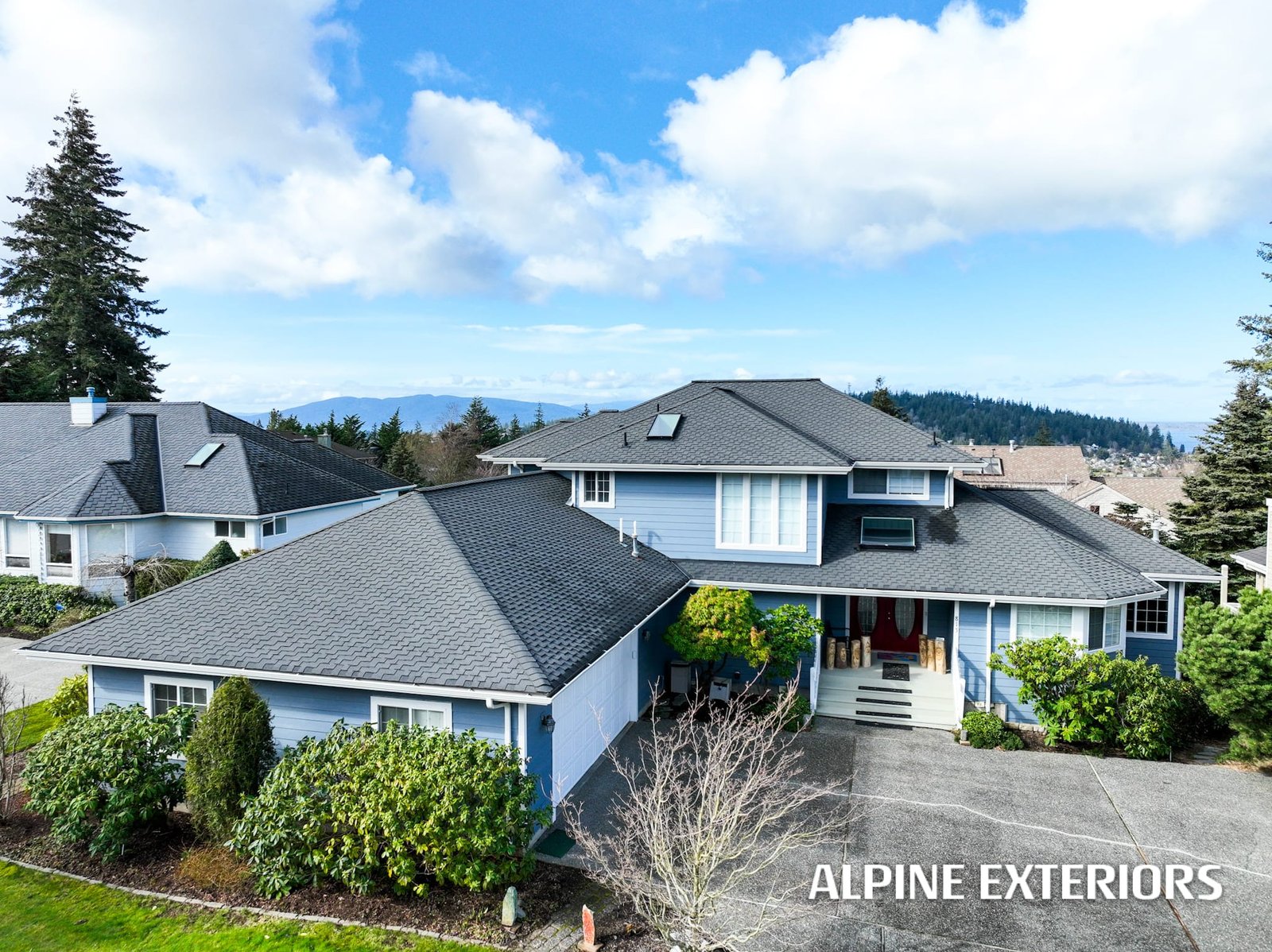
A useful roofing quote is detailed enough that a homeowner can compare it apples-to-apples against another bid. At minimum, it should spell out the material brand and product line, the shingle or panel warranty terms, the number of layers being removed, ventilation work (ridge vents, soffit vents, or baffles), underlayment type, and where ice-and-water shield will be installed. It should also note flashing replacement at chimneys, skylights, and roof-to-wall intersections, since reused old flashing is a common source of leaks even on a brand-new roof.
Any roof replacement in Washington involving structural changes, re-sheathing, or work tied to an addition should also be checked against Washington State Energy Code requirements for insulation and ventilation, since those standards affect attic assembly decisions on top of the roofing itself. A contractor familiar with local permitting will flag this rather than leaving it for the homeowner to discover later.
The lowest number on paper is not always the best value, and the highest number does not automatically mean better workmanship. Start by making sure every bid is quoting the same scope — same number of layers removed, same material tier, same warranty length. A bid that looks dramatically cheaper often excludes deck repair contingencies, permit fees, or full tear-off, which then appear as change orders once work begins.
Ask each contractor how they price unexpected rotten decking, since this is common enough in the Granite Falls area that a written per-sheet rate should already be part of the contract rather than negotiated after the fact. Confirm licensing and insurance directly — Alpine Exteriors holds Washington contractor license ALPINI751OW, and any roofing contractor working in the state should be able to provide their license number without hesitation. Finally, ask how many crews they run and whether the same crew that measures the job is the one that installs it; continuity tends to reduce miscommunication on complex roofs.
Many roofing contractors, including Alpine Exteriors, offer financing options that break a full roof replacement into monthly payments, which can make timing the project around a failing roof more manageable than paying the full cost up front. Terms vary by lender and credit profile, so it's worth asking for specifics rather than assuming a flat rate applies to every homeowner.
If the roof damage stems from a specific event — wind, a fallen limb, or a sudden leak rather than gradual wear — it may be worth a call to your homeowner's insurance carrier before committing to a full replacement, since storm-related damage is sometimes covered even when normal aging and moss deterioration are not. Insurance adjusters typically want to see photos and, ideally, an independent contractor assessment that documents the damage separately from the repair estimate, so getting a written inspection report early in the process is worth the extra step.
Steeper terrain often means steeper roof pitches, more complex rooflines, and harder site access for material staging, all of which add labor time. Homes higher in the foothills can also see heavier moss buildup under tree cover and occasional wet snow that older roofs weren't necessarily detailed to handle, which sometimes means additional underlayment or flashing work compared to a simpler roof on flat, open ground.
Metal roofing generally costs more upfront than composition shingles but tends to shed moss and needles more easily and can last significantly longer, which matters in a climate with near-constant winter moisture. Whether it's worth it depends on how long you plan to stay in the home, your budget for the upfront cost, and personal preference on appearance — it's a legitimate option, not a universally better one.
Widespread granule loss, soft or spongy spots in the decking, shingles that are curling or cracking across large sections, and recurring leaks in different locations each season are all signs that repair is no longer cost-effective. A localized leak around a single flashing point, by contrast, is often fixable without a full tear-off. A physical inspection is the only reliable way to tell the difference.
Not accurately. Roof pitch, layer count, deck condition, and access all affect the final price, and none of those can be confirmed from a phone call or satellite photo alone. Any number given before a physical inspection should be treated as a rough estimate, not a quote you can rely on for budgeting.
A roof replacement is a significant investment, and the right number for your home depends on details a general price range can't capture. Alpine Exteriors serves Granite Falls and the surrounding Snohomish and Skagit County communities and can walk your roof in person, explain what's driving the cost, and put the scope in writing before any work begins. Reach out to schedule an on-site estimate and get a quote you can actually compare against others.