
Decks in Mount Vernon, Anacortes, Burlington, Sedro-Woolley, La Conner, Stanwood, Camano Island and Bellingham spend the winter absorbing months of steady Pacific Northwest rain, and that moisture doesn't dry out quickly once the days turn milder. A deck that looked fine in October can have quietly changed shape by April. North- and east-facing decks tucked under fir, cedar or big-leaf maple canopy are especially prone to moss and algae film building up over the wet months, and that film holds water against the wood long after the surrounding ground has dried. Decks out on the open Skagit flats near Burlington and Mount Vernon take a different kind of beating: steady, unobstructed wind that works railings and post connections loose over time. On Camano Island, in Anacortes and along the water in Bellingham, salt-laden air off the Strait of Juan de Fuca and Puget Sound accelerates corrosion in fasteners, joist hangers and any hardware that isn't rated for coastal exposure. And in the foothill areas east of Sedro-Woolley, an occasional hard freeze or wet snow load adds one more stress cycle to boards and connections that have already been softened by a wet winter. Walking your deck with a checklist each spring, before you start loading it with furniture, planters and family gatherings, is the cheapest insurance you can buy against a bigger repair later. Alpine Exteriors put this list together from what we actually find on service calls across Skagit, Island and Whatcom counties every spring — not from a generic national template.
Posts, Footings and Framing
Ledger Board and House Connection
Decking Boards and Surface
Railings, Guards and Stairs
Fasteners and Hardware
Drainage, Flashing and Moisture Management
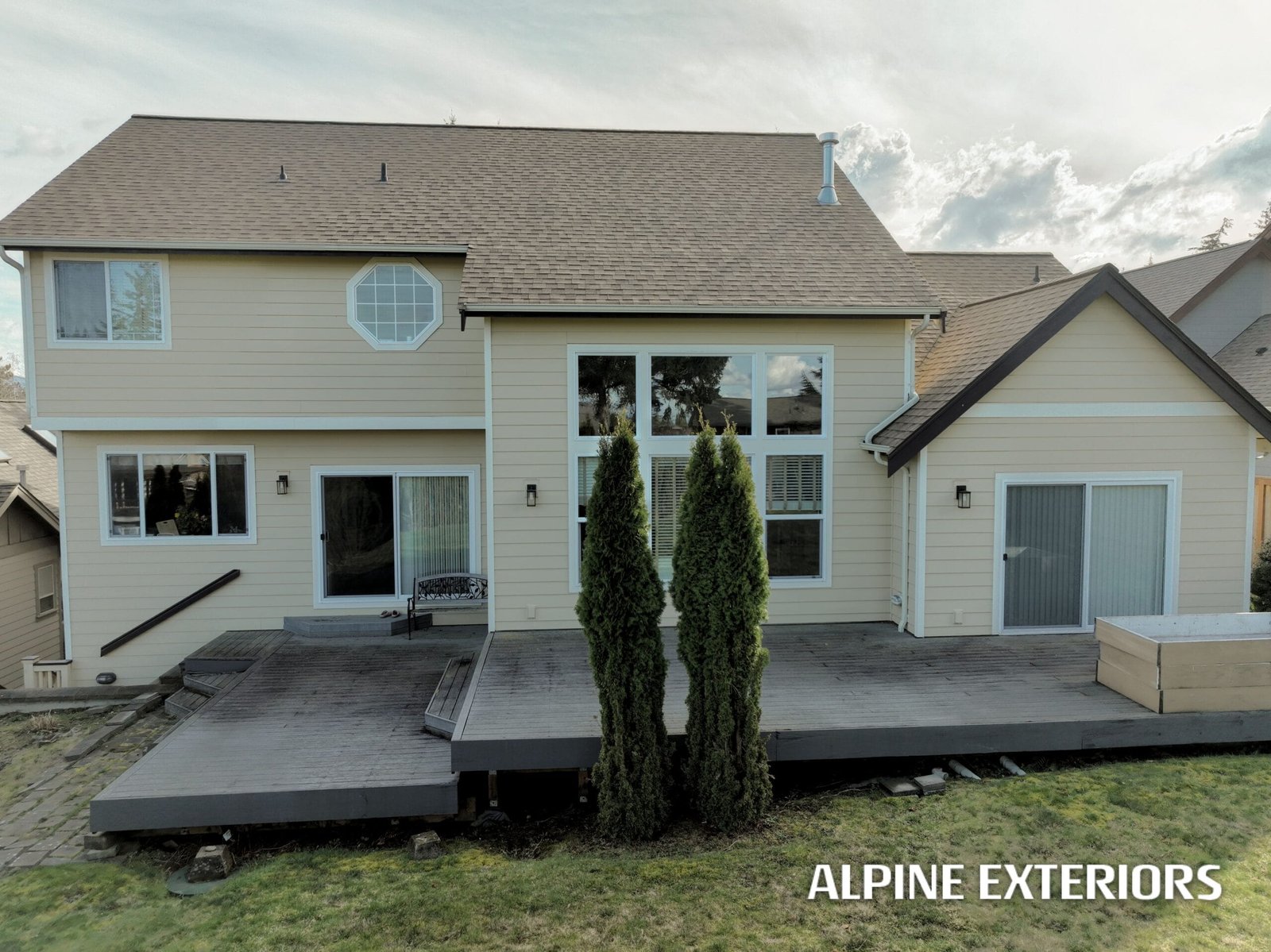
Not every failed item means the whole deck is unsafe, but each one deserves a clear response rather than a wait-and-see approach. Soft or spongy wood at a post base or ledger should be treated as a structural concern until proven otherwise — stop using that section of the deck, especially for concentrated loads like hot tubs, large gatherings or grills, until it's evaluated. Surface issues like moss, mild cupping or a few popped fasteners are usually maintenance items: a thorough cleaning, replacement of the specific fasteners, and a fresh coat of quality exterior finish will often buy several more good seasons out of decking that's otherwise sound. Loose railings and stair connections should be tightened or repaired before the deck sees regular use again, since these are the components most directly tied to fall injuries. Rusted hardware is worth replacing proactively even if it hasn't failed yet — by the time galvanized coating has visibly failed, the steel underneath has usually already lost meaningful strength, and swapping a joist hanger is far cheaper than repairing a joist that let go. Keep in mind that any deck repair involving structural framing, ledger reattachment or footing work is not a project to guess at; undersized or improperly fastened repairs can leave a deck looking fixed while remaining unsafe.
Some findings are reasonable for a handy homeowner to address — cleaning, refinishing, swapping a handful of visible screws. Others genuinely call for a licensed contractor. Bring in a professional if you find soft or rotted wood at the ledger board, at post bases, or in any structural beam or joist, since these areas carry the deck's actual load and a misjudged repair can be dangerous. The same goes for any noticeable movement, sag, bounce or sway in the deck frame itself, or any sign that the ledger connection to the house has separated or was never properly flashed. If your deck was built without visible ledger flashing, or you're not sure whether the guard height and baluster spacing still meet current requirements, a professional inspection can confirm what's actually there rather than leaving it to guesswork. It's also worth a call if you're planning to add a hot tub, roof cover or other significant load — older decks in this region were often built to lighter framing standards than current code assumes, and a covered or enclosed deck addition can also bring Washington State Energy Code requirements into play if it becomes conditioned living space. Alpine Exteriors, WA contractor license ALPINI751OW, handles deck inspections and repairs throughout Skagit, Island and Whatcom counties and can tell you honestly whether you're looking at a repair, a partial rebuild, or a deck that's still got good years left in it.
A full walk-through in spring, before the deck goes back into heavy seasonal use, is the minimum for homes in Skagit, Island and Whatcom counties. Given how much rain the region gets from fall through early spring, a second quick check in late summer or early fall — especially looking for moss regrowth in shaded areas and checking fasteners — catches problems before another wet winter makes them worse.
You can, but it's worth doing carefully. Too much pressure or the wrong nozzle angle can gouge softwood decking or blow water up under boards and flashing, which defeats the purpose. A wide fan tip, moderate pressure and a pass with a deck-safe cleaner usually works better than cranking up the PSI, and it's still worth checking underneath afterward to confirm you didn't drive extra water into the framing.
There's no honest exact number to give, since it depends heavily on how much sun and shade a given deck gets, how well it drains, and how consistently it's been refinished. Decks in full sun with good drainage regularly outlast shaded, moisture-trapping decks by a wide margin in this region. Regular cleaning and refinishing extends the life of any wood deck; skipping that maintenance is the single biggest reason we see decks fail early.
It can be, but it's a real trade-off rather than an automatic upgrade. Composite decking resists moss staining and rot better than wood and needs less refinishing, which matters in a climate this wet, but it costs more upfront — often several thousand dollars more for a mid-size deck depending on the product line and framing condition — and it still requires sound, code-compliant framing underneath, since composite boards don't add structural strength. For a deck with failing framing, replacement material choice matters less than fixing what's underneath it first.
A checklist catches a lot, but it can't replace someone who inspects decks for a living and knows what tends to fail first on homes in Mount Vernon, Anacortes, Burlington, Sedro-Woolley, La Conner, Stanwood, Camano Island and Bellingham. If your spring walk-through turned up soft wood, a shaky railing, or you're just not sure what you're looking at underneath the deck, Alpine Exteriors offers deck inspections across Skagit, Island and Whatcom counties and can give you a straight answer about what needs attention now versus what can wait. Reach out to schedule a look before the deck goes back into heavy use this season.