

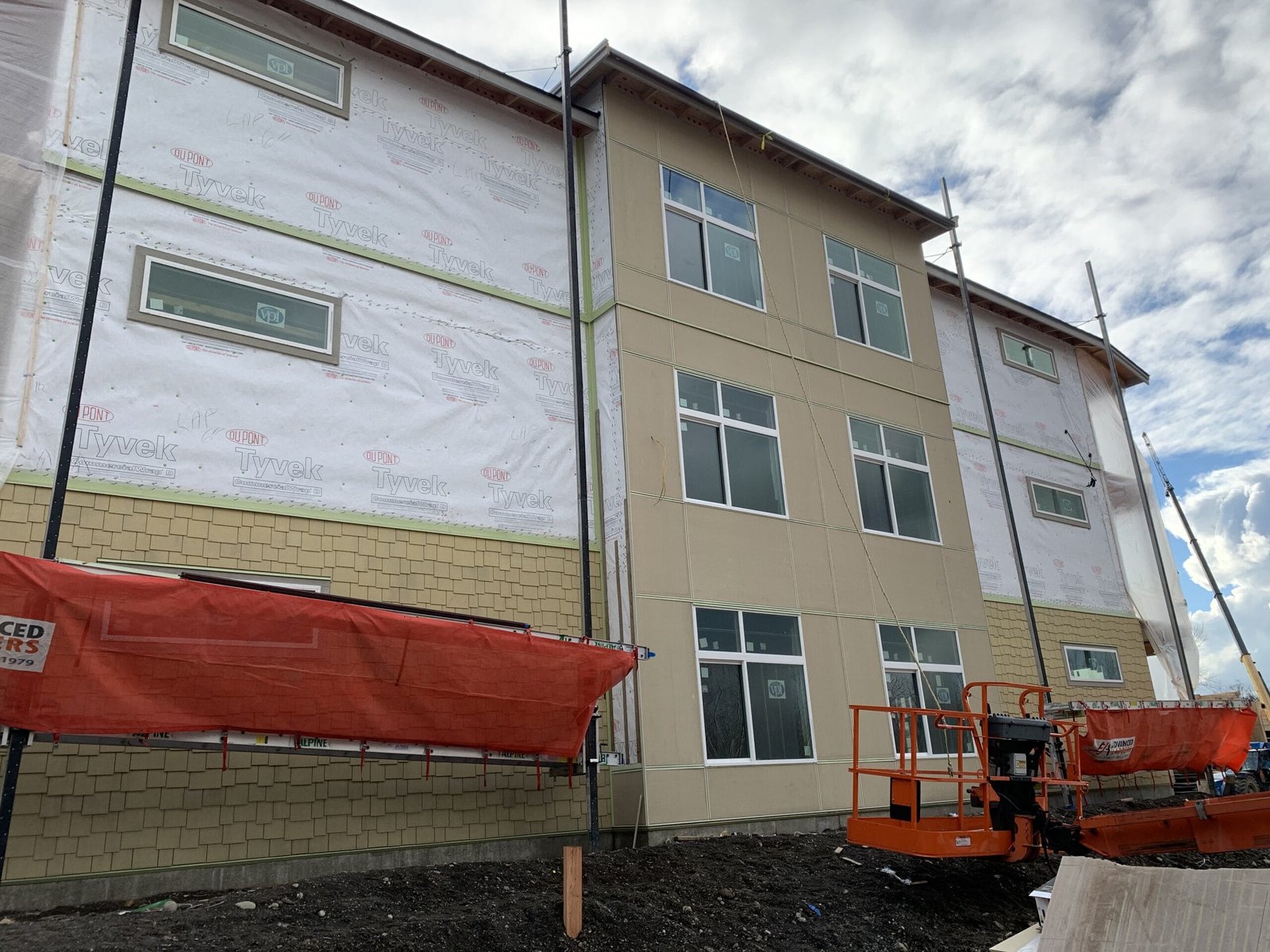
If you're replacing windows on a budget and want a proven, low-maintenance product for a standard Mount Vernon, Burlington, or Sedro-Woolley home, vinyl windows are usually the more practical choice. If your home sits closer to the water — La Conner, Anacortes, Camano Island — and takes direct salt air and driving winter storms off the Strait or the Skagit flats, or if you want narrower sightlines and a frame that won't expand and contract as much through our wide seasonal temperature swings, fiberglass is worth the extra cost. Neither option is wrong; the right pick depends on your budget, how long you plan to own the home, and how exposed the house actually is to wind and moisture. Alpine Exteriors installs both, and we'll walk your specific site conditions with you rather than push one product across the board.
Vinyl windows are extruded PVC frames, usually with multiple hollow chambers and often filled with foam insulation in better-grade products. They've been the standard replacement window in the Pacific Northwest for decades, and for good reason: they're weather-sealed from the factory, they don't need painting or staining, and they hold up well against our region's defining condition — near-constant winter rain from October through April. A quality vinyl window, properly flashed and installed, will shed water and resist rot at the frame in a way that older wood windows never could.
For most interior, wind-sheltered lots away from direct water exposure — a lot of Burlington, Sedro-Woolley, and inland Mount Vernon falls into this category — vinyl is a sound, cost-effective choice, and it's what we recommend most often when budget is the deciding factor.
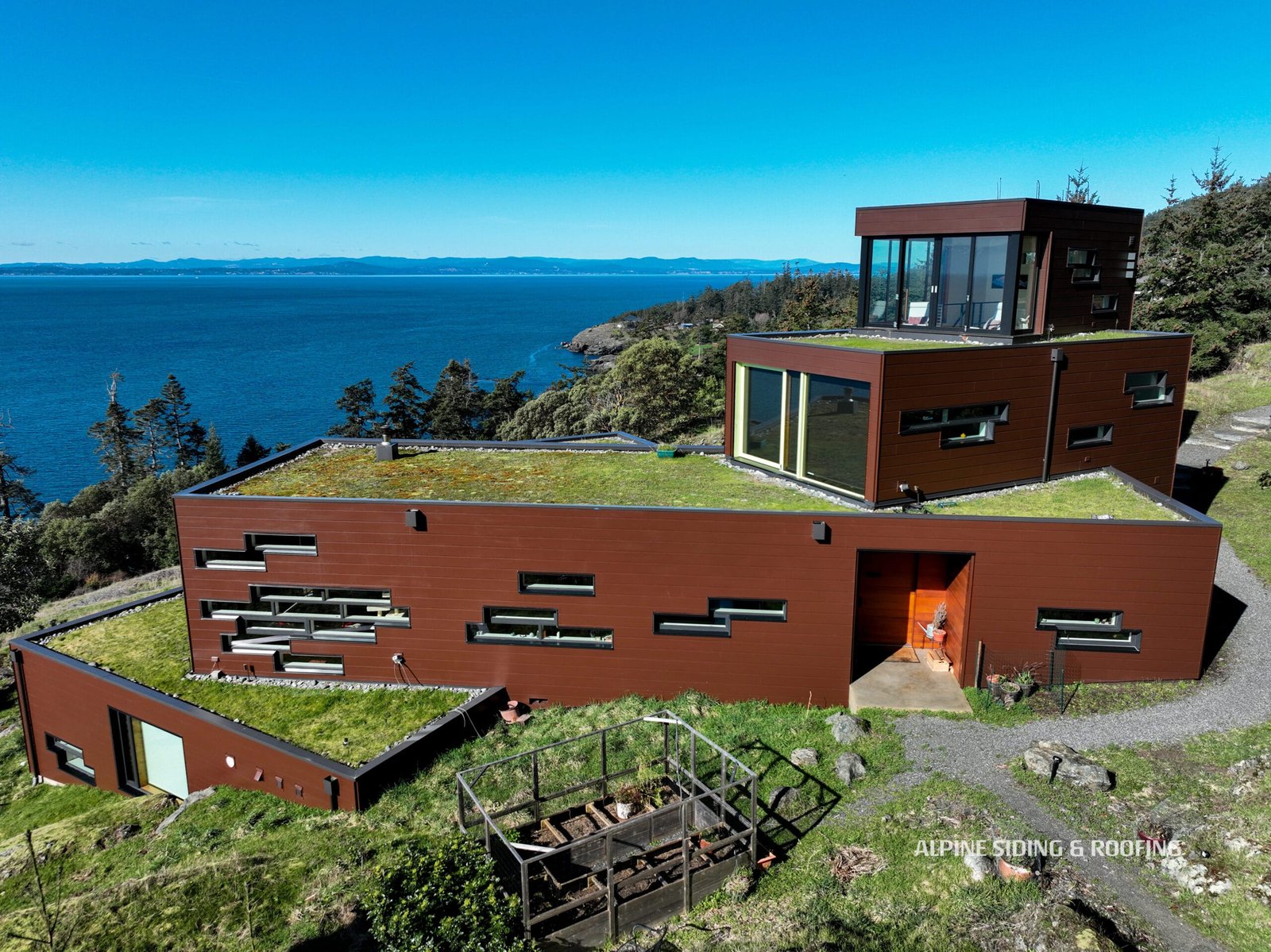
Fiberglass windows use pultruded glass-fiber-reinforced frames, which are dimensionally far more stable than vinyl — they expand and contract at close to the same rate as glass itself. That matters here more than people expect, because Skagit and Whatcom County homes see real temperature swings between summer afternoons and the occasional hard frost or foothill snow event in winter. A frame that moves less keeps its seal and its paint finish longer.
Fiberglass earns its price premium on homes with real wind and moisture exposure — waterfront and near-waterfront lots in La Conner, Anacortes, and the Camano and Whidbey-adjacent areas — and on larger openings where a stiffer frame reduces flex and improves the long-term seal.
| Factor | Vinyl | Fiberglass |
|---|---|---|
| Cost | Lower installed cost; the most budget-friendly full-frame or insert option in most price books | Higher installed cost, often a meaningful premium over comparable vinyl |
| Lifespan | Solid service life for a wind-sheltered, rain-exposed climate like ours when properly installed and flashed | Generally expected to outlast vinyl thanks to dimensional stability, especially in coastal or high-exposure locations |
| Maintenance | Essentially no painting; occasional cleaning of tracks and weep holes to keep drainage clear through our wet months | Same low day-to-day maintenance, with the option to repaint down the road if the color fades or you want a change |
| Appearance | Wider visible frame; broad but not unlimited color selection, usually locked in at time of purchase | Narrower sightlines, more visible glass, paintable finish that can be refreshed or changed later |
The conditions that actually drive this decision in our service area are wind, water, and temperature swing — not the extreme heat or hurricane exposure that shapes window choice in other parts of the country. Skagit and Island County homes deal with sustained winter rain, wind funneling off the Skagit flats and the Strait of Juan de Fuca, and on the islands and shoreline towns, ongoing salt air. Foothill and higher-elevation properties toward Sedro-Woolley occasionally see snow and hard frost that inland Mount Vernon rarely gets.
For a typical inland home in Mount Vernon, Burlington, or Sedro-Woolley that isn't taking direct wind or salt exposure, a good-quality vinyl window installed with proper flashing and a Washington State Energy Code-compliant glass package will perform well for a long time at a lower cost. That's the majority of the replacement work Alpine Exteriors does day to day.
For homes closer to the water — La Conner, Anacortes, Camano Island, and similarly exposed Bellingham and Stanwood properties — fiberglass's dimensional stability and better resistance to salt air and UV make the extra cost worth considering, particularly on larger window openings or south- and west-facing exposures that take the brunt of weather off the water. In both cases, the glass package matters as much as the frame material: whatever frame you choose, make sure the specified U-factor and solar heat gain coefficient actually meet Washington State Energy Code requirements for our climate zone, since an underspecified glass package will undercut even the best frame.
Installation quality also matters more than the brand of frame. A fiberglass window with poor flashing will leak just as readily as a cheap vinyl one, and a well-installed vinyl window will consistently outperform a poorly installed fiberglass one. Alpine Exteriors installs both product lines and can walk your home's actual exposure — sun, wind, water — before recommending one over the other.
Not always. On a wind-sheltered, inland lot in Burlington or Mount Vernon with no direct salt exposure, a quality vinyl window can perform well for many years, and the price difference may not be worth it. Fiberglass earns its premium on waterfront or near-waterfront properties, larger window openings, and homes where a narrower frame and repaintable finish matter to you.
No — vinyl is inherently water-resistant and doesn't rot, and it's been the standard replacement window across the Pacific Northwest for this reason. Leaks and premature failures in vinyl windows are almost always an installation or flashing problem, not a limitation of the material itself.
Both vinyl and fiberglass frames can be paired with glass packages that meet Washington State Energy Code requirements; the frame material itself doesn't determine code compliance. What matters is the U-factor and solar heat gain coefficient of the specific glass package installed, so confirm those numbers rather than assuming one frame type automatically outperforms the other.
It's a real factor for homes in Anacortes, La Conner, and on Camano Island that sit close to open water. Salt-laden air can accelerate UV wear and hardware corrosion over time on any exterior product, and fiberglass generally holds up a bit better in that environment than vinyl, though good hardware and regular cleaning help either material.
Every home in Skagit, Island, and Whatcom counties faces a slightly different mix of wind, rain, and sun exposure, and the right window frame depends on that mix as much as on budget. Alpine Exteriors, licensed in Washington under ALPINI751OW, serves Mount Vernon, Anacortes, Burlington, Sedro-Woolley, La Conner, Stanwood, Camano Island, and Bellingham, and can walk your home's specific exposure with you before recommending vinyl or fiberglass. Contact Alpine Exteriors to schedule an on-site window consultation and get a straightforward comparison for your particular property.



