
Marysville sits where Snohomish County's tree-covered neighborhoods meet the tide flats of Possession Sound and Port Susan, with the Cascade foothills visible to the east. That mix of heavy conifer cover, nearby saltwater, and a wet marine climate puts specific, predictable stress on a home's exterior. This checklist walks through what to look at, why it matters here, and what to do with what you find. It's written for a homeowner doing a walk-around with a notepad and a phone camera, not a licensed inspector — use it to catch problems early and decide when it's time to bring in a professional.
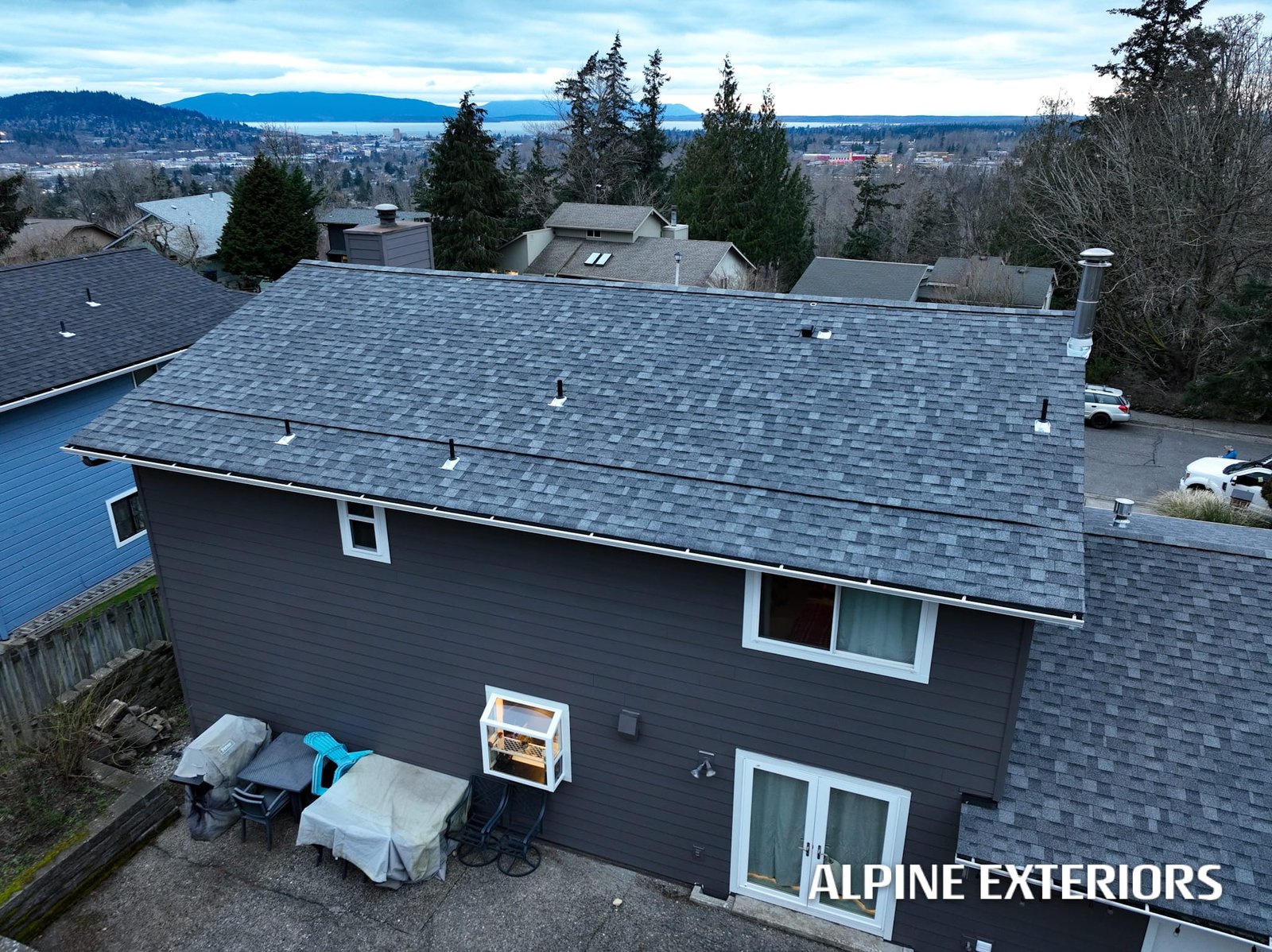
Marysville's weather pattern is dominated by long stretches of steady winter rain rather than short, intense downpours, which means water damage here tends to build slowly through small gaps and clogged paths rather than showing up all at once. Neighborhoods with mature Douglas fir and western red cedar canopy — common throughout Marysville, Lakewood, and the areas around Lake Goodwin and Smokey Point — keep north- and east-facing roof slopes shaded for much of the year, which is exactly the condition moss and moss-related shingle degradation need to take hold.
Wind is usually a secondary concern here compared to coastal parts of Washington, but homes closer to Port Susan Bay, Tulalip Bay, and the open water along Ebey Slough do see stronger gusts during winter storms, enough to lift already-loose shingles or work at fascia that's started to separate. Those same waterfront and near-waterfront properties also deal with a mild but real dose of salt-tinged marine air, which speeds up corrosion on exposed fasteners, gutter hangers, and unpainted metal trim faster than it happens a few miles inland.
Out toward the foothills — Granite Falls, Arlington, and the higher elevations east of town — occasional snow and freeze-thaw cycles show up most winters, and even a modest ice event can find weaknesses in flashing, gutters, or attic insulation that never get tested by rain alone. Finally, because Washington's building stock is governed by the Washington State Energy Code, older Marysville homes that predate current insulation and air-sealing requirements often show their age around windows, attic hatches, and rim joists — areas worth checking even though they're not the first thing that comes to mind during an exterior walk-around.
Work through each group on a dry day when you can see clearly, and again after the first hard rain of the season to see how water actually moves across the house.
Not every item on this list means an emergency repair. Start by photographing the issue with a date stamp and noting roughly when you first saw it — this record is useful whether you end up doing the repair yourself, hiring a contractor, or filing an insurance claim later. For small, contained issues like a single loose shingle, a caulking gap, or a clogged gutter section, many homeowners can handle a temporary fix — clearing debris, adding a bead of exterior-rated caulk, or tarping a small area until a proper repair can be scheduled.
For anything involving standing water against the foundation, soft or spongy structural wood, or signs of moisture actually inside the wall or attic cavity, treat it as time-sensitive even if it doesn't look dramatic. Washington's wet-season length means a small leak in October can become a much larger repair by February if it's left alone. Prioritize items that affect water shedding — roof, gutters, and grading — over purely cosmetic issues, since those are the ones most likely to compound.
If you're unsure whether something is cosmetic or structural, it's reasonable to get a second opinion before spending money on a repair that might not address the real cause. A siding crew called out for peeling paint, for example, may find the actual source is a gutter that's been overflowing onto that wall for two winters.
Some items on this checklist are genuinely fine for a homeowner to inspect from the ground with binoculars or from a stable ladder on a dry day. Others aren't worth the risk. Steep or high roof pitches, wet or mossy surfaces, and anything requiring you to walk the roof deck itself should go to a professional — falls are the most common way roof inspections go wrong, and moss makes footing worse, not better. Similarly, any repair that involves opening up siding or roofing to check for hidden water damage is worth having a licensed contractor assess, since what looks like a small stain on the surface can sit above a much larger area of saturated sheathing.
Deck ledger connections, structural cracks in a foundation, and attic moisture that suggests a ventilation or insulation problem tied to Washington State Energy Code compliance are also better handled by someone who does this work regularly — the fix often needs to address the underlying cause, not just the visible symptom. Alpine Exteriors performs exterior inspections and repairs across Skagit, Island, and Whatcom counties and into neighboring Snohomish County communities like Marysville, and can walk a property with you to sort out which findings are minor and which need scheduling sooner rather than later. Alpine Exteriors holds Washington contractor license ALPINI751OW.
Twice a year covers most of what matters here — once in early fall before the heavy rains set in, to clear debris and check the roof and gutters, and once in late winter or early spring to see how the house held up and catch anything that needs attention before summer maintenance season. Homes with heavy tree cover or close to saltwater may benefit from an additional gutter check mid-winter.
Moss returns because the underlying condition — shade, moisture retention, and organic debris — hasn't changed, not because the cleaning failed. Homes under dense fir or cedar canopy in Marysville often need more frequent moss treatment or, in some cases, selective tree trimming to reduce shade on the affected slope, since the moss itself is a symptom rather than the root problem.
Marysville doesn't see the sustained coastal winds that hit the outer islands or the Strait, but winter storms moving across Port Susan Bay and Possession Sound can still produce gusts strong enough to lift shingles that are already loose or worn, or to stress gutters and fascia that have started to pull away. It's less about hurricane-scale wind and more about wind finding the weak points that other conditions already created.
It generally applies to the scope of work being permitted — for example, if you're replacing windows or doing work that opens up wall or attic assemblies, that portion of the project typically needs to meet current code requirements even if the rest of the house was built to older standards. It's worth confirming with your contractor or the local building department how it applies to your specific project before work begins.
A checklist gets you most of the way there, but some issues only show up to someone who inspects roofs, gutters, siding, and decks for a living. Alpine Exteriors serves homeowners across Skagit, Island, and Whatcom counties and nearby Snohomish County communities including Marysville, Mount Vernon, and Anacortes, and can schedule a walk-through to confirm what's urgent, what can wait, and what a repair would realistically involve. Reach out to Alpine Exteriors to get a straightforward read on your home's exterior before the next wet season sets in.