
After a windstorm or heavy rain event on San Juan Island, walk the outside of your home and check the roof edges, gutters, siding and any spot where a limb landed before you do anything else — then photograph what you find and call your insurance company the same day. Most storm damage around Friday Harbor is repairable and covered in some form, but getting a licensed contractor to the island and scheduled takes longer than it would on the mainland, so the sooner you document and report, the smoother the claim moves.
San Juan Island doesn't see hurricane-force wind, but it doesn't need to. A sustained blow off Haro Strait or Rosario Strait, especially one paired with a heavy rain band moving through, is enough to lift the leading edge of composition shingles, pop loose a section of ridge cap, or peel back a strip of cedar shake that's already cupped from age. Once one shingle or shake lifts, wind gets underneath the row below it, and the damage tends to spread in a line rather than staying isolated to one spot. Metal drip edge and gutter sections that were only lightly fastened, or that have loosened over the years from expansion and contraction, are often the first things to go — you'll find them bent, hanging by one screw, or on the ground entirely.
Rain damage is usually less dramatic to look at but more expensive to ignore. Wind-driven rain finds any gap in flashing around chimneys, skylights or dormers and pushes water sideways and upward under material that was never designed to shed water from that angle. That's how a homeowner ends up with a ceiling stain two rooms away from where the actual opening is — the water traveled along the roof deck or a wall cavity before it showed itself. Siding takes a similar hit: caulk joints around windows and trim that have gone brittle let water behind the cladding, and on older homes with wood or fiber-cement siding, that trapped moisture is what leads to rot showing up months later, not the storm itself.
Fallen limbs are the third piece, and on an island with as much mature Douglas fir, madrona and big-leaf maple as San Juan County has, they're common. A limb doesn't have to crash all the way through a roof to cause a problem — a glancing hit can crack shingles, dent a gutter run, or knock a chimney cap loose without leaving an obvious hole. Those are the ones that get missed until the next rain, so a limb strike of any size is worth a closer look even if nothing looks broken from the ground.
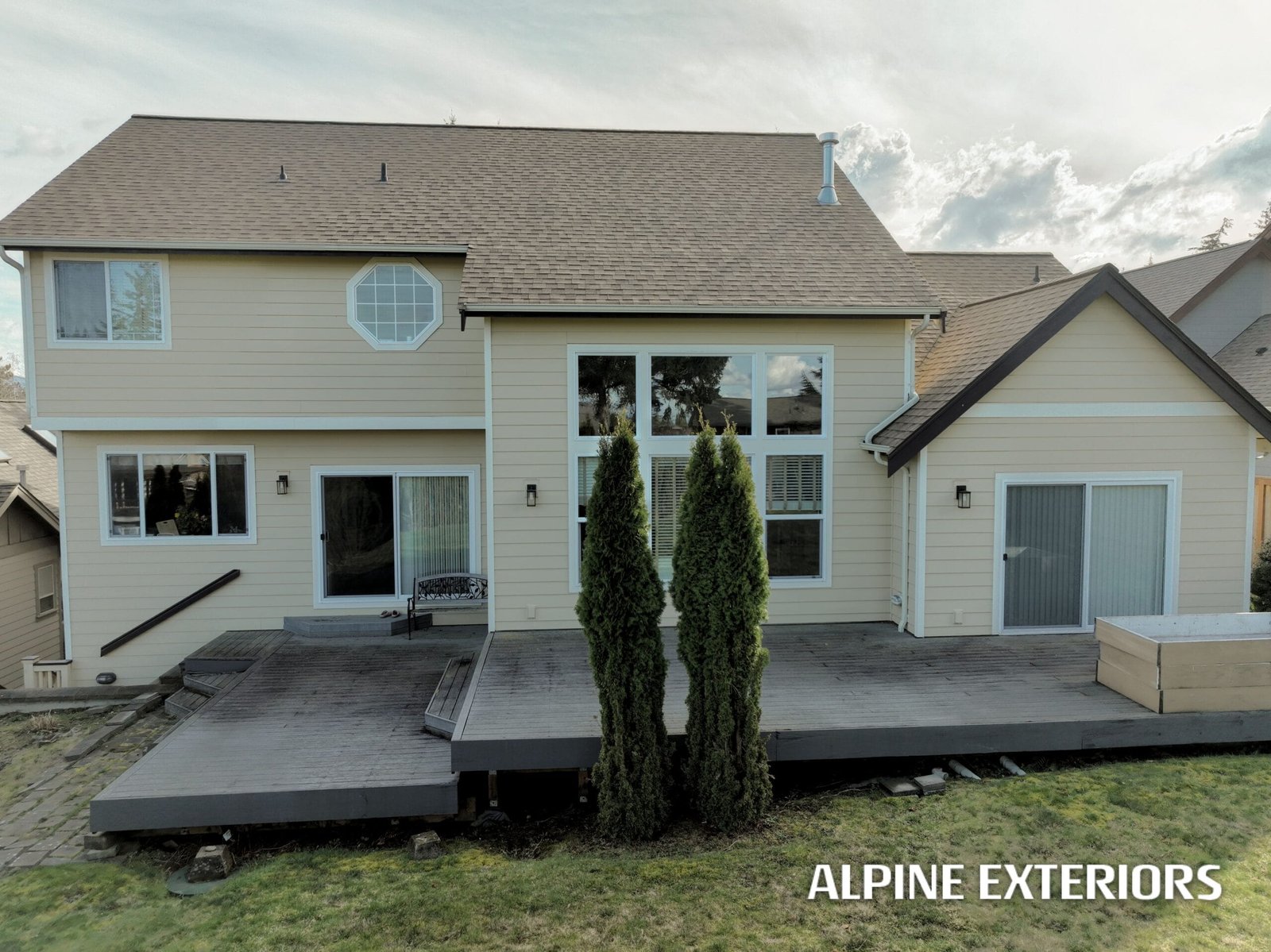
A storm-damage repair in Friday Harbor is not the same project as the identical repair in Mount Vernon or Burlington, and the differences matter for how you plan the fix.
Salt air off the Strait accelerates corrosion on anything metal — gutter fasteners, flashing, nail heads, even the screws holding down a metal roof panel. A roof or gutter system that would hold up for decades in Sedro-Woolley can show rust and fastener failure years earlier on the island, and after a storm that's often the reason a piece that looked secure a season ago is the one that gave way. Any repair work should account for that and use fasteners and flashing rated for coastal exposure, not whatever is standard inland.
Access is the other big one, and it's honest to say plainly: getting a contractor and materials to San Juan Island depends on the Washington State Ferries schedule out of Anacortes. A same-day emergency response that's routine on the mainland simply isn't possible on the same timeline here — trip planning, ferry reservations, and loading a truck with the right materials all add time before work can even start. That's not a reason to panic, but it is a reason to tarp and stabilize damage promptly rather than wait, since a covered hole can sit safely for a few days while a scheduling window is arranged.
Housing stock on the island skews older, with more wood siding, cedar shake and cedar shingle roofing than you'll typically see on newer mainland builds, and those materials behave differently in wind and moisture than asphalt composition and vinyl or fiber-cement. Cedar in particular hides damage well — a cracked or split shake can look fine from 20 feet away and still be letting water through. Power outages after a storm also tend to run longer on the island than on the mainland grid, which matters if a sump pump, dehumidifier or temporary patch depends on electricity.
Finally, moss is a year-round factor on shaded, north-facing roof slopes anywhere in this region, San Juan County included, and it's worth separating from storm damage. A heavy moss mat holds moisture against the roof surface and can lift shingle edges on its own, so after a windstorm it's common to find both storm damage and moss-related wear on the same roof. They're treated differently by most insurance policies — storm damage is typically covered, moss buildup is treated as a maintenance issue — so it helps to know which is which before a claim goes in.
In most standard homeowners policies, sudden wind damage and damage from a falling tree or limb are covered perils, but coverage details vary by carrier and policy, and older roofs are sometimes subject to actual cash value rather than full replacement cost. Gradual damage — like a roof that was already failing from age or moss before the storm — is typically excluded, which is why photo documentation of the specific storm event matters. Always confirm the specifics with your own insurer rather than assuming coverage.
It depends on ferry availability, the extent of regional storm damage that season, and how many other island homes need attention at the same time. A contractor who regularly works the San Juan Islands will typically plan a trip to bundle multiple jobs into one ferry crossing, which is more efficient than a single mainland-based visit — but it does mean scheduling isn't as instant as it would be in Mount Vernon or Anacortes. Tarping and stabilizing damage right away buys the time needed to schedule the actual repair properly.
Moss itself is a maintenance issue, not storm damage, and most insurance policies treat it that way. What a storm can do is accelerate a problem that moss already started — a shingle edge that moss had already loosened is more likely to be the one that lifts or tears free in high wind. If your roof has heavy moss on shaded slopes, it's worth having both the storm damage and the moss condition assessed together, since one contractor visit can address both.
A like-for-like patch repair — replacing a section of siding or a few damaged shingles with matching material — usually doesn't trigger a full permit or Washington State Energy Code review. A larger-scope job, such as replacing an entire wall of siding or multiple windows at once, is more likely to fall under current energy code requirements for insulation and window performance, and your local building department or your contractor can confirm which threshold your repair falls into before work starts.
If your Friday Harbor home took wind, rain or limb damage in a recent storm, Alpine Exteriors can inspect the roof, siding, gutters and windows, document what happened for your insurance claim, and give you a straightforward repair plan — including what's genuinely urgent and what can wait. Alpine Exteriors is a licensed Washington contractor (license ALPINI751OW) serving Skagit, Island and Whatcom counties along with the San Juan Islands, and we plan island visits around the ferry schedule so multiple homes can be handled efficiently in one trip. Reach out to schedule an inspection and get a clear, honest assessment of what your home needs.