
On San Juan Island, roofs age faster than their materials warranty suggests for two connected reasons: long stretches of low-intensity winter rain that keep roof surfaces damp for days at a time, and moss that establishes on shaded, north-facing slopes under the fir, cedar and madrona canopy common to Friday Harbor lots. The fix is not complicated, but it has to be done on a schedule: keep the roof surface clean of moss and debris, keep water moving off it and out of the gutters, and catch corrosion and flashing problems before they become deck rot. Homeowners who do this consistently rarely face the expensive repairs that show up on neglected roofs a few winters in.
None of this is unique to any one house on the island. It shows up on nearly every roof that sits under trees for part of the day, which in Friday Harbor is most of them.
Moss is not just a cosmetic nuisance. It is a moisture management problem. Moss holds water against the roofing surface long after the surrounding, sun-exposed sections of the same roof have dried out. On composition shingles, that trapped moisture accelerates granule loss and lets the moss's root structure work into the shingle mat, lifting tabs and creating channels for wind-driven rain to get underneath. On cedar shake, still common on older San Juan Island homes, moss holds moisture directly against the wood and speeds rot from the surface down. Even on metal roofing, moss mats trap organic debris in the seams and can hold moisture against fasteners long enough to start corrosion.
Gutters compound the problem. Douglas fir needles and madrona leaf litter are smaller and more persistent than the broadleaf debris that clogs gutters in other parts of Western Washington, and they pack into downspouts and behind gutter guards in ways that are easy to miss from the ground. A gutter that looks clear from the yard can still be dammed at the outlet, and once it backs up, water sheets over the fascia board and behind the drip edge rather than running off the roof the way it is designed to. That is how a gutter problem becomes a fascia and soffit rot problem within a season or two, well before the roofing material itself is old.
Salt-laden marine air adds a slower but steady failure mode: it corrodes exposed metal faster than it would a few miles inland. Roofing nails, gutter hangers, flashing, and ridge vent fasteners that would last decades on a mainland Skagit County roof can show rust streaking and early failure on an island roof, especially on homes closer to the water or exposed to onshore wind off Haro Strait or the Strait of Juan de Fuca.
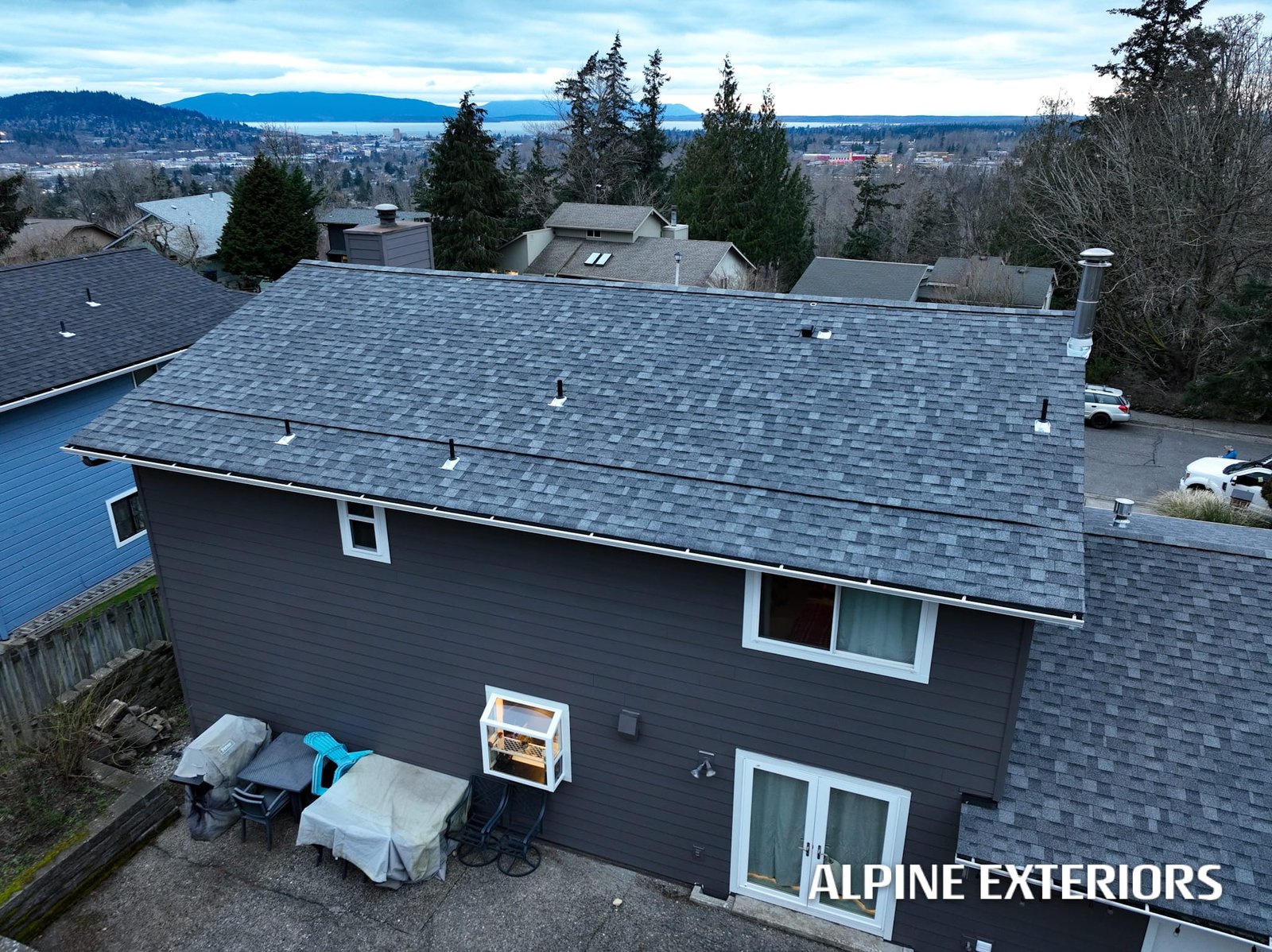
Friday Harbor shares a climate family with the rest of the Alpine Exteriors service area in Skagit, Island and Whatcom counties, but it is not identical, and treating it as identical is where roof maintenance advice goes wrong.
One thing that does not apply here, despite being a real concern elsewhere in Alpine Exteriors' service area: San Juan County does not see the heavier snow and ice loads that show up in the Cascade foothills east of Sedro-Woolley. Roof design on the islands does not need to account for sustained snow load the way a foothill property might.
The Washington State Energy Code applies to San Juan County the same as it does everywhere else in the state, and it is worth mentioning here because it bears directly on moss and moisture. The code's ventilation and insulation requirements for reroofing and additions are there partly to keep warm, moist interior air from condensing against a cold roof deck from below. A roof that is being soaked from above by rain and moss and from below by inadequate attic ventilation is dealing with moisture from two directions at once, and that combination is what actually rots a roof deck, not either condition alone.
Most of what protects a roof in Friday Harbor is unglamorous and needs to happen on a calendar, not just when something looks wrong.
It's worth being honest about the tradeoffs. Zinc strips and soft washing reduce moss but do not stop it permanently on a slope that gets no direct sun for months at a time; regrowth after a year or two under heavy shade is normal and not a sign that the work was done wrong. Corrosion-resistant fasteners and marine-grade flashing cost more up front than standard materials, and that added cost is a legitimate factor to weigh against a roof's remaining service life. And because of ferry scheduling, island homeowners generally get better results by budgeting for planned annual maintenance than by treating roof care as a reactive, as-needed expense.
Moss does real damage, not just cosmetic staining. It holds moisture against the roofing surface long after nearby sun-exposed areas have dried, which accelerates granule loss on composition shingles and speeds surface rot on cedar shake. Left long enough, moss root structure can also lift shingle tabs and create paths for wind-driven rain to get underneath, so it is worth addressing even on roofs that otherwise look intact.
Twice a year is a reasonable baseline — once in late fall after most needle and leaf drop, and again in late winter — but heavily shaded lots under mature fir and cedar often need a mid-winter check as well. Fir needles pack into downspouts and behind gutter guards in ways that can leave a gutter dammed at the outlet even when it looks clear from the ground.
Generally no, at least not with a standard high-pressure washer. That level of pressure strips protective granules from composition shingles and can force water under the shingle mat rather than removing the moss safely. A soft wash approach, manual removal, or zinc and copper control strips along the ridge are more appropriate for most residential roofs in this area.
The roofing material itself does not usually need to change, but the fasteners and flashing do. Standard electro-galvanized nails and flashing corrode noticeably faster in marine air than stainless steel or hot-dip galvanized alternatives, and that difference shows up as rust staining and early failure well before the shingles or metal panels themselves are worn out.
Alpine Exteriors works throughout Skagit, Island and Whatcom counties and coordinates ferry-scheduled visits to Friday Harbor and the rest of San Juan County for roof, gutter, window and deck inspections and repairs. Because island scheduling takes more lead time than a mainland call, the best results come from booking a fall inspection before the winter rain and shade season sets in rather than waiting for a leak to show up. Alpine Exteriors is licensed in Washington under contractor license ALPINI751OW; reach out to plan a visit or ask questions about what your specific roof, slope orientation and tree cover actually need.