
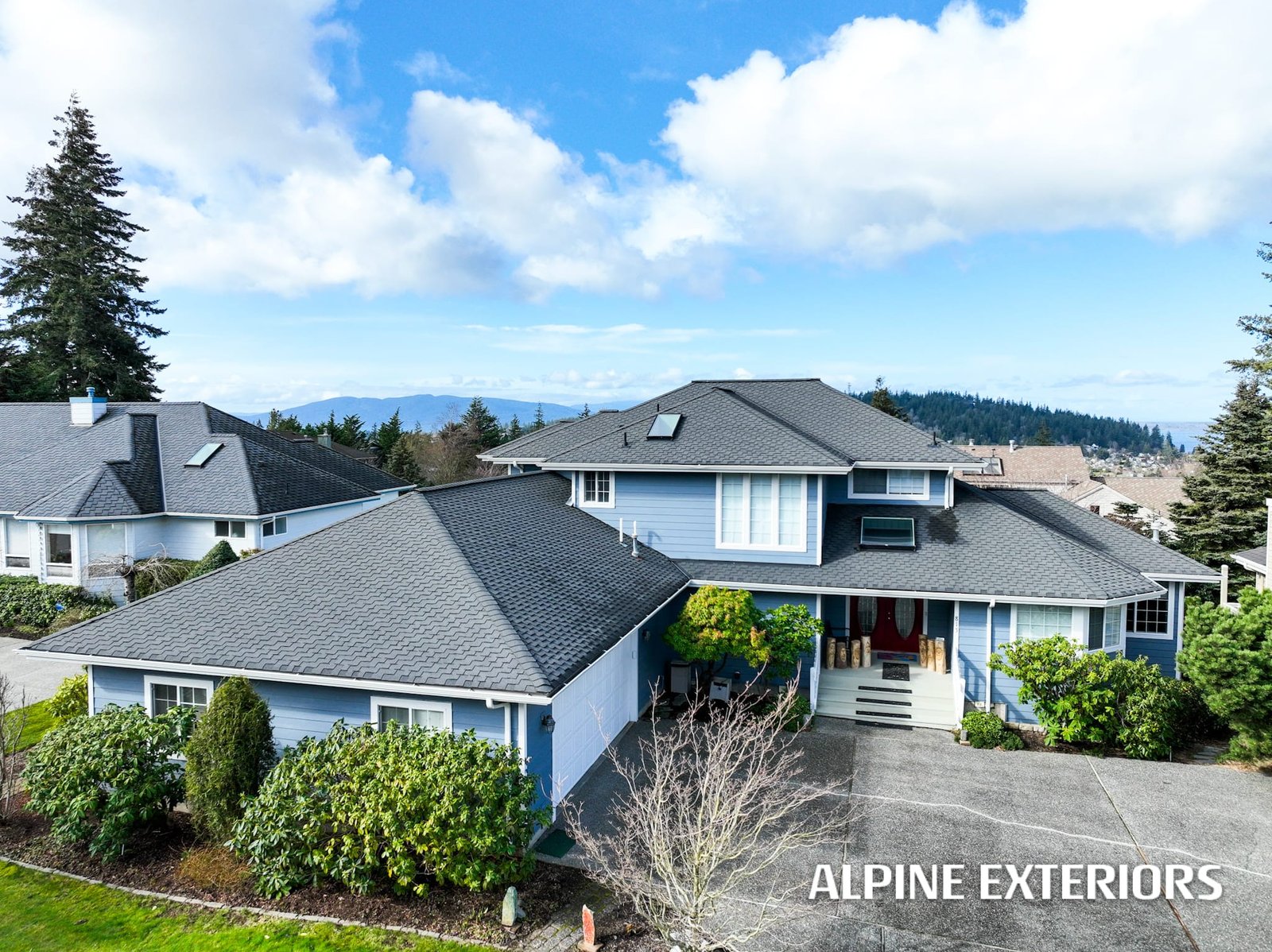
The two things that shorten a roof's life fastest in Freeland are trapped moisture and moss, and both come from the same root cause: shaded, slow-drying roof slopes under our long wet season. Keep the roof and gutters clear, let air and light reach the shaded sides of the house, and treat moss before it lifts shingles or shakes — that habit alone prevents most of the leak calls we see on this end of Whidbey Island.
Everything else in roof maintenance here is really an extension of that one idea: water that can't drain or dry out will eventually find a way into the house, and moss is usually the first visible sign that it's starting to happen.
Freeland sits on the west side of Whidbey Island, tucked along Holmes Harbor and close enough to Puget Sound that the marine layer rarely burns off before mid-morning for much of the year. From roughly October through April, the roofs here take on a steady diet of frontal rain systems moving in off the Pacific — not any single dramatic storm, but weeks at a stretch of drizzle, overcast skies and short dry windows in between. That pattern matters more than total rainfall totals do, because it's the slow, repeated wetting and drying cycle that stresses roofing materials, fasteners and flashing over time.
Moss thrives in exactly those conditions. Composition shingle and wood shake roofs on the north- and east-facing slopes of a house, especially anything shaded by the Douglas fir, western red cedar and big-leaf maple that cover much of Island County, stay damp far longer after each rain than a south-facing slope in the sun. Spores that land in that damp granule layer or in the grain of a cedar shake take hold, and once a moss colony is established it does two things a homeowner should care about: it holds water against the roofing material almost permanently, and its root structure works its way under shingle tabs and shake edges, lifting them just enough for wind-driven rain to get underneath. By the time moss is visible as a green mat from the ground, it has usually been growing for a season or two already.
None of this is unique to any one roofing material. Composition shingles lose granules and degrade faster where moss sits on them. Cedar shakes, which are still common on older Whidbey Island homes, are more forgiving of moisture in general but rot where moss keeps a spot continuously wet. Metal roofing resists moss growth itself but can still collect organic debris in valleys and at penetrations that holds moisture against fasteners and sealant. The fix in every case starts with the same two things: physically removing moss and the debris that feeds it, and improving how quickly that section of roof can dry between rains.
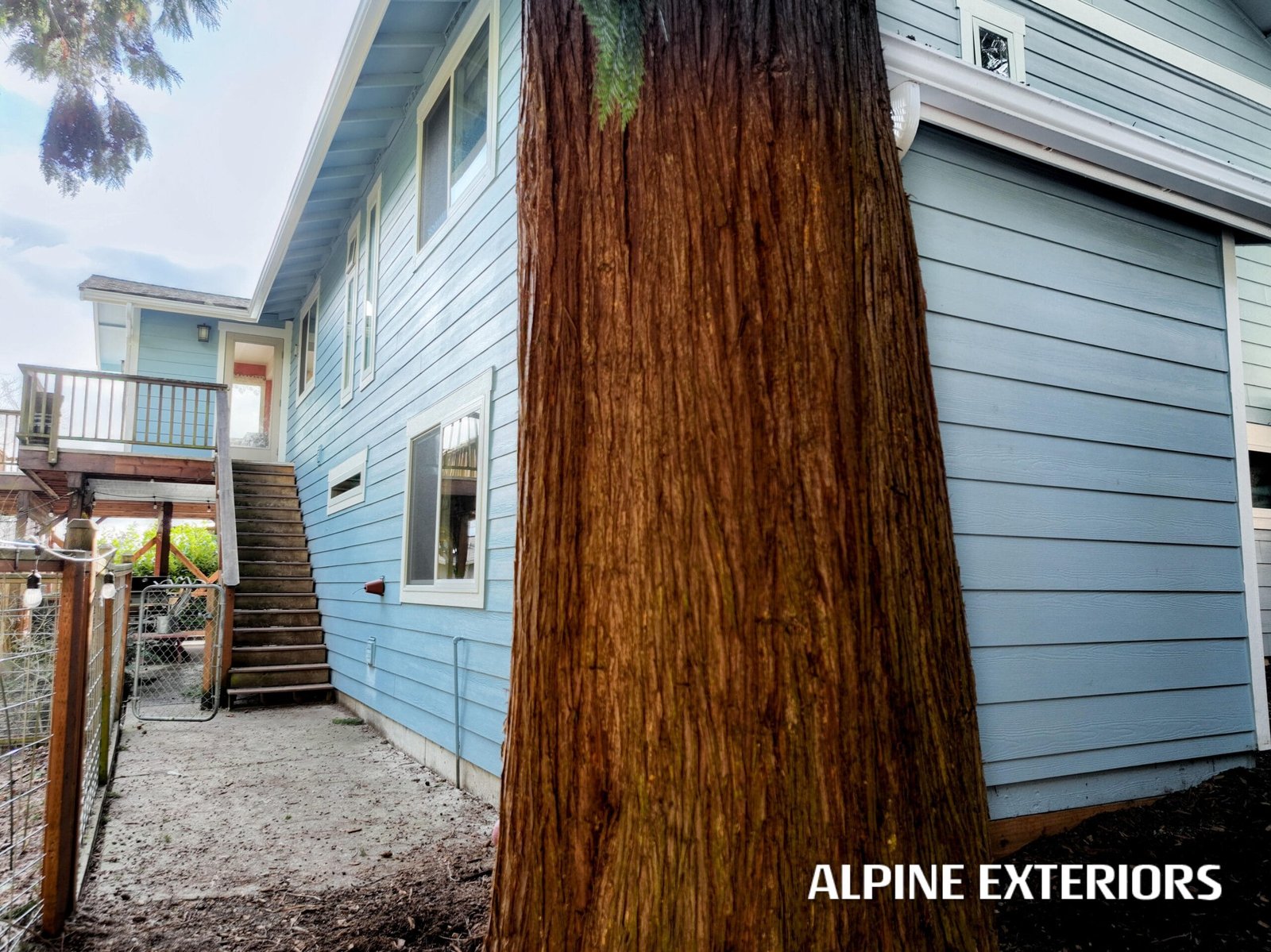
A few conditions specific to Freeland and the rest of Island County change how a roof should be maintained here compared to a drier or more open part of the state.
Most of the roof problems we get called about in Freeland trace back to one of a handful of maintenance gaps, and most of them are manageable without replacing the whole roof.
Inspect twice a year, at minimum. Late fall, before the heaviest rain sets in, and again in spring after the wet season eases, are the two windows that matter most. Look for moss and lichen on shaded slopes, granule buildup in gutters, lifted or curling shingle edges, and any rust streaking near flashing or fasteners.
Clean gutters and downspouts on a real schedule, not an occasional one. With mature trees this close to most Freeland roofs, needles and leaf litter build up fast, and a clogged gutter during a heavy rain event backs water up under the roof edge rather than away from the house. Twice-yearly cleaning is a reasonable baseline for most lots; homes under heavy conifer cover may need it more often.
Treat moss rather than just scraping it. Physically removing visible moss helps, but without a follow-up treatment — zinc or copper control strips near the ridge, or a properly diluted moss treatment applied by a professional — it tends to return within a season on a shaded roof. Pressure washing a roof is generally a bad idea; it can strip granules and force water under shingles, doing more damage than the moss itself.
Manage the shade, where it's practical to. Selectively limbing back branches that overhang the roof, rather than removing whole trees, often makes a meaningful difference in how quickly a roof dries after rain without sacrificing the wind buffer those trees provide.
Match ventilation to the Washington State Energy Code, not just the minimum that gets a permit signed off. If an attic or roof deck feels warm and humid during a roof inspection, that's usually a sign the ventilation and insulation aren't working together the way the code intends, and it's worth having it evaluated before the next reroof rather than after a moisture problem shows up in the sheathing.
Pick materials with the local climate in mind, and be honest about the tradeoffs. Architectural composition shingle remains the most common and generally most cost-effective choice for Freeland homes, with reasonable moss resistance when properly maintained; expect a wider replacement cost range depending on roof complexity and access. Cedar shake has real aesthetic appeal that fits the island setting, but it demands more frequent moss management and inspection to get a full service life out of it. Metal roofing sheds moss better than either and holds up well to wind, but carries a higher upfront cost and needs quality, corrosion-resistant fasteners given the salt air. None of these is the wrong answer; the right one depends on the specific roof, its exposure, and how much upkeep the homeowner wants to take on. Alpine Exteriors walks Freeland homeowners through that tradeoff on-site rather than defaulting to one material for every roof.
Don't ignore small flashing and fastener issues. A rust-streaked nail or a slightly lifted piece of step flashing is inexpensive to address on its own. Left through another wet season, it's often the start of a leak that damages sheathing or interior finishes, which costs considerably more to repair than the original fix would have.
For roofs with meaningful shade from surrounding conifers, a check every six months and a treatment or removal as soon as moss becomes visible is a reasonable rhythm. Waiting until moss is thick enough to see clearly from the street usually means it has already been lifting shingle tabs or shake edges for a while, so catching it early is what actually saves money and shingle life.
Yes, though it's a slow effect rather than a sudden one. Airborne salt speeds up corrosion on exposed metal components — nail heads, flashing, gutter hangers and fasteners — more than the same materials would corrode further inland. Using corrosion-resistant fasteners and flashing during any repair or reroof is a straightforward way to reduce this over the life of the roof.
Freeland doesn't see the kind of sustained cold and heavy snow load that causes serious ice damming in the Cascade foothills, but brief cold snaps following a wet stretch can still form ice at shaded eaves and inside gutters. It's infrequent enough that it shouldn't drive a roofing decision on its own, but eave protection and clear gutters make it a non-issue when it does happen.
Generally yes, for two combined reasons: the volume and frequency of rain from roughly October through April, and the heavy tree cover on most Freeland lots that fills gutters with needles and leaf litter. A gutter system that's undersized or infrequently cleaned is one of the more common causes of water finding its way under a roof edge or into a fascia board on this part of the island.
Moss, sustained winter rain and salt air are manageable conditions, but they reward homeowners who stay ahead of them rather than react after a leak shows up. Alpine Exteriors serves Freeland and the rest of Island County alongside Skagit and Whatcom counties, working on roofing, windows, decks and gutters for homes dealing with exactly these Salish Sea conditions. If it's been a while since your roof was inspected, or moss is starting to show on the shaded slopes, Alpine Exteriors (WA contractor license ALPINI751OW) can take a look and lay out honest options — including what doesn't need to be done yet — before small issues turn into a reroof.