
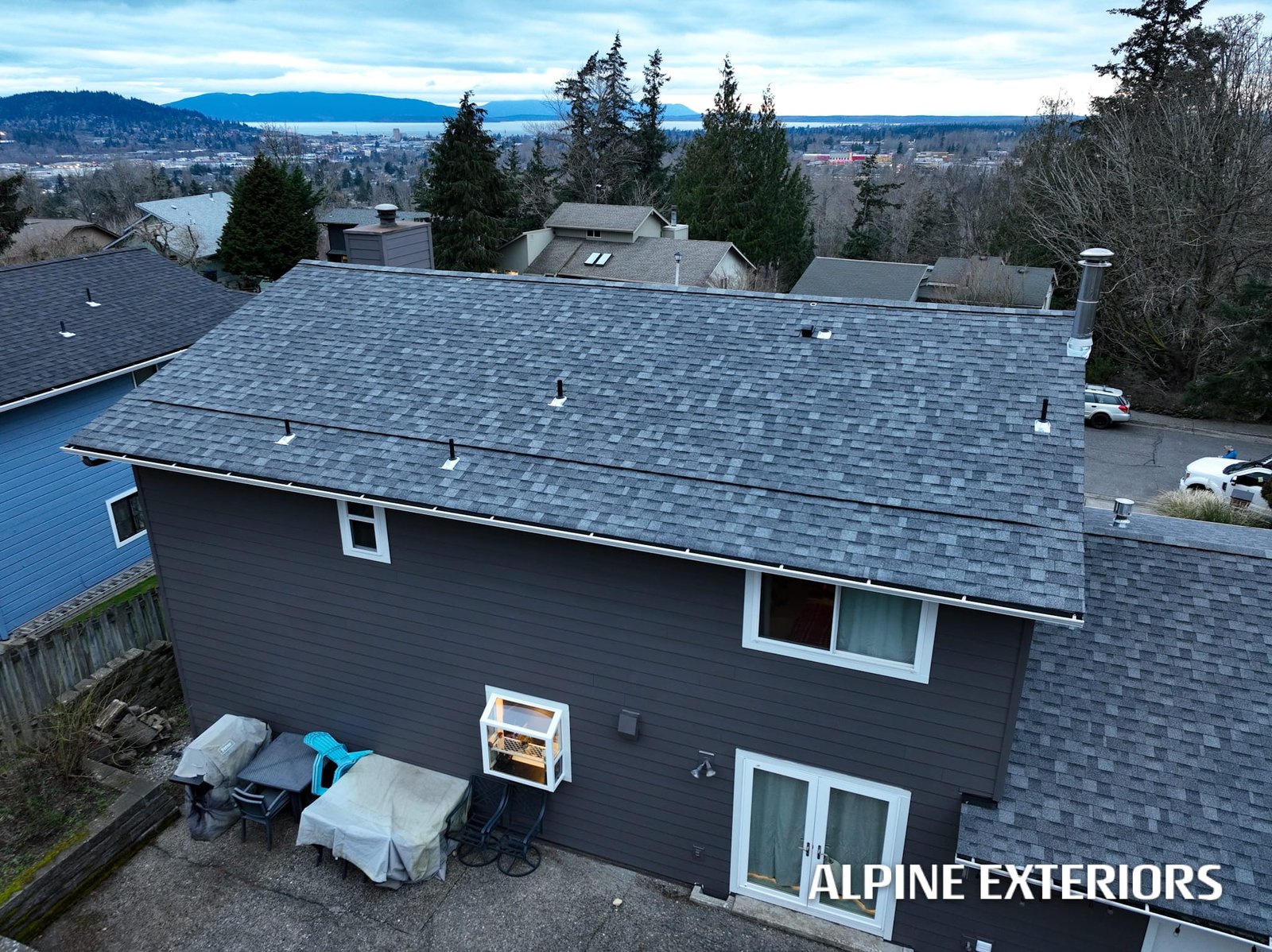
On Camano Island, the roof problem is almost never the rain itself — it's what the rain leaves behind. Shaded, moss-covered roof sections hold moisture against the shingle mat for weeks at a time, and that slow, steady dampness does more damage over ten years than any single storm. If you own a home here, the two things worth doing every year are keeping moss off the roof and keeping gutters clear so water actually leaves the property instead of backing up under the edge.
Camano Island sits inside Island County, surrounded by Port Susan and Saratoga Passage, which means most homes get a long, wet fall-through-spring stretch with relatively mild temperatures — perfect growing conditions for moss and algae on north- and east-facing roof slopes that don't see direct sun for months. Moss isn't just cosmetic. As it spreads, its root structure (rhizoids) works into the granule surface of asphalt shingles and lifts the shingle tabs slightly, which is exactly the gap wind-driven rain needs to get underneath. On cedar shake or shingle roofs, which are still common on older island properties, moss retains moisture directly against the wood and accelerates rot in a way that's hard to see from the ground.
Rain volume matters too, but it's the duration, not the intensity, that stresses roofs here. Long, low-intensity rain events mean water sits in valleys, around chimney flashing, and in gutters for hours or days rather than draining off quickly. Roofs with underperforming flashing or gutters that pitch even slightly wrong will show it eventually as a stain on an interior ceiling, usually near a chimney, skylight, or where a lower roof plane meets a wall.
Camano Island isn't Bellingham, and it isn't Mount Vernon or Burlington out on the flats, even though all three are part of the same general service area. A few things specific to the island change how a roof should be built and maintained:
None of this means Camano Island roofs need exotic materials. It means the details — fastener choice, flashing metal, gutter pitch, and how moss is actually removed — matter more here than in a drier inland climate.
A realistic, non-alarmist roof care routine for a Camano Island home looks like this:
Alpine Exteriors works on roofs, gutters, and related exterior systems across Island and Skagit counties, and Camano Island jobs come with their own checklist compared to a project in Mount Vernon or Stanwood, largely because of the salt air and tree cover described above. Being honest about that difference up front saves homeowners from paying for upgrades they don't need, or skipping ones they do.
Most shaded roofs on the island benefit from a moss check once a year, typically in late spring after the wettest months have passed, with removal as soon as moss is visible rather than waiting for it to spread across a whole slope. Roofs with heavy tree cover or north-facing exposure may need attention more often, while sunnier, open-lot roofs can sometimes go longer between treatments.
Yes, particularly for metal components — flashing, fasteners, gutters, and any exposed metal roofing. Homes closer to the shoreline see faster corrosion on unprotected or mill-finish metal than homes further inland in Skagit County, which is why corrosion-resistant materials are worth specifying for shoreline-adjacent properties even though they cost somewhat more upfront.
Both can perform well here, but each comes with tradeoffs. Cedar shake has to be kept clear of moss and debris more diligently since trapped moisture accelerates wood rot, while asphalt shingles are lower-maintenance but still vulnerable to moss lifting the tabs if left untreated. The right choice usually depends on the home's tree cover, the owner's willingness to maintain the roof, and the look they want, not on region alone.
When a roof is replaced, it's typically the most practical time to bring attic insulation and ventilation up to current Washington State Energy Code requirements, since the roof deck is already exposed. Proper ventilation also reduces the underside moisture buildup that contributes to moss, mold, and premature decking wear, so it's worth addressing during the same project rather than as a separate one later.
If you're on Camano Island and dealing with visible moss, a slow gutter, or a stain that's showing up after every heavy rain, it's worth having someone look at the actual cause before assuming the worst — or assuming it's nothing. Alpine Exteriors, WA contractor license ALPINI751OW, serves homeowners across Island and Skagit counties, including Camano Island, Stanwood, Anacortes and Mount Vernon, and can walk a roof, gutters and flashing to give a clear, no-pressure read on what needs attention now versus what can wait.