
For most homes in and around Friday Harbor, an architectural (dimensional) asphalt shingle rated for high wind and treated with algae-resistant granules is the best balance of cost, durability, and low maintenance. It handles the near-constant winter rain of the San Juan Islands, resists the moss that thrives under Douglas fir and madrona canopy, and is easy for local crews to source and install without long waits on ferry-dependent material shipments. If you plan to stay in the home for decades, are building on an exposed bluff or waterfront lot, or simply want to re-roof once and be done with it, standing seam metal is the stronger long-term pick, provided it is specified with corrosion-resistant fasteners and flashing suited to salt-laden marine air. Synthetic and composite shake sits in between: a reasonable compromise for owners who want the traditional Pacific Northwest look without the upkeep that real cedar demands in this climate. Cedar shake itself can still be the right choice for a historic property in town, but it comes with the most maintenance of any option here, and that matters more on an island where a contractor visit means a ferry crossing.
Alpine Exteriors is based on the mainland side of the Salish Sea, in Skagit, Island, and Whatcom counties, and we take on select San Juan County projects reached via the Anacortes ferry. That travel reality shapes some of the recommendations below, because getting materials and skilled labor to Friday Harbor is a genuinely different logistical problem than roofing a house in Mount Vernon or Anacortes.
Not every roofing criterion that matters on the mainland matters the same way on San Juan Island, so we weighed each option against conditions that are actually relevant here:
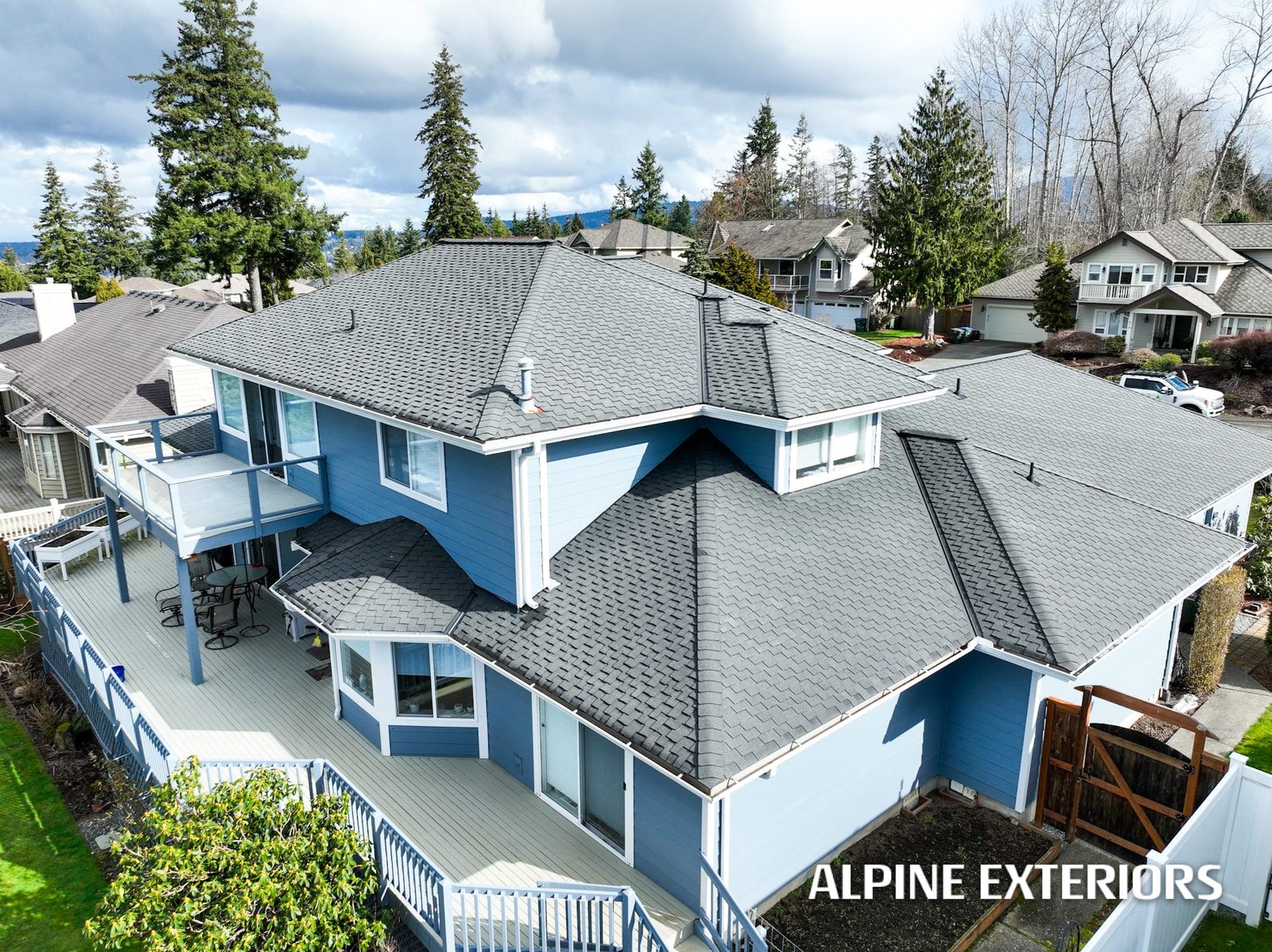
Architectural, or dimensional, asphalt shingles are the most common re-roofing choice on San Juan Island for good reason. They are widely manufactured, so distributors on the mainland can usually get a full pallet order onto a ferry without the long custom lead times that specialty materials require. Many product lines now include algae-resistant granules, typically infused with copper or zinc, that slow the black streaking and moss colonization that shaded island roofs are prone to. Wind-rated shingle products in the 110 to 130 mph range are widely available and appropriate for most Friday Harbor lots, including many waterfront properties.
The honest drawbacks: asphalt shingles have a shorter service life than metal, typically in the range of 20 to 30 years depending on the product tier and how much shade and moss exposure the roof gets. A north-facing slope buried under fir canopy will show moss well before a sun-exposed south slope on the same house, even with algae-resistant granules, so periodic gentle cleaning is still part of ownership. Some homeowners also simply prefer not to have a petroleum-based product on a historic or high-end property. For most Friday Harbor homes, though, a quality architectural shingle with a wind and algae-resistant rating is the most practical, cost-effective option, and it is the one local and visiting crews are most experienced installing and repairing.
Standing seam metal is the strongest performer against wind and sustained rain of anything on this list. The concealed-fastener, mechanically seamed panels resist uplift well and shed water fast even during weeks of steady winter rain, with no shingle tabs or exposed edges for wind to work loose over time. Metal roofing also holds up to decades of service, often 40 to 60 years or more with the right coating system, which matters on an island where every future re-roof means coordinating a crew and materials around ferry schedules. Moss has a much harder time gaining a foothold on smooth metal panels compared to the textured surface of shingles or shake.
The tradeoffs are real. Upfront cost is meaningfully higher than asphalt. Not every steel coating performs equally well in salt air long-term; aluminum panels or a properly rated coated-steel system paired with stainless steel fasteners is worth the additional cost on or near the water, and it is worth asking any contractor exactly what coating and fastener spec they are proposing before you commit. Metal roofs are also louder in heavy rain unless the assembly includes adequate underlayment and attic insulation, and fewer local and island-based crews have deep standing seam experience compared to asphalt, which can mean a longer wait to get on a qualified installer's schedule. Falling branches from the island's mature tree cover can dent panels over time, which is a cosmetic rather than functional issue but worth knowing about on a heavily wooded lot.
Synthetic and composite shake products, usually engineered from polymer or rubber compounds, are built to mimic the look of split cedar shake without the ongoing maintenance that real wood demands in this climate. Many carry Class A fire ratings, resist moss better than natural wood, and weigh less than clay or concrete tile, which simplifies structural considerations on older framing common in some of Friday Harbor's historic housing stock. Wind ratings on quality composite products are generally solid.
The main caution is that this is a newer product category, so its real-world, multi-decade performance in the specific combination of Salish Sea rain, salt air, and heavy shade that San Juan Island offers is less proven than the century-plus track record of asphalt or the many-decades track record of metal. Cost typically lands between shingle and metal roofing. Up close, some composite products still read as synthetic rather than as authentic wood, which matters if the goal is to match a historic streetscape. Warranty support can also be thinner if a manufacturer doesn't have a strong distributor network reaching this far into the islands, so it's worth confirming how any warranty claim would actually get serviced before choosing this route.
Cedar has genuine appeal for island homes, especially older or historic properties in and around Friday Harbor where a natural wood roof suits the architecture and streetscape. It's a breathable material, and treated products can improve resistance to fire and, to a degree, moss.
That said, this is the option that requires the most honesty about upkeep. The combination of near-constant winter rain and heavily shaded, tree-covered lots that describes a large share of San Juan Island is close to a worst-case scenario for untreated wood roofing: moss, moisture retention, and eventual rot set in faster here than in a drier climate. Ownership means a real, recurring commitment to cleaning and re-treatment, not a one-time installation. Practical lifespan in this climate tends to run shorter than manufacturers' figures suggest for more favorable climates, and some insurance carriers apply different terms to wood roofing, which is worth checking before you commit. Once treatments, more frequent maintenance visits, and the logistics of getting a specialty crew to the island are factored in, all-in cost over the life of the roof is often comparable to or higher than metal. Cedar remains a legitimate choice for the right property and the right owner, but it is not the low-maintenance option some people assume it to be.
It depends heavily on material and site conditions. A quality architectural asphalt shingle roof commonly lasts in the range of 20 to 30 years in this climate, while a well-specified standing seam metal roof can run 40 to 60 years or more. Shaded, moss-prone lots tend to show wear sooner than sun-exposed ones on the same material, so a roof's real-world lifespan on a wooded Friday Harbor property may land toward the shorter end of any manufacturer's stated range.
Yes, to some degree. San Juan Island is small enough that most properties sit within a marine air environment even if they aren't directly on the water. Fasteners, flashing, and any exposed metal components should be specified for corrosion resistance across the island, not just for homes with an unobstructed water view.
Moss is one of the most common roofing issues we see on shaded lots in the San Juans, and it can't be eliminated entirely on a north-facing slope under mature tree cover, but it can be significantly slowed. Algae-resistant granules on asphalt shingles, smooth metal surfaces, and simply keeping overhanging branches trimmed back all reduce how quickly moss establishes itself, and periodic gentle cleaning keeps small growth from turning into a larger moisture problem.
Any re-roof or new roof in San Juan County still needs to meet the Washington State Energy Code's insulation and ventilation requirements along with standard county building permitting; there isn't a separate island-specific building code. What is genuinely different is logistics: material deliveries and contractor scheduling revolve around the Anacortes ferry, which can extend project timelines compared to a similar job on the mainland, even though the underlying code requirements are the same.
Choosing the right roof for a Friday Harbor home means weighing wind exposure, shade and moss, salt air, and the practical realities of getting materials and crews onto the island, against your budget and how long you plan to own the property. Alpine Exteriors, WA contractor license ALPINI751OW, works primarily across Skagit, Island, and Whatcom counties and takes on select San Juan County roofing projects reached via the Anacortes ferry. We'll walk your specific roof, talk through honest tradeoffs between shingle, metal, and shake for your lot's shade and wind exposure, and give you a straightforward assessment before any work begins. Reach out to Alpine Exteriors to schedule a roofing consultation for your Friday Harbor home.