
Ridge vents are one of those roofing components that rarely get attention until moisture damage, ice-cold attic floors, or a curling shingle warranty issue forces the question. In Skagit, Island and Whatcom counties — where heavy winter rain, shaded tree-line roofs, and stretches of damp marine air are simply part of owning a home in Mount Vernon, Anacortes, Burlington, Sedro-Woolley, La Conner, Stanwood, Camano Island or Bellingham — proper ridge ventilation does real work. It pulls warm, moisture-laden air out of the attic before it condenses on the underside of the roof deck, and it works together with soffit intake vents to keep the attic close to outdoor temperature, which slows ice damming in the colder foothill areas and reduces the conditions that let moss and algae take hold on north-facing slopes. This page walks through realistic cost ranges for the region, what actually drives the price up or down, what a legitimate quote should contain, and how to compare bids without getting steered by the lowest number on the page.
There are two very different scenarios that both get called "ridge vent cost," and mixing them up is the most common source of sticker shock. The first is adding or upgrading a ridge vent as a standalone project on a roof that is otherwise in decent shape — cutting a slot along the ridge, installing the vent product, and capping it with matching shingles or metal ridge cap. The second is ridge venting bundled into a full roof replacement, where the incremental cost of the vent itself is small because the ridge is already being opened up and re-capped as part of the larger job.
As a standalone retrofit on a typical single-story home in this region, homeowners are generally looking at a modest few hundred dollars up into the low thousands, depending heavily on ridge length, roof pitch, and what the crew finds once the ridge cap comes off. When ridge venting is added as part of a full reroof, the added cost over a solid ridge cap is usually far smaller — often folded into the per-square roofing price — because the labor of accessing the ridge is already being paid for. Steeper roofs, longer or more complex ridgelines (multiple hips and dormers are common on the larger homes around Bellingham and the Skagit Valley acreage properties), and any rot repair found under the old ridge cap all push the number toward the higher end. None of these figures are quotes — they're a starting point for budgeting, and any contractor, including Alpine Exteriors, should confirm the real number after walking the roof.
| Cost Factor | Typical Low End | Typical High End |
|---|---|---|
| Ridge length (linear footage of vent) | Short ridge, single roof plane | Long or multi-ridge roof with hips and valleys |
| Roof pitch and accessibility | Low-slope, single story, easy staging | Steep pitch, two-story, limited ground access |
| Existing soffit intake balance | Soffit vents already adequate and clear | Soffit vents blocked, undersized, or absent — needs added work |
| Ridge vent material and cap type | Standard shingle-over ridge vent | Metal ridge vent or profile matched to metal roofing |
| Deck and framing condition at the ridge | Sound sheathing, no rot found | Moisture or moss-related rot requiring deck/framing repair |
| Standalone retrofit vs. bundled with reroof | Rolled into a full roof replacement | Isolated retrofit on an otherwise untouched roof |
Beyond the table above, a handful of regional realities show up on almost every ridge vent job in this part of Washington. Moss is the big one. Shaded roofs under fir and cedar canopy — common from the Chuckanut foothills through Sedro-Woolley and out toward Camano Island — trap moisture longer than open, sun-exposed roofs, and moss roots work their way under shingle edges over time. When a crew opens the ridge on a mossy roof, it's not unusual to find soft or delaminated sheathing that wasn't visible from the ground, and that repair gets added to the job rather than absorbed into the original estimate.
Wind is the second factor. The Skagit flats and the open water of the Strait and Bellingham Bay funnel wind in ways that inland roofs never experience, and older ridge caps — especially ones already loosened by years of freeze-thaw cycling in colder snaps — are a common failure point. A quote written in summer can look different from one written after a windstorm has already lifted cap shingles, because at that point the job includes wind-damage repair, not just a ventilation upgrade.
Salt air on Camano Island and the San Juan-facing shorelines accelerates corrosion on any exposed metal fasteners or ridge vent components, which is why some installers spec stainless or coated fasteners near the water even when it adds a modest premium. Inland, that upgrade is optional.
Finally, the balance between ridge (exhaust) and soffit (intake) ventilation matters more than the ridge vent alone. A ridge vent installed without adequate, unobstructed soffit intake can actually pull conditioned air from the living space instead of the attic, which defeats the purpose and can worsen moisture problems in a wet climate like this one. If soffit vents are painted shut, blocked by insulation, or simply undersized, opening those up is additional labor that belongs in the estimate — not a surprise change order halfway through the job.
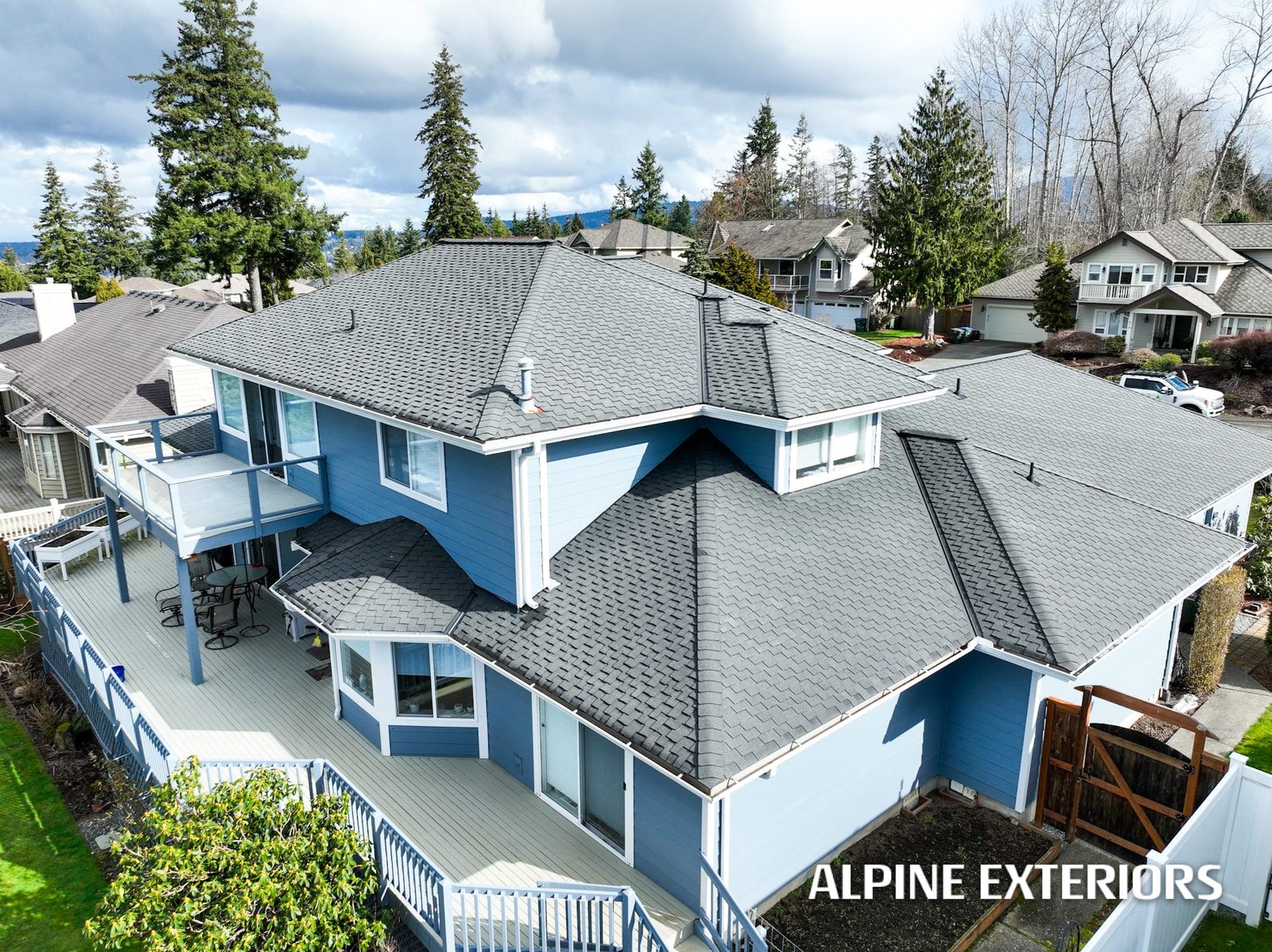
A complete ridge vent estimate should spell out, in writing, the linear footage of ridge being vented, the specific vent product and ridge cap material (shingle-over, metal, or a profile matched to an existing metal roof), and whether the crew is verifying and correcting soffit intake as part of the scope or treating it as a separate line item. It should also state whether tear-off and disposal of the old ridge cap is included, what fasteners and underlayment or flashing details will be used at the ridge, and how the crew will handle sheathing or framing repair if rot is found once the cap is removed — either as a not-to-exceed allowance or a clear per-sheet or per-hour rate for anything discovered.
Warranty terms belong in the quote too: what's covered on labor versus the manufacturer's coverage on the vent product itself, and for how long. Timeline should account for the region's wet season — a contractor who won't discuss weather contingencies for a project scheduled in the fall or winter months isn't being realistic about how roofing work actually goes in Skagit County. If a permit is required by the local jurisdiction for the scope of work, that should be named in the proposal rather than left for the homeowner to discover later.
The single biggest mistake in comparing ridge vent bids is comparing a linear-foot price from one contractor against a lump-sum price from another without confirming they cover the same ridge length and the same scope. Ask each bidder to state the total linear footage of ridge they measured — if the numbers differ significantly, someone measured wrong or is scoping the job differently.
Next, check whether soffit intake correction is included or excluded in each bid. A bid that looks cheaper because it skips soffit work isn't actually the same job, and skipping it can leave the ventilation system unbalanced. Confirm the ridge vent product and cap material by name or profile, not just "ridge vent" as a generic line item — shingle-over vents, rigid baffled vents, and metal ridge vents have real differences in airflow capacity and durability in a wet climate.
Verify licensing and insurance directly rather than taking a business card at face value; Washington's contractor license lookup is public, and any roofer working in the state should be able to provide their license number without hesitation. Alpine Exteriors holds Washington contractor license ALPINI751OW, and homeowners should expect the same transparency from any company bidding the work. Finally, ask how each contractor handles rot or deck damage discovered during the job — a vague "we'll let you know" is worth less than a written allowance or a stated per-unit repair rate agreed to up front.
Ridge vent work performed as routine maintenance or an efficiency upgrade is generally not something homeowners insurance covers, since it isn't damage-driven. That changes if the ridge cap was damaged by a specific wind event — the kind that occasionally comes off the Skagit flats or the Strait — in which case a homeowner may have a legitimate claim for repair or replacement of the damaged section, and it's worth documenting the damage with photos and a contractor estimate before filing. Insurers typically want to see that the damage was sudden and identifiable, not the result of gradual wear or long-term neglect, so a roof that's been quietly failing for years due to moss and moisture is less likely to qualify than one damaged in a specific storm.
For homeowners bundling ridge venting into a broader attic ventilation or insulation upgrade, it's worth asking whether the work qualifies for any regional utility or state energy-efficiency incentive, since ventilation and insulation improvements tied to Washington State Energy Code compliance sometimes overlap with rebate programs — availability and amounts change, so this is worth confirming directly with the utility rather than assuming. Many roofing contractors, including Alpine Exteriors, can also point customers toward financing options that spread the cost of a reroof or ventilation retrofit over time, which is often more relevant to this kind of project than insurance, since most ridge vent work falls outside a covered peril.
Many homes built decades ago in this area were roofed with gable or gravity vents rather than a continuous ridge vent system, and some have inadequate attic ventilation entirely. Whether adding a ridge vent makes sense depends on the current attic ventilation ratio, the condition of existing vents, and how the roof is performing — a home with visible moisture staining in the attic, ice damming in cold snaps, or heavy moss growth is a stronger candidate than one with no symptoms at all.
Better attic ventilation can reduce some of the conditions that encourage moss by keeping the roof deck temperature more consistent, but it will not stop moss that's caused by shade, tree debris, and standing moisture on the shingle surface itself. Moss control on a shaded roof usually needs a combination of periodic cleaning, tree trimming where practical, and sometimes zinc or copper strips, in addition to — not instead of — proper ventilation.
Yes, in most cases a ridge vent can be retrofitted onto an existing roof that's otherwise in serviceable condition, by cutting the ridge slot and installing matching ridge cap shingles or a compatible metal cap. The caveat is that the crew won't know the true condition of the sheathing and framing at the ridge until the old cap is removed, so there's always some possibility of finding repair work that wasn't visible beforehand.
The Washington State Energy Code addresses attic and roof ventilation as part of its broader building envelope and moisture-control requirements, generally by referencing minimum ventilation ratios rather than mandating ridge vents specifically as the only acceptable method. A licensed contractor or the local building department can confirm exactly what applies to a given project, since requirements can depend on the scope of work and whether it triggers a permit.
Ridge vent pricing depends on details that are hard to judge from the ground — ridge length, pitch, the condition of the soffit intake system, and whatever the crew finds once the old cap comes off. Alpine Exteriors serves homeowners across Skagit, Island and Whatcom counties, including Mount Vernon, Anacortes, Burlington, Sedro-Woolley, La Conner, Stanwood, Camano Island and Bellingham, and can walk a roof in person to give a written, itemized estimate rather than a rough guess over the phone. Reach out to schedule a roof inspection and get a ridge vent quote specific to your home.