

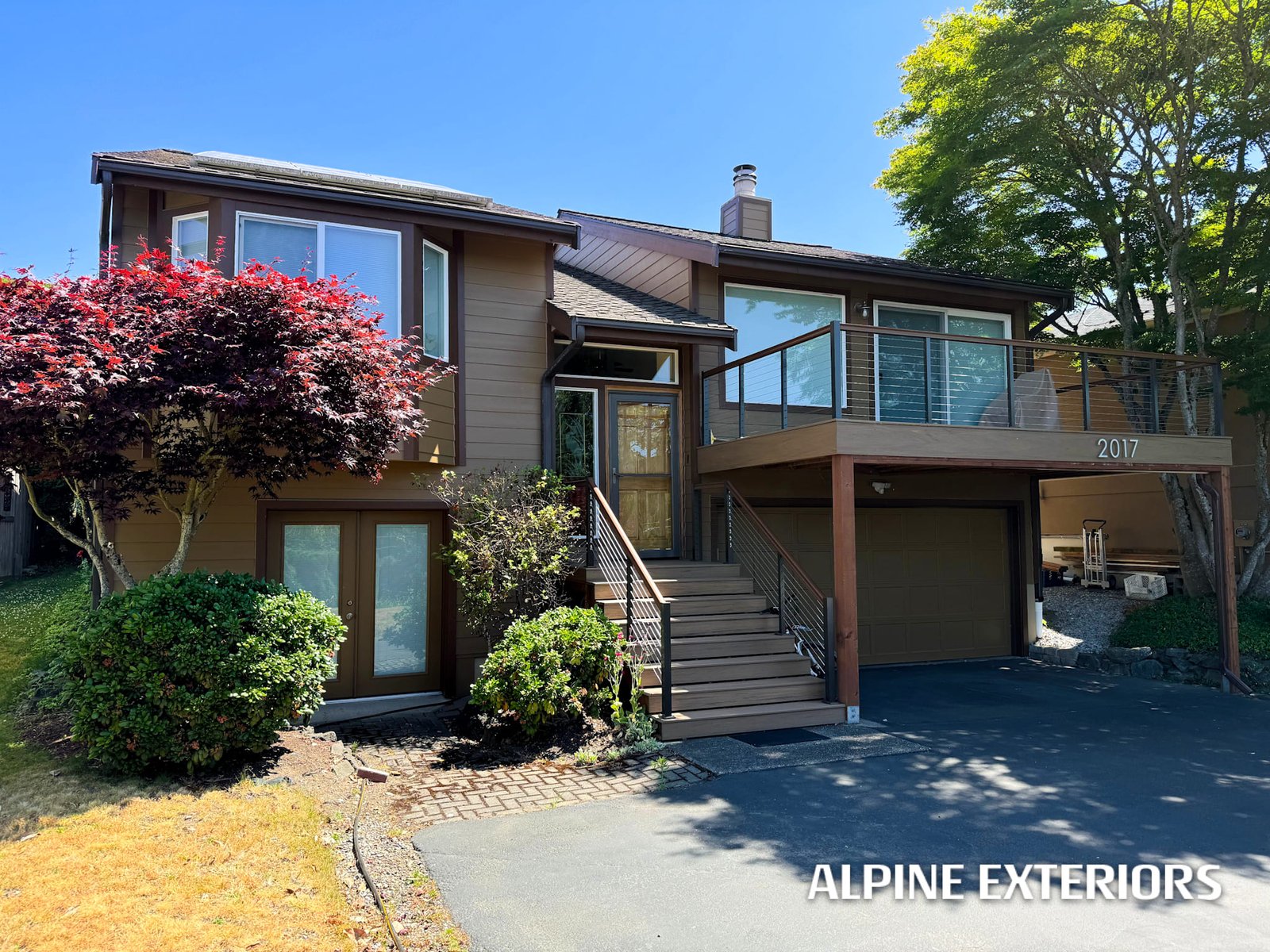
Clinton sits at the south end of Whidbey Island, right where the ferry lands from Mukilteo, and that location shapes almost everything about how a house here holds up to weather. Homes along the bluffs and waterfront get a steady dose of salt-laden air off Saratoga Passage and Possession Sound, while properties tucked back into the fir and cedar stands deal with heavy shade, dropped needles, and moss that spreads onto roofs and into gutters faster than most homeowners expect. Add in the wet, wind-driven winter storms that roll through Island County, and you have a short list of reasons why gutters here work harder than gutters in drier parts of the country. If you're pricing out gutter installation or replacement in Clinton, this guide walks through what actually drives the cost, what a fair quote should contain, and how to compare bids without getting stuck comparing apples to oranges.
Most single-family homes in the Clinton area fall into a wide cost band for new seamless gutters, and the spread exists for good reason: roof size, roofline complexity, gutter size, material choice, and accessibility can each push a project toward the low end or the high end of that range. A straightforward single-story home with a simple gable roof and easy ground access will land well below a two-story home with multiple roof planes, dormers, and gutters that run thirty feet in the air over a slope. Homeowners on Whidbey Island should also expect labor and material costs to run somewhat higher than in denser mainland markets, partly because of ferry-dependent logistics for materials and crews, and partly because more homes here have longer, more complicated gutter runs tied to larger lots and wooded settings.
| Cost Factor | Typical Low End | Typical High End | Why It Matters |
|---|---|---|---|
| Standard 5" seamless aluminum gutters | Lower per-foot cost | Moderate per-foot cost | Baseline material for most Clinton homes; good balance of cost and durability in wet climates |
| Oversized 6" gutters | Moderate per-foot cost | Higher per-foot cost | Handles the heavier winter rain volume off larger or steeper roof planes better than 5" runs |
| Downspouts and extensions | Modest add-on per spout | Higher add-on per spout | More spouts are often needed on multi-plane roofs to keep water moving fast enough in heavy rain |
| Gutter guards or leaf protection | Moderate add-on | Significant add-on | Worth weighing seriously under conifers, where needle and moss buildup is a recurring problem |
| Copper or heavier-gauge metal | Substantially higher | Highest tier | Longer lifespan and strong resistance to salt air, at a meaningfully higher upfront cost |
| Roof height, pitch, and access | Modest premium | Steep premium | Two-story sections, steep pitches, or limited ground access all add labor time and equipment cost |
| Fascia repair or replacement | Per-section add-on | Can add substantially if extensive | Common where old gutters have overflowed for years and softened the wood behind them |
Beyond the base material and size, a handful of Clinton-specific conditions tend to shift a quote more than homeowners expect. The first is moss and organic debris. Whidbey Island's tree cover means many roofs, especially north-facing slopes and anything shaded by mature fir or cedar, accumulate moss and needle litter that clogs gutters faster than an open, sun-exposed roof would. That doesn't necessarily raise the base installation cost, but it often makes gutter guards or a wider gutter profile a more worthwhile investment than they'd be elsewhere.
The second factor is wind exposure. Properties closer to the water, or anywhere with a clear run for wind off the Strait or Saratoga Passage, need gutters and hangers fastened more aggressively than a sheltered inland lot would require. Undersized or thin fastening in a windy spot is one of the more common reasons gutters pull away from fascia boards within a few years, so a contractor who accounts for wind exposure may spec heavier hangers spaced closer together, which adds modest material and labor cost but pays off in longevity.
Salt air is the third consideration, particularly for homes closer to the shoreline. Standard aluminum gutters hold up reasonably well, but fasteners, screws, and any exposed steel components corrode faster in salt-influenced air than they would a few miles inland. This is one of the places where spending a bit more on stainless or coated hardware, rather than the cheapest fasteners available, tends to be worth it for waterfront and near-waterfront Clinton properties.
Finally, roof geometry and access matter as much here as anywhere. A simple rectangular roof with good ladder access from the ground costs less to gutter than a home with multiple gables, valleys, and dormers, or one where the crew has to work around steep grades, retaining walls, or dense landscaping that limits ladder placement.
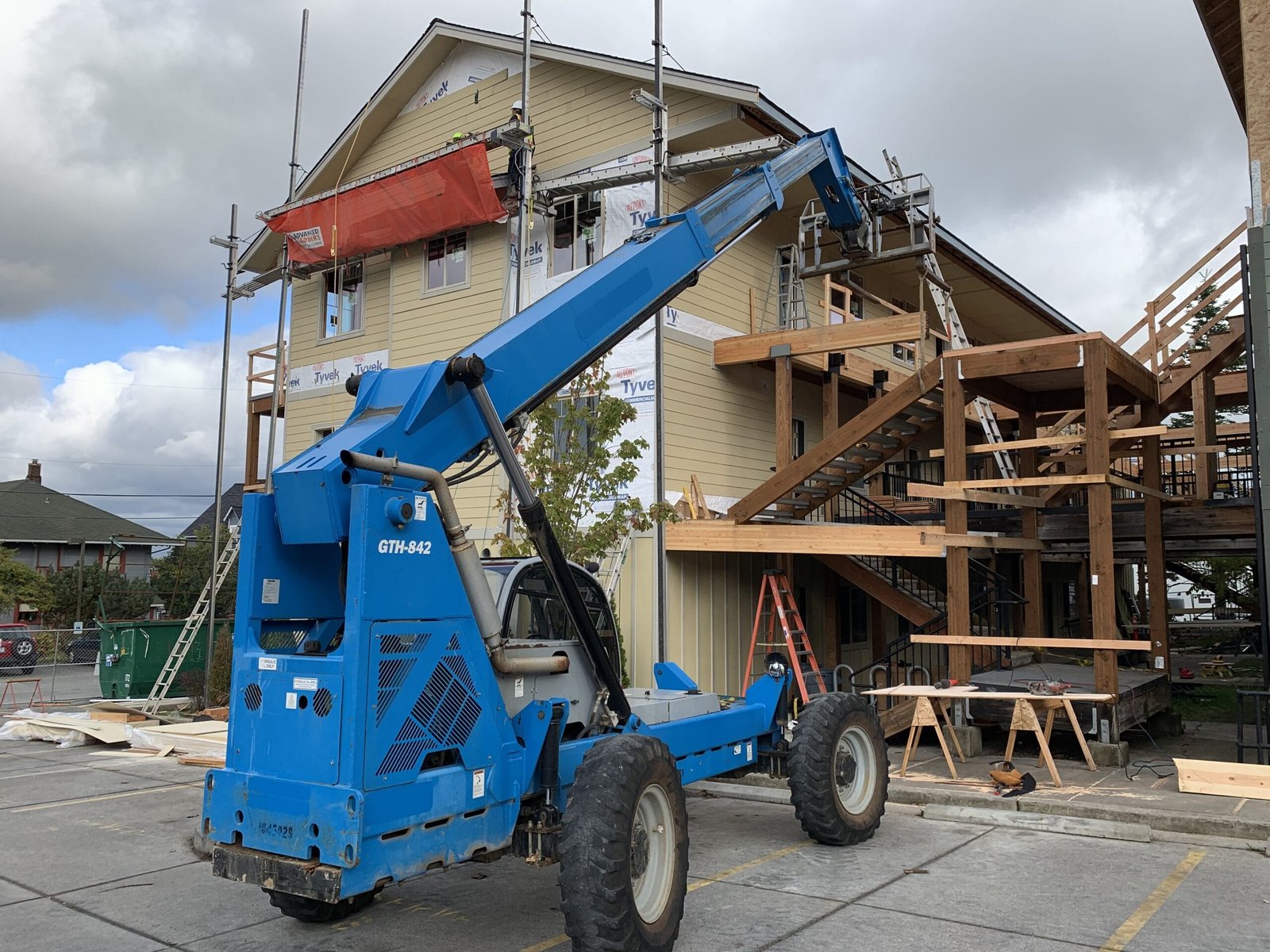
A gutter quote that's actually useful to compare should spell out more than just a bottom-line number. Look for the gutter size (5" versus 6"), the material and gauge, the number and placement of downspouts, whether gutter guards are included or optional, and whether any fascia or trim repair is anticipated or excluded. It should also state how the gutters attach — hidden hangers spaced at a defined interval hold up better in wind than older spike-and-ferrule systems, which tend to work loose over time, especially in exposed or windy spots around Clinton and the rest of Island County. A thorough quote from Alpine Exteriors will also note where downspouts discharge, since Washington's adopted building code and many Island County site conditions call for stormwater to be directed well away from the foundation rather than dumped at the base of the wall — an easy detail to miss on a rushed estimate but an important one on sloped or waterfront lots.
The single biggest mistake homeowners make when comparing gutter bids is looking only at the total price. Two quotes for the same house can differ by a wide margin because one specifies 5" gutters with basic hangers and no guards, while the other specifies 6" gutters, closer hanger spacing, and gutter guards over the shaded sections. Neither is automatically wrong, but they aren't the same project. Ask each contractor for the gutter size, hanger type and spacing, downspout count, and whether fascia condition was inspected, so you're comparing scope rather than just a number. It's also worth asking how each bidder plans to handle any existing rot or soft fascia discovered during removal of the old gutters — a vague answer here often turns into a surprise change order later. Finally, confirm licensing. Alpine Exteriors holds Washington contractor license ALPINI751OW, and any contractor working on your home should be able to provide their own active WA license number without hesitation.
Gutter replacement is rarely covered by homeowners insurance unless the damage stems from a specific covered event, such as wind or impact damage during a storm, rather than ordinary wear, moss buildup, or age-related sagging. If a windstorm off the Strait has visibly torn gutters loose or a fallen limb has damaged a run, it's reasonable to ask your insurer whether the repair falls under storm damage coverage, but routine replacement due to age or clogging typically falls to the homeowner. Many contractors, including Alpine Exteriors, can discuss financing options for larger exterior projects that bundle gutters with roofing, siding, or window work, which can make sense if you're already planning other exterior upgrades and want to spread the cost rather than paying for each project separately.
Most single-story homes with a straightforward roofline can be completed in a single day, while larger homes with multiple roof planes, dormers, or extensive fascia repair may take longer. Weather can also affect scheduling, since seamless aluminum gutters are typically fabricated on-site and installation is easier to do accurately in dry conditions.
Guards aren't mandatory, but on shaded, tree-heavy lots common around Clinton, they can meaningfully cut down on the moss, needle, and leaf buildup that leads to overflow and ice-related backups during cold snaps. Whether they're worth the added cost depends on how much tree cover shades your roof and how often you're willing to clean gutters manually without them.
Standard 5" gutters handle typical roof runoff fine on most homes, but larger roof areas, steep pitches, or roofs that funnel a lot of water into a single run often benefit from 6" gutters, which move a noticeably higher volume of water before overflowing during heavy winter storms.
This is usually a sign of older spike-and-ferrule fasteners loosening over time, sometimes accelerated by wind exposure or the added weight of trapped moss and debris. Modern hidden-hanger systems, spaced appropriately for the site's wind exposure, generally hold up better long-term than the fastening methods used on many older homes.
If your gutters are overflowing during winter storms, pulling away from the fascia, or simply original to a home that's due for an upgrade, it's worth getting a written estimate that spells out size, material, hanger type, and downspout placement before you commit. Alpine Exteriors serves Clinton and the rest of Island County alongside its work throughout Skagit and Whatcom counties, and can walk your property, account for its specific wind and tree exposure, and put together a quote that's easy to compare against any other bid you collect.



