
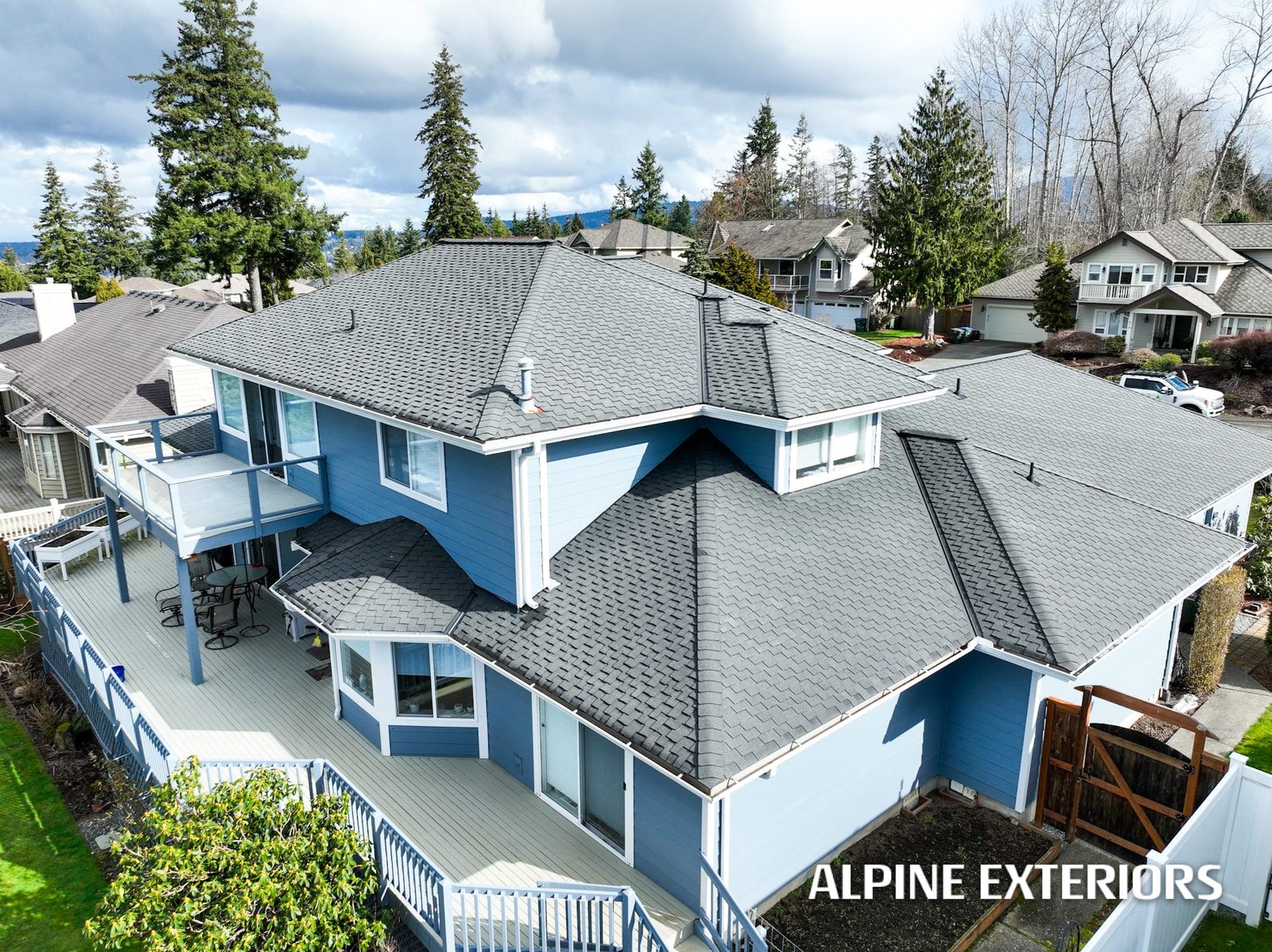
La Conner sits right on the Swinomish Channel, tucked between the Skagit flats and the saltwater of Similk Bay, and that setting shapes what a deck replacement actually costs here. Homeowners researching this project usually start with one question — "what will this run me?" — and the honest answer is a range, not a number, because the condition of the old structure, the material you choose, and how exposed the site is to wind and salt air all move the total. This guide walks through what deck replacement genuinely costs in the La Conner area, what pushes a project toward the high end, and how to read a quote so you're comparing contractors fairly. Alpine Exteriors has built and replaced decks throughout Skagit, Island and Whatcom counties, and the ranges below reflect what that work actually looks like on the ground — not a national average pulled from somewhere else.
Most deck replacement projects in and around La Conner land somewhere between a modest refresh of an existing footprint and a full structural rebuild with upgraded materials. The spread is wide because "deck replacement" can mean swapping worn decking boards on a sound frame, or tearing out a deck down to the posts because the ledger board, joists, or footings failed a closer inspection. Waterfront and near-waterfront properties along the channel also carry considerations inland decks don't: salt-laden air accelerates corrosion on fasteners and hardware, and any work close to the shoreline may trigger a Skagit County Shoreline Master Program review before a building permit is issued. None of that means every La Conner deck is expensive — plenty of straightforward replacements on solid framing come in toward the lower end of the range — but it's why a fair quote for this area looks different from a generic online calculator.
| Cost Factor | Typical Low | Typical High |
|---|---|---|
| Pressure-treated wood decking, like-for-like footprint | Lower end of the range | Moderate |
| Composite or PVC decking (upgrade from wood) | Moderate | Higher end of the range |
| Footing, post, or joist replacement (structural rebuild) | Moderate | Significantly higher |
| Railing system upgrade (cable, glass, or code-compliant rebuild) | Modest add-on | Substantial add-on |
| Multi-level design or stairs added | Moderate increase | Large increase |
| Demolition and haul-away of the existing deck | Small line item | Larger if access is tight or materials are treated lumber requiring special disposal |
| Permit and shoreline/setback review (channel-adjacent lots) | Standard permit fee | Higher if a shoreline exemption or variance is needed |
Treat this table as a map of where the money goes, not a price sheet. A 300-square-foot pressure-treated deck on solid footings in Mount Vernon or Burlington will price very differently from a similarly sized composite deck on a bluff lot near La Conner with corroded ledger flashing and a staircase down to grade. The only way to get an actual number is a site visit — anything quoted sight-unseen should be treated as a rough placeholder, not a bid.
A handful of factors do most of the work in pushing a deck replacement toward the top or bottom of that range.
Material choice. Pressure-treated wood remains the most affordable decking option and holds up reasonably well here as long as it's sealed and maintained, but our wet winters mean untreated cut ends and neglected boards can rot faster than owners expect. Composite and PVC decking cost more up front but shed water without staining or splintering and don't need annual sealing — a real advantage given how many rainy months Skagit County gets each year. Cedar sits in between on price and offers a warmer look, but it's softer and needs more upkeep in a marine climate.
Structural condition underneath. This is the single biggest wildcard. Decks built decades ago, or built without engineered footings, often need post and joist work once the old decking comes off. Ledger board attachment to the house is a common failure point — if the flashing has been letting water into the rim joist for years, that repair has to happen before new decking goes down, and it's not optional. A deck that looks fine from the top can hide a compromised frame underneath, which is exactly why estimates change once demo starts.
Wind and site exposure. Homes out on the flats between Mount Vernon and La Conner, and waterfront lots along the channel and Similk Bay, see steadier wind than more sheltered inland sites. That doesn't call for hurricane-rated hardware — this isn't a hurricane zone — but it does mean railing posts, joist hangers, and ledger connections should be sized and fastened to hold up under sustained coastal wind rather than the bare code minimum, which is worth asking your contractor about directly.
Salt air and corrosion. Properties close to the water benefit from stainless or heavily coated fasteners and hardware rather than standard galvanized hardware, which can start showing rust within a few years this close to saltwater. It costs more up front and saves a re-do down the road.
Railings, stairs, and layout complexity. Multi-level decks, added stairs, and upgraded railing systems (cable rail and glass panel railings are increasingly requested for the channel views) all add labor and material cost beyond a simple flat rebuild. Guardrail height and baluster spacing are set by the Washington State Building Code, and any replacement deck has to meet current code even if the deck it's replacing predates those requirements — that's a legitimate cost driver, not an upsell.
Permitting and shoreline review. Skagit County requires a building permit for most deck replacement work, and lots near the Swinomish Channel or Similk Bay shoreline may fall under additional shoreline setback rules. Your contractor should know whether your specific parcel is affected and build that timeline and cost into the quote rather than surprising you mid-project.
A complete, comparable deck replacement quote should spell out, at minimum: demolition and disposal of the existing structure (including how treated lumber is hauled away); the scope of structural work, meaning which footings, posts, and joists are being inspected, repaired, or replaced, and what happens if hidden rot is found once demo starts; the decking material by brand and grade, not just "composite" or "wood"; the railing system, including baluster spacing and height called out to Washington State Building Code requirements; fastener and hardware specifications, especially for waterfront or near-waterfront properties where corrosion resistance matters; permit costs and who's pulling the permit; and a realistic project timeline that accounts for our rainy-season scheduling. If a quote is missing several of these, ask for them before signing — vague scope is the most common source of mid-project cost surprises.
The cheapest number on paper isn't always the better deal. When you're lining up bids, compare the actual decking material and grade specified, not just the total price — a composite quote and a pressure-treated quote will never be apples to apples. Ask each contractor to walk you through what they found (or expect to find) in the substructure, since a bid that assumes no repairs needed can balloon once work begins if that assumption was wrong. Confirm licensing — Alpine Exteriors is licensed in Washington under contractor license ALPINI751OW, and any contractor working on your home should be able to give you their license number without hesitation. Ask what warranty covers labor versus material, and for how long. And be wary of a bid that comes in dramatically lower than the others with no site visit behind it; it usually means either the scope is thinner than the others or the difference shows up as a change order later.
Deck replacement is generally treated as a home improvement expense rather than an insurance claim, unless the damage triggering the replacement came from a specific covered event — a fallen tree limb during a windstorm, for example, rather than ordinary age and weathering. If a storm or wind event damaged your deck, document it with photos before any demo work starts and check with your homeowner's insurance agent about whether it's covered before assuming it isn't. For projects that are simply wearing out from age, sun, and Skagit County's wet winters, most homeowners pay out of pocket or use a financing option — many contractors, including Alpine Exteriors, can discuss financing arrangements for larger projects, so it's worth asking during your estimate rather than after.
A straightforward decking-only replacement on sound framing can often wrap up in under a week of active work, while a full structural rebuild with new footings, framing, and railings can take several weeks. Weather is the biggest variable — Skagit County's rainy stretches, particularly late fall through early spring, can push back both permitting timelines and outdoor work days, so your contractor should build some buffer into the schedule rather than promising an exact finish date.
In most cases, yes — Skagit County requires a building permit for deck replacement, particularly when structural elements like footings, posts, or ledger attachment are involved. Properties near the Swinomish Channel or other shoreline areas may also fall under additional shoreline review. A reputable contractor will handle or guide you through this process rather than skipping it, since unpermitted work can create problems when you eventually sell the home.
For many homeowners here, yes — composite and PVC decking resist the staining, splintering, and rot that pressure-treated wood is prone to after repeated wet winters, and they don't need annual sealing. The tradeoff is a higher upfront cost and a different look and feel underfoot than natural wood. If long-term low maintenance matters more to you than upfront price or the traditional wood look, composite generally pays for itself in reduced upkeep over the years.
It depends entirely on their condition, which usually can't be fully assessed until the old decking comes off. Footings poured without proper depth or reinforcement, or posts that have been sitting in wet soil for years, often need replacement to meet current code and hold up going forward. This is one of the most common reasons a deck replacement estimate changes once demolition begins, so ask your contractor how they handle that scenario before work starts.
Cost ranges are a useful starting point, but the only way to know what your deck replacement will actually cost is to have someone look at the structure underneath the boards. Alpine Exteriors serves La Conner and the rest of Skagit, Island, and Whatcom counties, from Mount Vernon and Anacortes to Stanwood and Camano Island, and can walk your property, check the framing, and put together a written scope and quote based on what's actually there — not a guess from a form. If you're weighing a deck replacement in La Conner, reach out to Alpine Exteriors for an on-site estimate before you budget around a number you found somewhere else.