
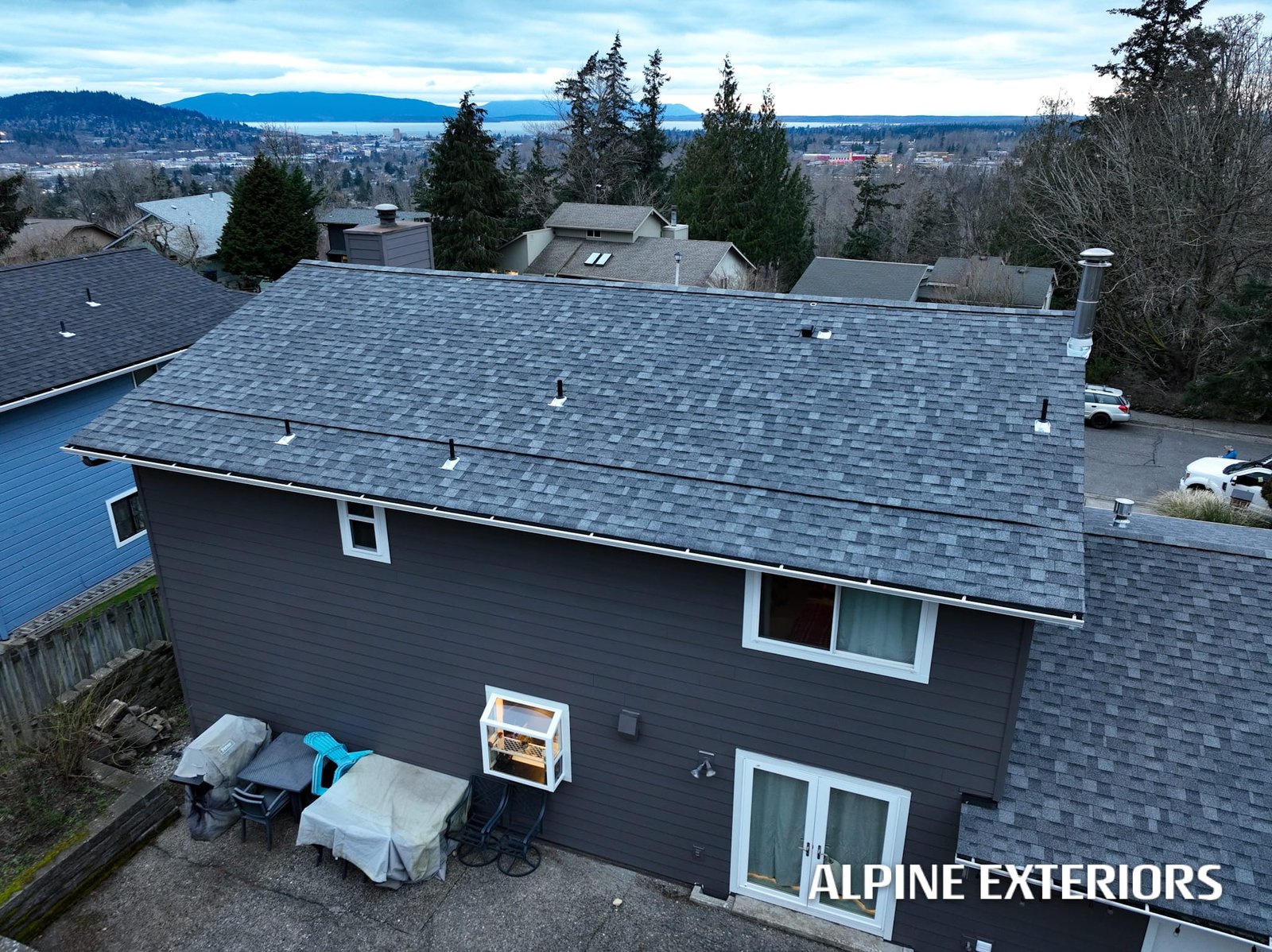
Homeowners from Mount Vernon to Anacortes ask the same first question before anything else: what is this actually going to cost? Composition (asphalt) shingle roofing is still the most common re-roof material in Skagit, Island and Whatcom counties, and for good reason — it holds up reasonably well against our wet winters, it's available in algae-resistant grades that matter under the shaded, moss-prone tree cover common in this region, and it's the material most local crews, including Alpine Exteriors, install week in and week out. Below are realistic price ranges for the region, the factors that move a bid up or down, and what you should expect to see in a legitimate written quote.
For a typical single-family home in the Mount Vernon, Burlington, Sedro-Woolley or Anacortes area, a full composition roof replacement generally lands somewhere in the low five figures to the high five figures, with most straightforward tear-off-and-replace jobs on a standard-size roof falling in the middle of that band. Steeper, larger, or more complicated roofs — common on the bluff-view homes around Camano Island and the waterfront lots near La Conner — push toward the higher end. Smaller homes with simple gable rooflines in Burlington or Stanwood tend to land toward the lower end. These are broad regional ranges, not a quote; every roof is priced after a physical inspection.
| Cost Factor | Typical Low-End Impact | Typical High-End Impact |
|---|---|---|
| Roof size and number of stories | Small, single-story footprint | Large footprint or multi-story roof needing extra staging and safety setup |
| Roof pitch and walkability | Low-slope, easy-to-walk roof planes | Steep pitch requiring harnesses, roof jacks and slower crew pace |
| Layers and tear-off scope | Single existing layer, straightforward strip | Multiple old layers or hidden layers found once removal starts |
| Decking condition | Sound plywood or OSB throughout | Rot or delamination from long-term moisture intrusion, requiring sheet replacement |
| Underlayment and ventilation | Standard felt or synthetic underlayment, existing venting adequate | Upgraded ice-and-water-shield coverage plus added ridge/soffit venting to meet current code |
| Shingle grade | Standard three-tab or economy architectural shingle | Heavier architectural shingle with algae-resistant granules for shaded, moss-prone roofs |
| Flashing, valleys, chimneys, skylights | Few penetrations, simple valleys | Multiple chimneys, skylights, dormers or complex valley work |
| Access and site conditions | Easy driveway access, room for a dumpster and material staging | Tight lot, tree cover requiring trimming, or waterfront access constraints |
| Permits and disposal | Standard local permit and one dumpster load | Additional disposal trips or permit conditions tied to shoreline or critical-area review |
A handful of regional realities show up in nearly every Skagit-area roofing bid, and understanding them ahead of time makes the eventual quote much less of a surprise. Our winters bring long stretches of steady rain rather than sudden downpours, which means the underlayment system and flashing detail work matter as much as the shingle itself — a roof that leaks here usually fails at a valley, chimney or vent boot, not in the open field of shingles. Contractors serving Mount Vernon, La Conner and Sedro-Woolley routinely price in extra ice-and-water-shield coverage at eaves and valleys specifically because of this rain pattern, and that coverage is not optional corner-cutting; it is the difference between a roof that stays dry for its full service life and one that develops slow leaks within a few winters.
Moss is the other constant. Homes shaded by Douglas fir and cedar cover — common throughout the Skagit Valley and up toward Sedro-Woolley and Bellingham — grow moss on north-facing slopes faster than open, sun-exposed roofs. Algae-resistant shingles cost more up front but reduce the frequency of moss treatment and premature granule loss, so a quote that specifies AR-rated shingles for a shaded lot isn't padding the price for no reason.
Wind is a factor too, though a different kind than homeowners moving here from elsewhere might expect. There are no hurricanes to plan for, but the funneling wind off the Skagit flats and the gusts that come down the Strait of Juan de Fuca toward Anacortes and the islands are real enough that shingle wind rating and proper nailing pattern matter, especially on exposed, elevated, or waterfront lots. On Camano Island and the Fidalgo/Anacortes shoreline, salt-laden air can accelerate wear on unprotected metal flashing and fasteners over time, which is why quality contractors spec corrosion-resistant flashing and fasteners for those properties rather than the cheapest available stock. Up toward the foothills near Sedro-Woolley, occasional ice and light snow accumulation add a little more weight-and-ice-dam consideration to eave detailing than you'd plan for on a low-elevation lot in Burlington.
Finally, the Washington State Energy Code affects re-roof pricing more than most homeowners expect. Depending on the scope of work and whether attic access or insulation is disturbed during the project, code-required ventilation ratios or insulation upgrades can add scope that wasn't on the original mental checklist. A contractor who flags this during the estimate isn't inflating the bid — they're accounting for an inspection requirement that a lowball bidder may simply be ignoring.
A complete composition roofing quote should specify the exact shingle brand, line and color, not just "architectural shingle." It should state whether tear-off includes disposal of existing layers, what underlayment system is being used and where ice-and-water-shield will be installed, what ventilation changes (if any) are planned, and whether flashing at chimneys, skylights, and valleys is being replaced or reused. It should also spell out the manufacturer's warranty terms as well as the contractor's own workmanship warranty, list who is pulling the permit, and note an estimated timeline with a caveat for weather delays — a realistic caveat given how often Skagit County re-roofs get pushed a day or two by rain. If a quote is missing several of these details, it's worth asking for them in writing before comparing price alone.
The temptation is to line up total price and pick the lowest number, but that comparison only works if the scope behind each number is identical. Two bids for the "same roof" can differ by thousands of dollars because one includes full decking replacement contingency, upgraded underlayment, and code-compliant ventilation, while the other assumes best-case conditions and quietly excludes anything found once tear-off starts. Ask each contractor to itemize labor, materials, permit, disposal, and any allowance for hidden decking repair, then compare those line items side by side rather than just the bottom line. Confirm each bidder is a licensed, bonded and insured Washington contractor — Alpine Exteriors, for example, carries WA contractor license ALPINI751OW, and any legitimate roofing company operating in Skagit, Island or Whatcom County should be able to provide their license number without hesitation. It's also reasonable to ask how a contractor handles decking rot discovered mid-project, since that's the single most common reason a final invoice differs from the original estimate.
Many roofing contractors, including Alpine Exteriors, offer financing options for homeowners who'd rather spread a re-roof cost over time instead of paying the full amount up front; ask what terms and lenders are available during your estimate, since programs and rates change. On the insurance side, a roof replacement prompted by a specific storm event, fallen limb, or other sudden damage may be covered under a homeowner's policy, while a re-roof driven by ordinary age and wear typically is not. If you suspect storm damage — a wind event off the Strait or a heavy limb drop during a winter storm, for instance — document the damage with photos and get an inspection before filing a claim, and keep in mind that insurers often want an independent contractor assessment separate from their own adjuster's estimate. Never sign a contract that requires you to file an insurance claim as a condition of the work; that's a red flag regardless of who's asking.
Yes, with the right underlayment and shingle grade. Composition shingles perform well under Skagit County's steady winter rain when the underlayment system, valley flashing and eave protection are installed correctly, and algae-resistant shingle lines specifically address the moss growth that shaded, tree-covered lots see more of than open, sun-exposed properties.
Almost always it comes down to scope, not just price. One bid may include full valley and flashing replacement, upgraded ice-and-water-shield, and a contingency allowance for decking repair, while a cheaper bid assumes none of that will be needed. Ask for an itemized breakdown from each contractor so you're comparing the same actual work.
Depending on the scope of the project, re-roofing work can bring in requirements under the Washington State Energy Code related to attic ventilation and insulation, particularly if the work disturbs the attic or existing ventilation path. A contractor who raises this during the estimate is accounting for a real inspection point, not padding the bid.
Most single-family composition re-roofs in Skagit County take a few days of active work, but the region's frequent winter rain and the occasional wind event off the Skagit flats or the Strait can add delay days beyond that, since shingle installation and underlayment work generally need to happen in dry conditions.
If you're weighing a composition roof replacement anywhere from Mount Vernon or Burlington out to Anacortes, La Conner, Stanwood, Camano Island or Bellingham, the most useful next step is a physical inspection and a fully itemized written quote — not a phone-estimate guess. Alpine Exteriors serves homeowners throughout Skagit, Island and Whatcom counties and can walk your roof, note the specific conditions affecting your home, and put together a scope-and-cost breakdown you can actually compare against other bids.