
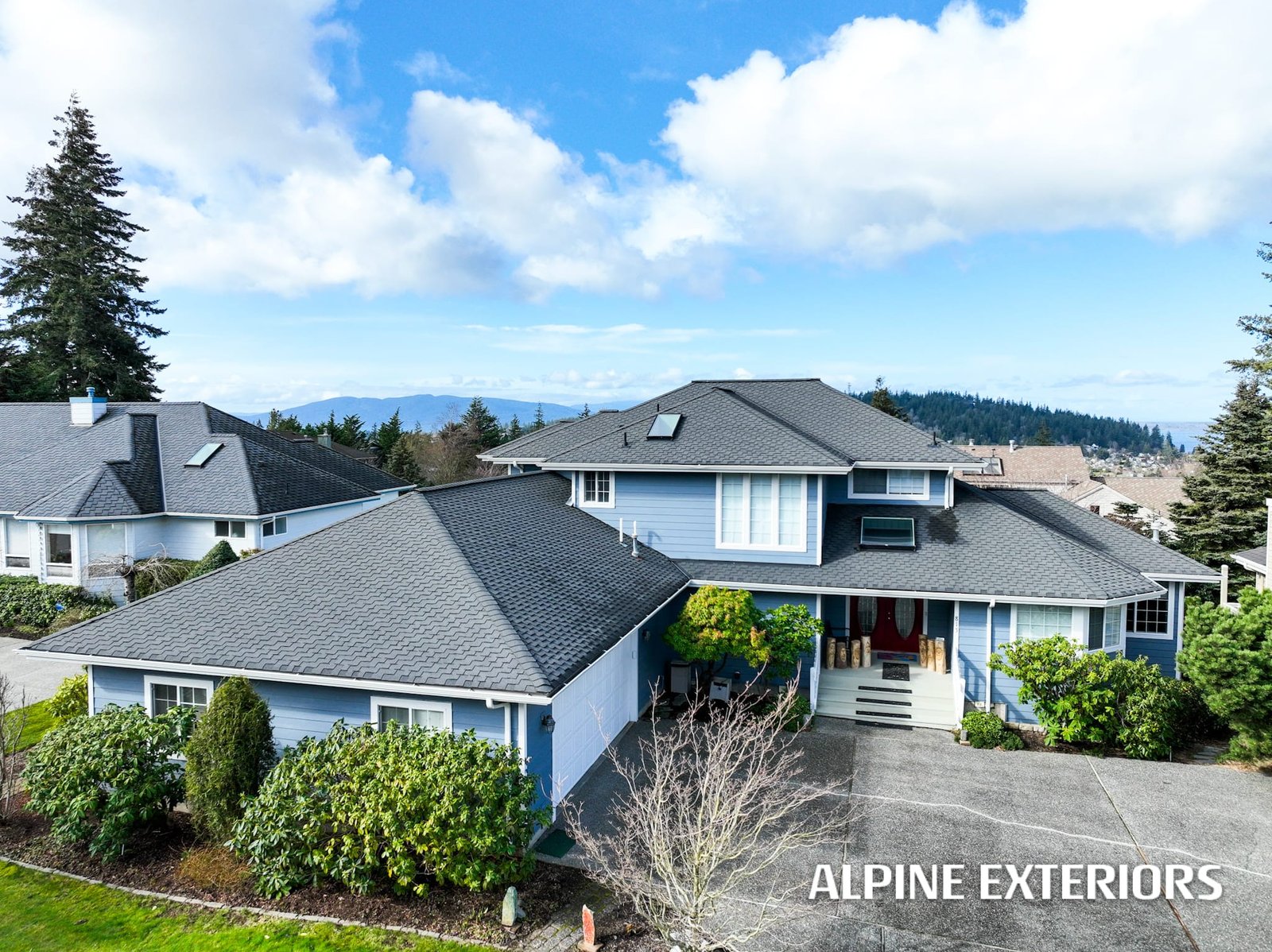
If you're comparing bids for a new architectural shingle roof in Mount Vernon, Anacortes, Burlington, Sedro-Woolley, La Conner, Stanwood, Camano Island or Bellingham, the biggest source of confusion isn't usually the shingle brand — it's why one quote comes in so far from another for what looks like the same job. Architectural (also called laminate or dimensional) shingles are the most common upgrade homeowners in this part of Washington choose over basic three-tab shingles, mainly because they hold up better to the region's wind and rain and they last longer before the moss and lichen that thrive under our tree cover start working their way under the tabs. This page walks through realistic cost ranges, the site conditions that push a bid up or down, what should be spelled out in writing, and how to read two bids side by side without getting lost in the fine print. Alpine Exteriors put this together from years of estimating roofs across Skagit, Island and Whatcom counties — treat the numbers as a planning range, not a quote, since every roof is different once someone is actually standing on it.
Architectural shingle roof replacement costs are usually quoted per square (100 square feet of roof area), and in Skagit, Island and Whatcom counties that per-square number moves quite a bit depending on the roof's pitch, how many layers of old roofing have to come off, and how easy the house is to access. A straightforward single-story ranch with a simple gable roof and one layer of old shingles will price out very differently from a steep, cut-up roof on a bluff-view home in Anacortes with multiple valleys, skylights and a detached garage to match. Rather than quote a single number, it's more honest to think in terms of a low-to-high range and understand which factors on your specific house push you toward one end or the other.
| Cost Factor | Tends Toward the Low End | Tends Toward the High End |
|---|---|---|
| Roof size and shape | Simple gable, few valleys or hips | Multiple valleys, dormers, steep cuts, complex cut-up roof |
| Pitch and access | Walkable low-to-moderate slope, easy ground access | Steep pitch requiring harnesses/staging, limited driveway or crane access |
| Tear-off scope | Single layer of existing shingles, exposed decking in good shape | Multiple old layers, rotten or delaminated decking needing replacement |
| Shingle line and warranty tier | Standard-grade architectural shingle, manufacturer's basic warranty | High-wind-rated or premium designer shingle line, extended system warranty |
| Underlayment and ice/water protection | Standard synthetic underlayment on most of the field | Full ice-and-water shield at eaves, valleys and around penetrations for extra moisture protection |
| Ventilation and code upgrades | Existing ventilation already meets current code | Ridge vent, baffles or insulation upgrades needed to satisfy the Washington State Energy Code |
| Flashing, skylights and penetrations | Few penetrations, flashing in serviceable condition | Multiple skylights, chimneys, solar mounts or plumbing stacks needing new flashing |
| Site conditions | Flat staging area, easy dumpster placement | Waterfront or sloped lots, HOA restrictions, tight island-property access (La Conner, Camano Island) |
Because so many of these factors compound each other — a steep, multi-valley roof with rotten decking and poor access will land well above a simple one-story reroof — the honest answer to "what does it cost" is always a range, and the only way to narrow that range for your specific house is an on-roof inspection.
A few conditions come up again and again in this region and are worth understanding before you get a bid, because they're the things that turn an estimate into a surprise change order if they're missed during the walkthrough.
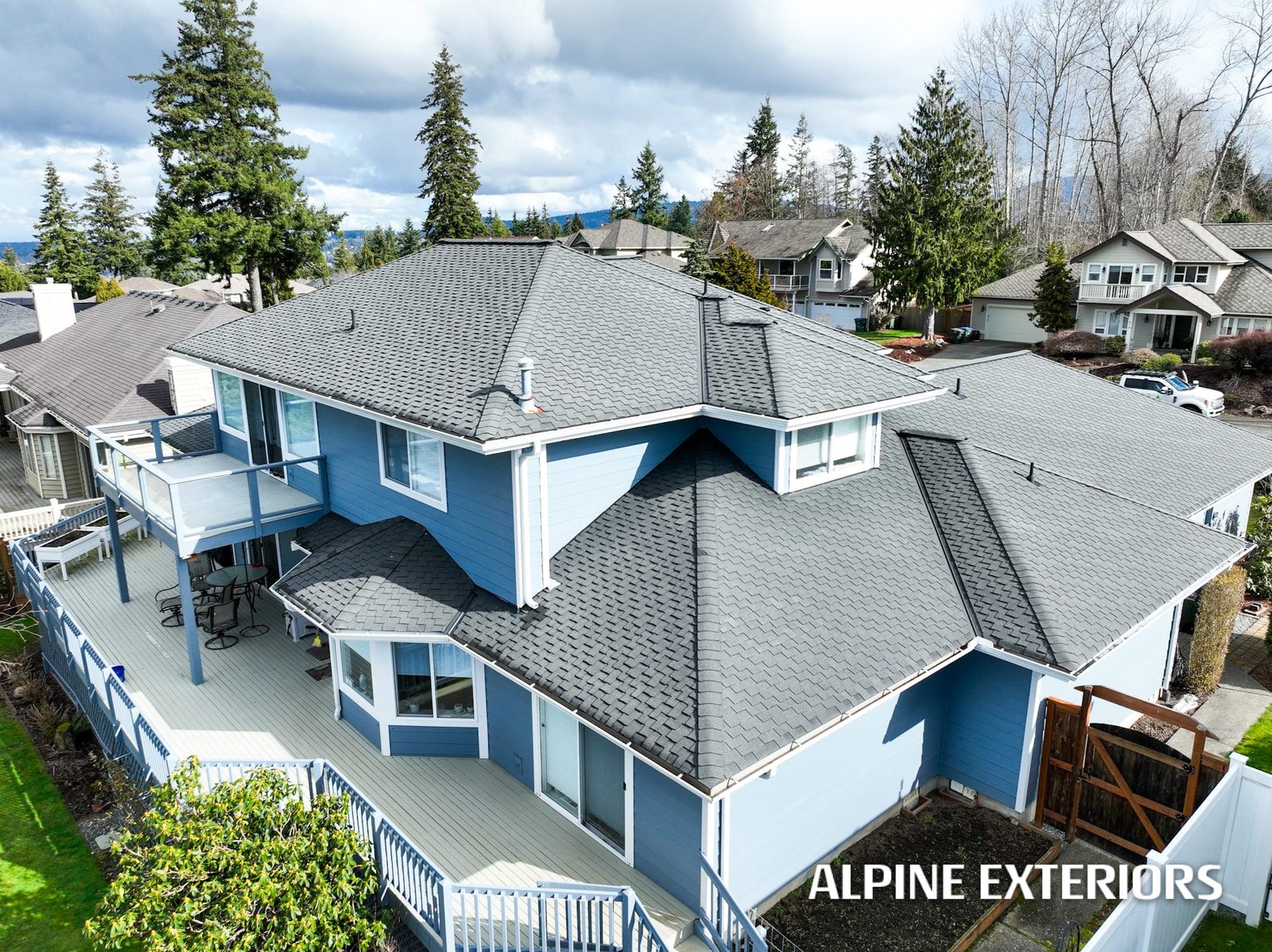
A complete architectural shingle roofing quote should be specific enough that you could hand it to a different contractor and they'd understand exactly what was priced. At minimum, look for these line items spelled out rather than lumped into a single "roof replacement" number:
Alpine Exteriors writes quotes this way on purpose — a homeowner comparing bids should never have to guess what's actually being installed. If a bid you're holding doesn't specify the shingle line, the underlayment, or the ventilation plan, it's worth asking for those details before signing anything.
The most common mistake in comparing roofing bids is treating the bottom-line number as the whole comparison. Two bids for "the same roof" can differ by a meaningful margin because one includes full ice-and-water shield in the valleys and one doesn't, or because one is pricing a 30-year architectural shingle and the other a lighter-weight product marketed under a similar name. Before comparing price, line up each bid's scope of work item by item: same tear-off depth, same underlayment coverage, same flashing scope, same shingle product (not just "architectural shingle," but the actual manufacturer and line). Once the scope is genuinely apples-to-apples, price differences usually come down to labor crew size, overhead, or how much contingency the contractor built in for potential deck repair. Ask each bidder directly how they handle unexpected rotten decking discovered mid-tear-off — a per-sheet replacement rate should already be in writing, not negotiated after the fact when your roof is open to the weather.
It's also reasonable to ask for local references specific to your area — a crew experienced with steep coastal roofs in Anacortes may not be the same crew best suited to a straightforward Burlington ranch, and vice versa. A contractor who knows the difference between a job on the Skagit flats and a job on a Camano Island bluff will price the wind and access considerations more accurately than one working from a generic template.
Most roofing contractors in this region, including Alpine Exteriors, can walk homeowners through financing options for a reroof, since the full cost is often more than most households want to pay out of pocket in one payment. Terms, rates and qualification vary by lender, so ask your contractor what financing partners they work with and get the actual terms in writing rather than relying on a verbal estimate of monthly payments.
On the insurance side, roof replacements in this region are sometimes triggered by wind or storm damage rather than simple age, in which case your homeowner's insurance may cover part of the cost after a claim and inspection. If you're filing a claim, get a written damage assessment from your contractor before the adjuster visit, and keep photos of any wind or moss-related damage. Routine wear, moss growth, and age-related deterioration are typically not covered the way sudden storm damage is, so it's worth understanding which category your situation falls into before assuming insurance will offset the cost. Your contractor can usually tell you, based on the damage pattern, whether it's worth pursuing a claim at all.
Architectural shingles are generally rated for a longer service life than basic three-tab shingles, but actual lifespan in Skagit, Island and Whatcom counties depends heavily on shade, moss exposure and how well the roof was ventilated when installed. A roof on an open, well-ventilated site will typically outlast one on a heavily shaded lot where moss and moisture are a constant issue, so regular moss treatment and gutter maintenance make a real difference here.
Most jurisdictions in this region require a building permit for a full roof replacement, and the requirements can vary between Skagit County, Island County, Whatcom County and the individual cities within them. A licensed contractor should pull the permit as part of the job and know the specific requirements for your address, so it's worth confirming permit handling is included in your quote rather than left to you.
Installing a new layer over existing shingles is sometimes allowed by code and can lower upfront cost by skipping tear-off labor and disposal, but it's usually not the best long-term choice here because it hides the condition of the decking underneath and can trap moisture, which is a bigger risk in a climate with this much sustained winter rain. Most contractors will recommend a full tear-off so the decking can actually be inspected and any moss- or moisture-related damage addressed before new shingles go down.
The biggest driver is usually scope, not markup — one bid may include full ice-and-water shield at valleys and eaves, upgraded flashing, and a higher wind-rated shingle, while another prices a bare-minimum installation. Crew experience, overhead, and how each contractor handles unexpected decking repair also factor in. Lining up the exact materials and scope of each bid side by side is the only reliable way to understand why the numbers differ.
If you're planning an architectural shingle roof replacement anywhere in Skagit, Island or Whatcom County — from Mount Vernon and Burlington out to Anacortes, La Conner, Stanwood, Camano Island or Bellingham — the most useful next step is an on-roof inspection rather than a phone estimate, since so much of the final price depends on pitch, access, decking condition and existing ventilation. Alpine Exteriors (WA contractor license ALPINI751OW) provides written, itemized quotes for architectural shingle roofing across the region and can walk through financing options and insurance questions as part of that visit. Reach out to schedule an inspection and get a real range for your specific roof, not a generic estimate.