

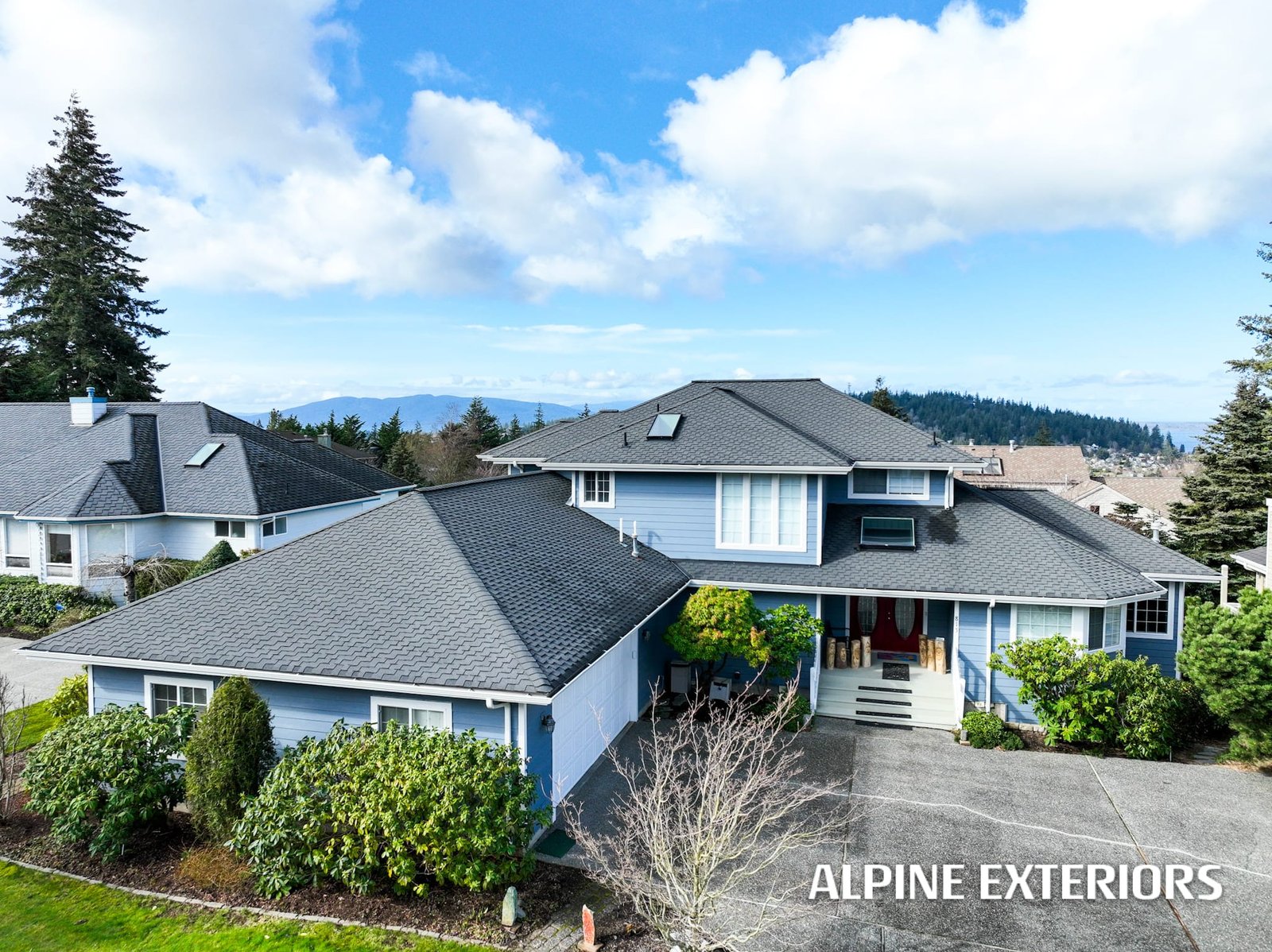
Soffit and fascia are the finishing boards under and along your roof edge, and in this part of Washington they take a steady beating from rain, wind and shade-grown moss long before most homeowners notice. If you're seeing sagging or discolored boards, peeling paint that keeps coming back, or small gaps where birds or wasps get into the attic, it's time to have the soffit and fascia inspected — replacement usually runs a few hundred to a couple thousand dollars per side of the house, depending on material and how much rot has spread.
Fascia is the vertical board that runs along the edge of the roofline, usually the same board your gutters are hung from. Soffit is the horizontal panel underneath the roof overhang, closing the gap between the fascia and the house wall. Together they finish off the roof edge, keep pests and moisture out of the attic, and — critically for this region — carry the ventilation that lets your attic breathe.
Most older homes around Mount Vernon, Burlington and Sedro-Woolley still have solid or thin-slot wood soffit, sometimes original to the house. Wood is workable and looks right on older craftsman and farmhouse-style homes, but it's also the first thing to go once water gets behind the gutter or under a lifted shingle. Once wood fascia starts absorbing moisture, it swells, the paint film cracks, and rot spreads into the rafter tails behind it — which is a bigger and more expensive repair than the soffit and fascia alone.
Aluminum and vinyl soffit and fascia have become the more common replacement choice because they don't rot and don't need repainting, and pre-finished aluminum fascia wrap (sometimes just called "gutter apron" when it's minimal) can be installed directly over sound wood trim in a lot of cases, which keeps costs down. Fiber cement fascia boards are the other option homeowners ask about, mainly for their fire resistance and paint longevity, though they cost more up front and still need periodic caulking and repainting at the seams.
The vent function matters as much as the cosmetic function. Continuous or perforated vinyl and aluminum soffit panels are usually punched with intake vents that pull fresh air into the attic, working with a ridge vent or gable vents to move air across the underside of the roof deck. When soffit gets replaced with solid panel instead of vented panel, or when insulation gets pushed up against the vent openings during an attic project, that airflow gets cut off — and that's when moisture problems that used to stay outside start showing up as sheathing rot or mold inside the attic.
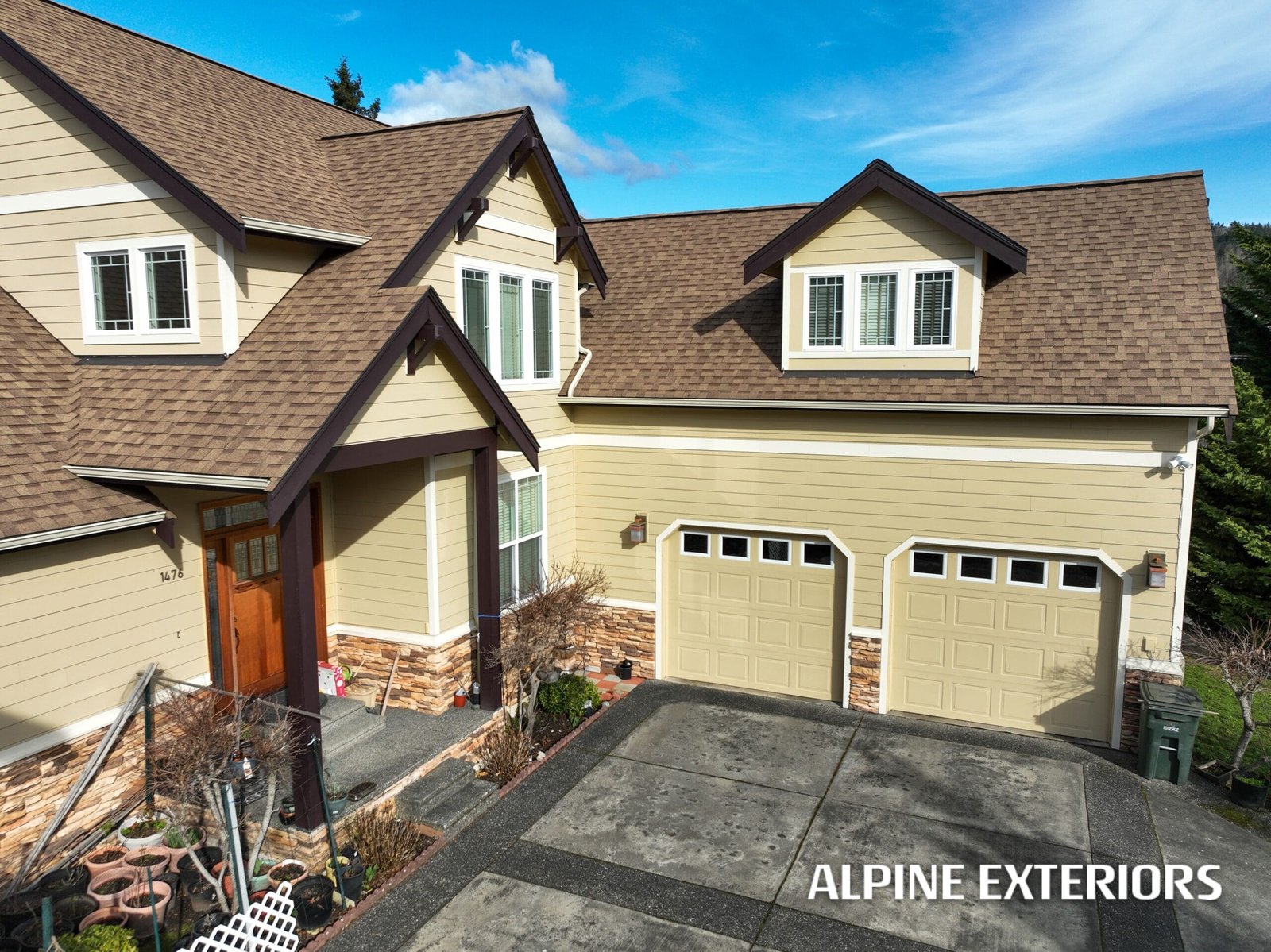
Skagit, Island and Whatcom County weather is hard on soffit and fascia in a few specific ways that don't show up in drier climates. The heavy winter rain that runs from October through March means fascia boards are essentially wet for months at a time whenever a gutter is clogged, pitched wrong, or pulling away from the fascia board — and once wood fascia holds water that long, rot sets in even under paint that still looks fine from the ground.
Moss is a bigger factor here than most homeowners realize until it's pointed out. North-facing roof slopes and anything shaded by fir or cedar trees around Anacortes, La Conner and the wooded lots outside Sedro-Woolley stay damp longer, and moss doesn't just grow on the shingles — it works its way down onto the soffit and into the gutter line, holding moisture against the fascia board and clogging the vent openings in the soffit panel itself.
Wind is a genuine consideration too, particularly the funneling wind that comes off the Skagit flats and the wind off the Strait of Juan de Fuca that hits Anacortes and the west side of Whidbey and Camano Island directly. Older or poorly fastened soffit panels can rattle loose or peel away in a hard blow, and once one panel lifts, the ones next to it are exposed to wind-driven rain from underneath, which is a different failure path than a leaking gutter.
Homes on Camano Island and closer to the water on Whidbey deal with salt air, which accelerates corrosion on cheaper fasteners and thin aluminum trim faster than it does further inland. It's worth asking what grade of fastener and flashing gets used on island jobs specifically, since the difference between a stainless or coated fastener and a standard one shows up years later as rust streaking down the fascia. Up toward the foothills near Sedro-Woolley, occasional snow load and ice can add weight to a gutter that's already pulling on marginal fascia, which is usually when a homeowner notices the board flexing or the gutter spike pulling free.
Washington State Energy Code ventilation requirements are also part of this conversation, since the code sets minimum net free ventilation area for attics relative to floor area, and that ventilation is typically split between soffit intake and ridge or gable exhaust. A soffit replacement that swaps vented panel for solid panel, or that gets installed without matching the existing vent ratio, can put a home out of compliance with the assumptions the original roof and attic insulation were designed around — worth flagging to whoever's doing the work, not just assuming they'll match it.
Start with a look from the ground with binoculars, or from a ladder if you're comfortable, at the fascia line and soffit panels, especially on the north side of the house and anywhere near tree cover. Sagging soffit, dark streaking, soft spots you can press a thumb into, or gaps at the seams are all signs it's past a paint touch-up. Clean or repaired gutters are worth doing at the same time as any soffit or fascia work, since a gutter that's pitched wrong or pulling loose is often what caused the damage in the first place — replacing the fascia without fixing the gutter attachment just restarts the same problem.
Get an actual look at the rafter tails and roof sheathing behind the fascia before agreeing to a price, not just the visible board. Rot that's reached the framing is a different scope of work than swapping trim, and a contractor who only quotes the fascia board without checking what's behind it can leave you with a repair that fails again within a season or two.
Ask specifically what vent ratio the new soffit panel provides and whether it matches or improves on what's there now, particularly if the attic has ever had condensation or mold issues. This is also a reasonable point to ask whether existing attic insulation is blocking the soffit vents — a common problem on older homes that's cheap to fix once it's identified but easy to miss.
Consider material based on where the house sits, not just price. A shaded, tree-covered lot near Bellingham or Sedro-Woolley favors a low-maintenance vinyl or aluminum soffit that won't hold moss the way bare wood eventually does. A waterfront or near-waterfront property on Camano or Whidbey Island is worth spending a little more on corrosion-resistant fasteners and flashing, since the salt air cost shows up later as premature rust rather than at installation. Get a written scope that separates fascia, soffit, gutter work and any rot repair as line items, so you know what you're actually paying for and can compare quotes apples to apples. Alpine Exteriors walks Mount Vernon, Burlington, Stanwood and Camano Island homeowners through that scope before any work starts, specifically because soffit and fascia problems are rarely just about the trim board itself.
Water stains along the top of an exterior wall or dripping near the roof edge often trace back to a failed gutter or rotted fascia rather than the roofing material itself, since the fascia and soffit are what the gutter and lowest course of shingles tie into. A contractor who checks both the roof edge detail and the trim underneath can usually tell you which one actually failed, and it's common for a gutter problem to look like a roof leak until someone gets a ladder on it.
Sometimes — a short section of rotted fascia or a few damaged soffit panels can often be cut out and replaced without redoing the whole roofline, especially if the damage was caught early and the framing behind it is still sound. Once rot has spread along a run of fascia or into multiple rafter tails, though, patch repairs tend to be a short-term fix, and full replacement of that section ends up being the more practical option.
Yes, in the sense that it won't rot, doesn't need repainting, and resists the moss buildup that wood soffit tends to collect in shaded, damp spots. It's not maintenance-free, though — panels can still crack from impact, fasteners can loosen in wind, and the vent openings still need to be checked periodically to make sure they haven't been blocked by debris, moss, or insulation pushed up from inside the attic.
It can, either for better or worse, which is why it's worth confirming before work starts. If the new soffit panel has less vent area than the old one, or if solid panel gets used where vented panel used to be, the attic can end up with less intake airflow than the Washington State Energy Code's ventilation assumptions were based on, which over time can contribute to moisture buildup on the roof sheathing.
If your soffit or fascia is showing rot, sagging, or paint that won't stay put, it's worth getting an honest look before it spreads into the rafters or gutters. Alpine Exteriors serves Mount Vernon, Anacortes, Burlington, Sedro-Woolley, La Conner, Stanwood, Camano Island and Bellingham, and can walk your roofline with you, point out what's driving the damage, and lay out real options and cost ranges before any work begins. Alpine Exteriors holds Washington contractor license ALPINI751OW — reach out for a straightforward inspection of your soffit, fascia and gutter system.



