

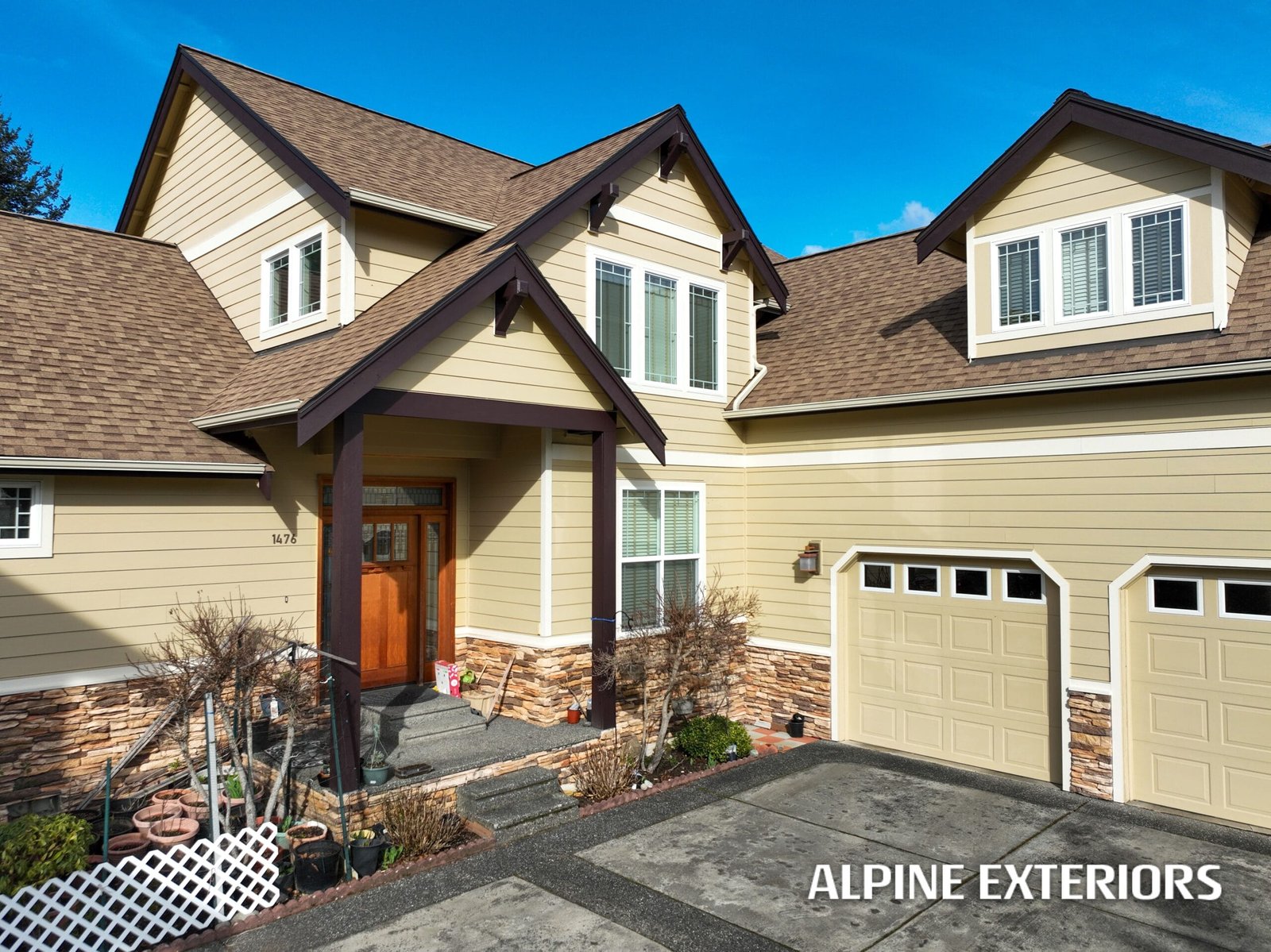
Marysville sits at the southern edge of the same Puget Sound weather system that shapes roofs across Alpine Exteriors' home territory in Skagit, Island, and Whatcom counties, just south of Stanwood and within sight of Port Susan Bay and Tulalip Bay. Roofs here rarely fail because of one dramatic storm. Instead, they wear down from months of steady, saturating rain, damp shade that grows moss faster than most homeowners expect, and gusty marine wind that works shingles loose a little at a time. Most roofs give warning signs before they actually fail, but those signs are easy to miss from the ground or dismiss as cosmetic. This guide walks through what to look for on a Marysville home, what is driving the wear locally, and how to tell a roof that needs attention this season from one that still has a few years left in it.
If several of these apply to your roof at once, or if any of them show up alongside an active leak, treat that as a signal to get someone on the roof soon rather than waiting for the next dry stretch.
Edges lift and turn upward, corners pull away from the roof deck, or you see diagonal cracks that look like a fish mouth when the light hits them right. In Marysville this comes from repeated wet-to-dry cycling: a long damp season from fall through spring, followed by direct summer sun with little transition between the two. On south- and west-facing slopes, that sun exposure dries out the asphalt oils faster than the shingle was built for. On shaded slopes the opposite problem happens: the mat stays damp for days after a rain, and the bond between granules and asphalt weakens from underneath before curling ever becomes visible from the ground.
This is one of the most common calls Alpine Exteriors fields in this part of Snohomish and Skagit counties. It shows up as green-black cushioning along ridgelines, under overhanging cedar and fir branches, and on the north-facing slope that gets the least sun. Light surface algae staining is mostly cosmetic and often cleans off without issue. Established moss is different: it holds moisture directly against the shingle, lifts tabs as it grows, and sends fine rootlets into the asphalt mat itself. Once moss has had a season or two to take hold, cleaning it off frequently reveals granule loss and softened shingle underneath that cleaning alone will not fix.
Sand-like grit collecting in the gutters after a hard rain, or shiny, discolored patches on the shingle surface, both point to granule loss. Wind-driven rain off Puget Sound and the occasional cold snap that drops down from the Cascade foothills both wash and freeze-thaw granules loose over time. Granules are not decorative; they are the shingle's UV and weather shield. Once they are gone in a given spot, that patch of roof ages faster than the rest of it, which is why bald spots often show up years before the surrounding roof looks worn.
A visible dip or wave when you look down the roof slope from the street or driveway usually means moisture has already reached the roof deck. Saturated plywood or OSB sheathing loses its structural stiffness and starts to sag between the rafters. In Marysville this frequently traces back to an undersized or clogged gutter system that lets runoff pool against the fascia and roof edge during the heavy November-through-January rain stretch, rather than a problem out in the middle of the roof field.
Failed underlayment, popped nails, or a cracked pipe boot can let wind-driven rain track sideways under the shingles before it ever shows up as a ceiling stain inside the house. It's also worth knowing that the Washington State Energy Code sets attic ventilation and insulation requirements that matter here beyond just utility bills. When soffit-to-ridge airflow is blocked by insulation, storage, or bird-blocking, attic condensation can build up and mimic, or worsen, an actual roof leak, so a musty attic is not automatically a leaking roof, but it always deserves a look.
Check chimneys, skylights, dormers, and roof-to-wall intersections with binoculars from the ground if you're not comfortable on a ladder. Marine air off Puget Sound carries enough salt, particularly for homes closer to the water around Tulalip Bay, Priest Point, and Warm Beach, to accelerate corrosion on unprotected steel flashing faster than it would inland. Flashing failures are also where the majority of real roof leaks start, not out in the open shingle field, which is why it deserves its own line item on any inspection.
This sign will not always be visible. A roof can look fine from the curb and still be near the end of its service life. Standard architectural asphalt shingles are typically rated for 25 to 30 years, but in this climate's extended damp season they often perform toward the shorter end of that range. If you don't know the age of your roof, permit records, prior repair receipts, or a contractor's read on the shingle profile usually narrow it down better than looks alone.
Marysville sees far less snow than the Cascade foothills to the east, but an occasional Arctic outbreak is enough to melt snow near a warm ridge and refreeze it at the colder eaves, building ridges of ice that back water up under the shingles. This is almost always an insulation and ventilation issue rather than a shingle issue, and it often points to attic performance that has fallen behind current Washington State Energy Code targets for re-roofing and insulation upgrades.
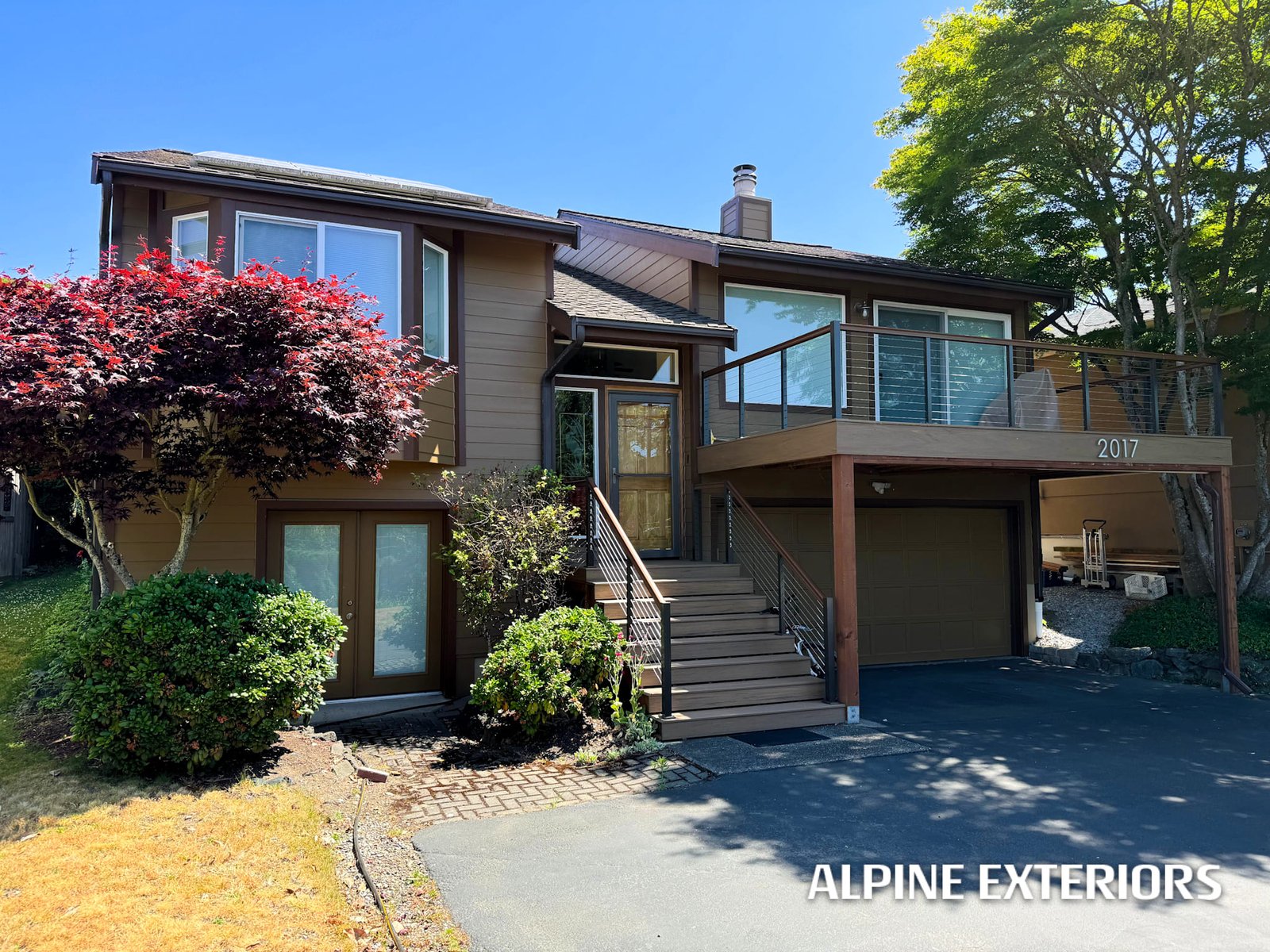
Not every sign on this list means the roof needs to come off this month. Knowing the difference saves money and avoids unnecessary work.
These point to an active moisture pathway into the structure, and the longer that goes unaddressed, the more the repair scope tends to grow from a roofing job into sheathing and framing repair.
In these cases it's still worth getting a professional opinion on timeline, but there's no need to rush a decision.
Once you've spotted one or more of these signs, a few steps make the process easier and cheaper in the long run. Avoid walking a wet or mossy roof yourself; both are more slippery than they look, and a fall risk isn't worth saving a phone call. Photograph and date any interior stains so a contractor can compare them against future weather events. Check the attic from inside with a flashlight during or right after a rain, since that's often the clearest evidence of where water is actually getting in. Get a written inspection from a licensed roofing contractor rather than relying on a driveway estimate, and confirm the contractor's Washington state license is active before signing anything. Get more than one quote, and ask each contractor specifically about underlayment and ice-and-water shield at the eaves and valleys, since those details matter more to long-term performance here than shingle brand alone. If a full re-roof is on the table, ask how the project addresses attic insulation and ventilation relative to the Washington State Energy Code, since a re-roof is often the most cost-effective time to correct a ventilation problem that's been quietly driving moss growth or ice damming for years. Finally, if the roof can hold on, plan the actual tear-off for the drier stretch between roughly July and September, when a multi-day project is less likely to get rained out mid-tear-off.
Alpine Exteriors works on roofs across this corridor of Snohomish, Skagit, Island, and Whatcom counties and can walk a Marysville roof with you, point out which of these signs actually apply, and lay out realistic options rather than pushing a full replacement by default. Sometimes a targeted flashing repair or a moss treatment and gutter fix genuinely buys a roof several more years; sometimes the deck is already compromised and replacement is the honest answer. Either way, a straightforward inspection report is more useful than guessing from the ground.
Cost depends heavily on roof size, pitch, the number of layers being torn off, and material choice, but most full asphalt shingle replacements on a typical Marysville home run roughly in the $9,000 to $25,000 range, with steeper or more complex rooflines, metal roofing, or extensive deck repair pushing toward the higher end. A written, itemized quote after an on-roof inspection is the only reliable way to narrow that range for a specific house.
A straightforward single-layer tear-off and reroof on an average-size home usually takes a few days of active work, though the exact timeline depends on roof complexity and weather. Because this region's dry window is limited, most contractors, including Alpine Exteriors, try to schedule tear-offs during stretches with a lower chance of rain so the deck isn't left exposed longer than necessary.
In most cases, yes. The City of Marysville typically requires a building permit for reroofing, particularly when sheathing repair or structural work is involved, and unincorporated areas nearby fall under Snohomish County permitting instead. Requirements can change, so it's worth confirming directly with the applicable jurisdiction or asking your contractor to pull the permit as part of the project.
Sometimes. If moss growth is caught early and the shingles underneath are still sound, a professional moss treatment combined with improved gutter flow and, where possible, some added airflow or shade reduction can meaningfully slow regrowth without a full replacement. Once moss has been established long enough to lift shingle tabs or cause visible granule loss, cleaning alone won't restore the shingle's remaining service life, and that's usually the point where a licensed contractor should assess whether repair or replacement makes more sense.
If any of these warning signs sound familiar, it's worth getting a second set of eyes on the roof before the next wet season sets in. Alpine Exteriors, Washington contractor license ALPINI751OW, serves Marysville alongside its core coverage across Skagit, Island, and Whatcom counties, and can provide a straightforward roof inspection, an honest read on repair versus replacement, and a written quote so the decision is based on what's actually happening on your roof rather than guesswork from the ground.



