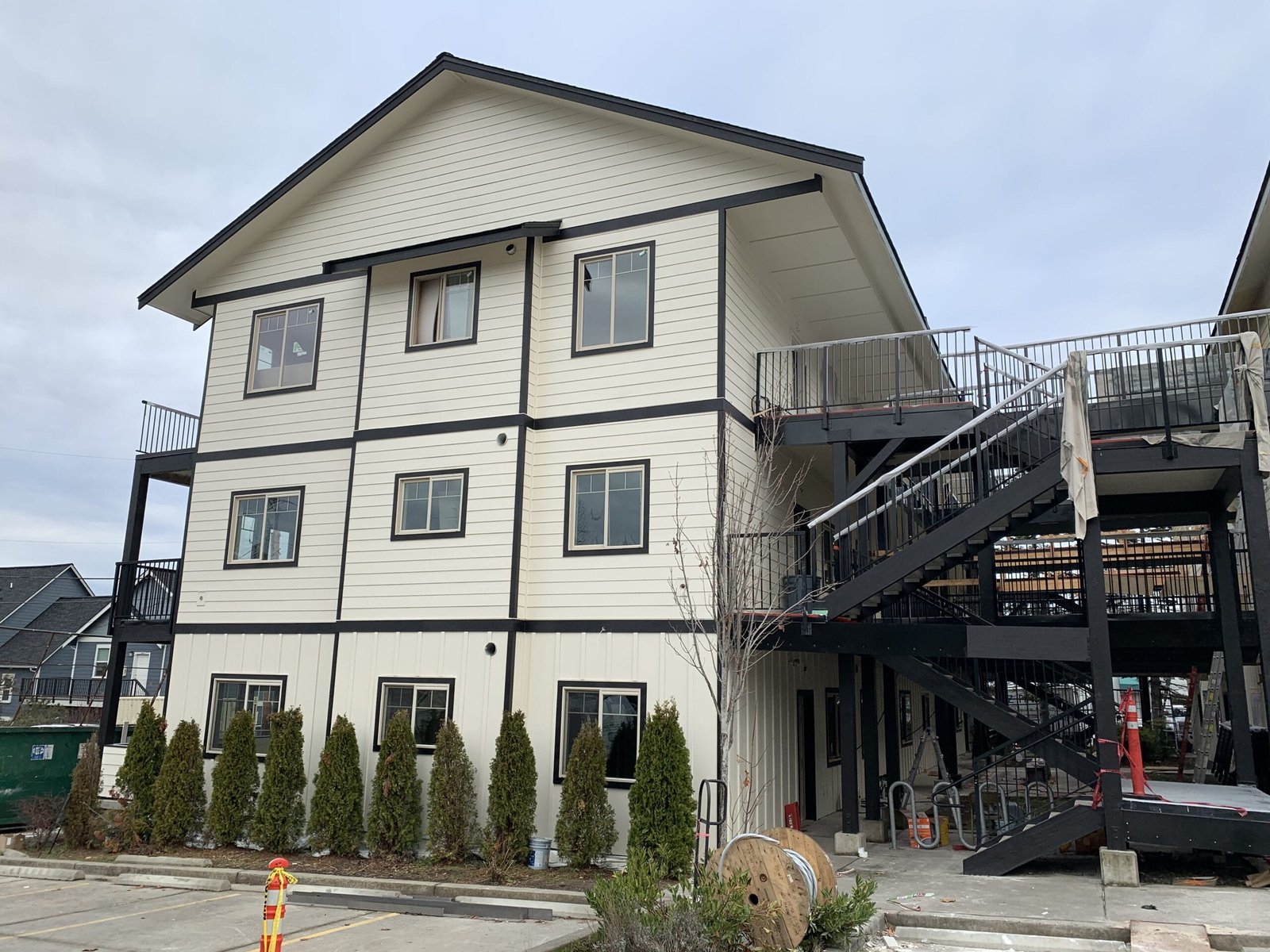
On Orcas Island, roof moss and slow rain damage are almost always the result of shade, low roof pitch and standing moisture, not a failing roof material. The fix is a combination of regular moss removal, better airflow around the roof deck, and keeping gutters and valleys clear so water actually leaves the roof instead of sitting on it through the wet months.
San Juan County gets a long, damp fall-through-spring stretch where roofs rarely get a full day of direct sun, especially on north-facing slopes tucked under the Douglas firs and madrones that cover most of Orcas Island. Moss spores land on any roof, but they only take hold where moisture lingers — under tree canopy, in the shadow line of a chimney or dormer, or along a north-facing eave that stays wet for days after a storm system moves through. Once moss gets a foothold, it works its way under shingle tabs and shakes, lifting them slightly and letting water track sideways instead of down and off the roof. On composition shingle roofs this shows up as granule loss and premature wear along the moss line. On cedar shake or shingle roofs, which are still common on the island's older homes, trapped moisture under moss accelerates rot in the wood itself. Left alone for several seasons, moss growth can shorten the useful life of a roof by years, and the damage is usually hidden until a leak shows up inside the house — often around a chimney flashing, a skylight, or a valley that has been quietly holding water and organic debris.
Rain itself is rarely the direct cause of a leak on a roof that is properly installed and flashed. The problem is almost always a detail — a nail popped by seasonal movement, a valley clogged with fir needles, a gutter that overflows onto fascia board, or flashing around a vent pipe that has hardened and cracked with age. Skagit and Whatcom County mainland roofs face similar rain volume, but Orcas Island homes tend to sit under heavier tree cover and get less wind-driven drying between storms, which is why moss and moisture problems often show up sooner here than on an equivalent roof in Mount Vernon or Burlington.
A few conditions specific to Orcas Island and the San Juan Islands generally change how a roof, deck, gutter system or set of windows should be built and maintained compared to a mainland Skagit or Whatcom County property:
Notably absent from this list is anything related to hurricane-force wind events or building-code wind-uplift requirements written for coastal hurricane zones — those simply don't apply to Washington's islands. What does apply statewide, including on Orcas Island, is the Washington State Energy Code, which governs insulation levels, air sealing and ventilation requirements for roof and attic assemblies on new construction and many re-roofing or remodel projects. Proper attic and roof ventilation isn't just an energy-code checkbox here — it also helps roof decks dry out between rain events, which directly reduces how much moss and rot pressure a roof faces over its lifetime.
Most of what protects a roof, deck or gutter system on Orcas Island doesn't require replacing anything — it requires a maintenance rhythm suited to a shaded, wet, salt-air environment:
None of this is glamorous work, and it's honest to say that a heavily shaded roof on Orcas Island will always need more frequent moss control than a comparable roof in an open, sunny spot in Mount Vernon or Anacortes — no coating, treatment or roofing material fully eliminates that difference. The goal is managing it on a schedule instead of discovering the damage after a leak has already reached the interior of the house.
For heavily shaded roofs under fir or madrone canopy, once a year is a reasonable minimum, and some north-facing or densely shaded roofs benefit from a check every six to eight months. Roofs with more open sun exposure, such as south-facing slopes or homes on cleared lots, can often go longer between cleanings, but an annual inspection is still worth doing so small problems get caught before they become flashing or deck repairs.
It's not just cosmetic. Moss holds moisture against the roofing material far longer than the material is designed to tolerate, which accelerates granule loss on composition shingles and wood decay on cedar shake or shingle roofs. Left unaddressed for several seasons, moss-related moisture damage can meaningfully shorten a roof's remaining service life and lead to leaks that show up well before the roofing material would otherwise have needed replacement.
Zinc and copper strips help by releasing trace metal that inhibits moss growth as rainwater washes over them, and they work reasonably well on roofs with moderate shade. On the more heavily canopied lots common on Orcas Island, though, strips alone usually aren't enough — they slow regrowth rather than eliminate it, so most homeowners still need periodic manual moss removal in addition to any strip system.
Yes. Homes closer to the shoreline see faster corrosion on exposed metal fasteners, gutter hangers, flashing and deck hardware than inland properties do, and steady wind off Rosario Strait and the surrounding waters puts more repeated stress on deck railings and loosely fastened gutter sections. Using corrosion-resistant hardware and checking fastener condition during routine maintenance matters more on near-shore Orcas Island properties than it typically does on an inland Skagit County home.
Alpine Exteriors is based in the Skagit Valley and works primarily across Skagit, Island and Whatcom counties — Mount Vernon, Anacortes, Burlington, Sedro-Woolley, La Conner, Stanwood, Camano Island and Bellingham. For San Juan County homeowners, including on Orcas Island, ferry-dependent scheduling means roofing, gutter and deck projects need to be planned around sailing times, and it's worth a direct conversation about logistics before committing to a project timeline. If you're weighing whether a shaded, moss-prone roof needs cleaning, repair or replacement, or want a straight assessment of gutter, deck or window condition on a near-shore property, reach out to Alpine Exteriors, Washington contractor license ALPINI751OW, to talk through what actually needs attention on your home.