
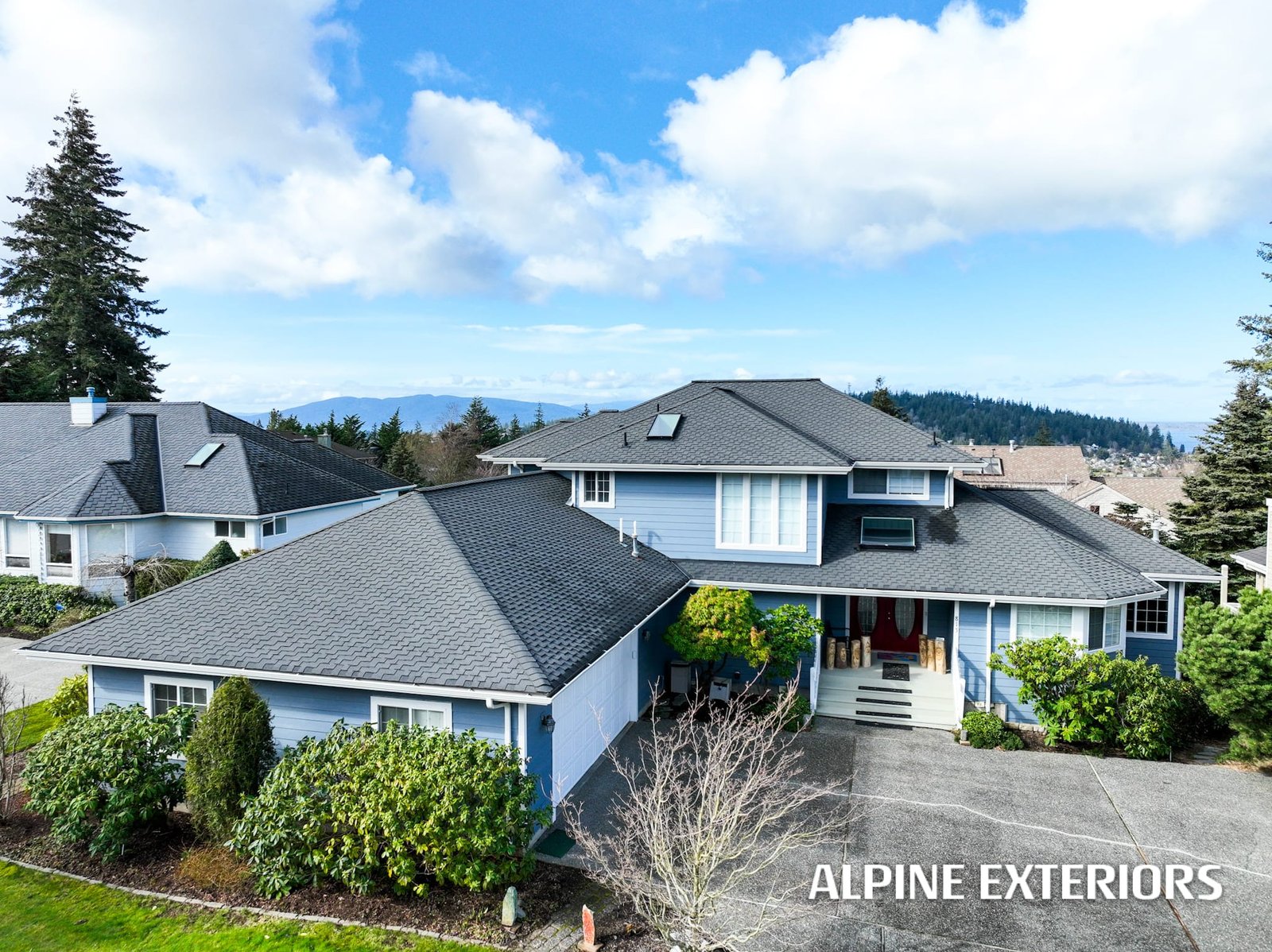
On Whidbey Island, moss and standing water cause more roof damage over time than age alone, because Oak Harbor's marine climate keeps shaded roof sections damp for months on end. The fix isn't a once-a-decade replacement — it's a seasonal rhythm of moss removal, gutter clearing and periodic inspection that lets a roof reach its full service life instead of failing early from trapped moisture. Alpine Exteriors sees this pattern on nearly every older roof we inspect on the island, and it's almost always preventable.
Moss doesn't just sit on a roof looking bad — it holds water against the shingle surface long after the rest of the roof has dried. Once a moss colony establishes itself, its root-like rhizoids work into the shingle mat and slowly lift the tabs, breaking the seal that keeps wind-driven rain out. That lifted edge is exactly where water finds its way under the shingle and into the decking below. On composition shingle roofs, the granule loss that follows moss growth accelerates UV damage to the asphalt underneath, which shortens the roof's remaining life faster than straight weathering would.
Gutters compound the problem. Needles, cones and leaf litter from the fir and madrona canopy common in older Oak Harbor neighborhoods collect in valleys and gutters, and once a gutter backs up, water sheets over the fascia board instead of draining away. Fascia rot, soffit staining and, in unheated crawlspaces, moisture intrusion at the eaves are the downstream result. None of this happens overnight — it's the slow accumulation of a wet climate acting on organic debris and untreated wood trim, which is why a roof that looked fine at the last inspection can show real problems two or three winters later.
Metal components take their own kind of damage here. Flashing around chimneys, skylights and dormers, along with the fasteners holding down ridge caps and gutter hangers, sit in an environment with near-constant humidity and, on Whidbey Island in particular, a steady dose of salt air off Puget Sound and the Strait of Juan de Fuca. That combination corrodes exposed steel fasteners and thin aluminum flashing faster than it would on a comparable roof twenty miles inland in Mount Vernon or Burlington. A fastener that backs out or corrodes through is a small problem until it becomes a leak path.
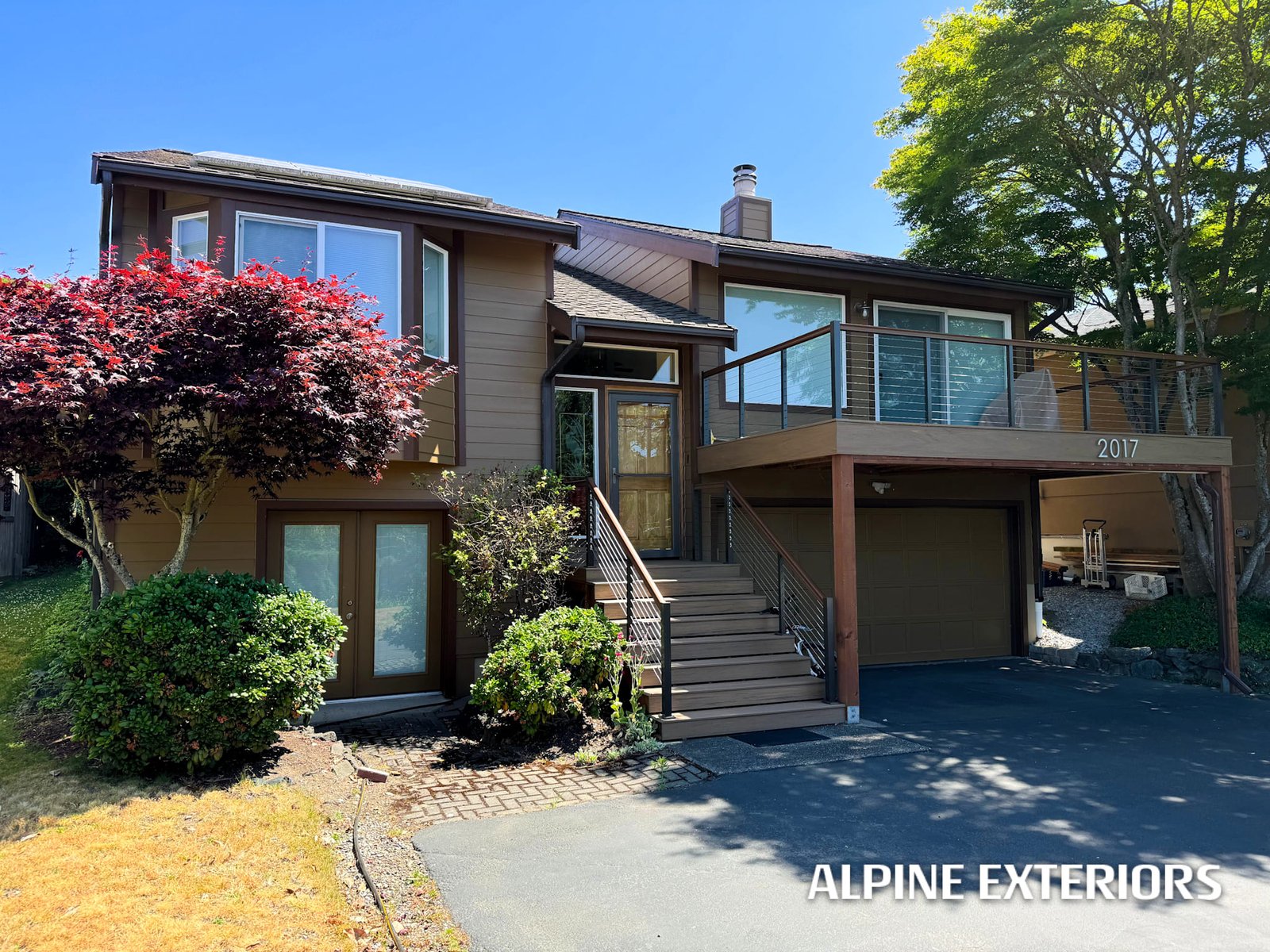
Island County's roofing challenges aren't dramatic, but they're persistent, and they differ in specific ways from the rest of Alpine Exteriors' Skagit and Whatcom County service area.
None of this requires a major project every year, but it does require a routine, and skipping it is the single most common reason Alpine Exteriors gets called out for a repair that could have been avoided.
It's also worth being honest about the limits of maintenance. Moss control strips and cleaning slow the problem — they don't stop it permanently, and a roof in a heavily shaded location will need attention on a recurring basis for as long as that shade exists. Routine moss removal and gutter service on a typical Oak Harbor home generally runs in the low hundreds of dollars per visit depending on roof size and pitch, while control strip installation is usually a modest add-on to that. None of that replaces a roof that's already lost significant granule coverage or has soft decking underneath — at that point, maintenance is just delaying a repair or replacement that's already needed, and Alpine Exteriors will say so plainly during an inspection rather than selling a cleaning that won't solve the underlying issue.
Most homes on Whidbey Island benefit from a moss check and cleaning once a year, typically in late spring after the wettest months have passed. Heavily shaded roofs under mature fir or madrona trees often need attention more like every eight to ten months, since they rarely get enough direct sun to dry out fully between rains.
They work, but they're a prevention tool, not a cure. Rain carries trace metal ions down the roof slope and inhibits new moss and algae growth in that path, which is genuinely effective over a year or two of exposure. They won't remove moss that's already established, so the roof usually needs to be cleaned first and strips installed afterward as ongoing protection.
Generally, no, at least not at the pressures most rental units and consumer washers put out. High-pressure water strips the protective granules off asphalt shingles and can force water underneath the tabs and around flashing, which creates leak risks the moss itself wasn't causing. A soft wash with appropriate cleaning solution and low pressure, or careful manual removal, protects the shingle surface while still clearing the moss.
If the shingle tabs underneath the moss are still flat, flexible and holding their granules, a cleaning and moss prevention plan is usually enough. If you find curling, cracked or bare-looking shingles once the moss is cleared, or soft spots in the decking when walked, that's a sign the underlying roofing material has already been compromised and a repair or replacement conversation is the honest next step. An inspection is the only reliable way to tell the difference before committing to either option.
Oak Harbor and the rest of Island County have their own version of Pacific Northwest weather — steady rain, salt air, and wind off the water — and a roof maintained with that in mind will simply last longer than one treated like it's anywhere else. Alpine Exteriors is a Washington-licensed contractor (license ALPINI751OW) working roofing, windows, decks and gutters across Skagit, Island and Whatcom counties, including Oak Harbor, Camano Island, Anacortes and the surrounding communities. If it's been more than a year since your roof was checked, or you're seeing moss, gutter overflow or stains on the fascia, reach out to Alpine Exteriors for an inspection and an honest read on whether you need maintenance, repair or replacement.