
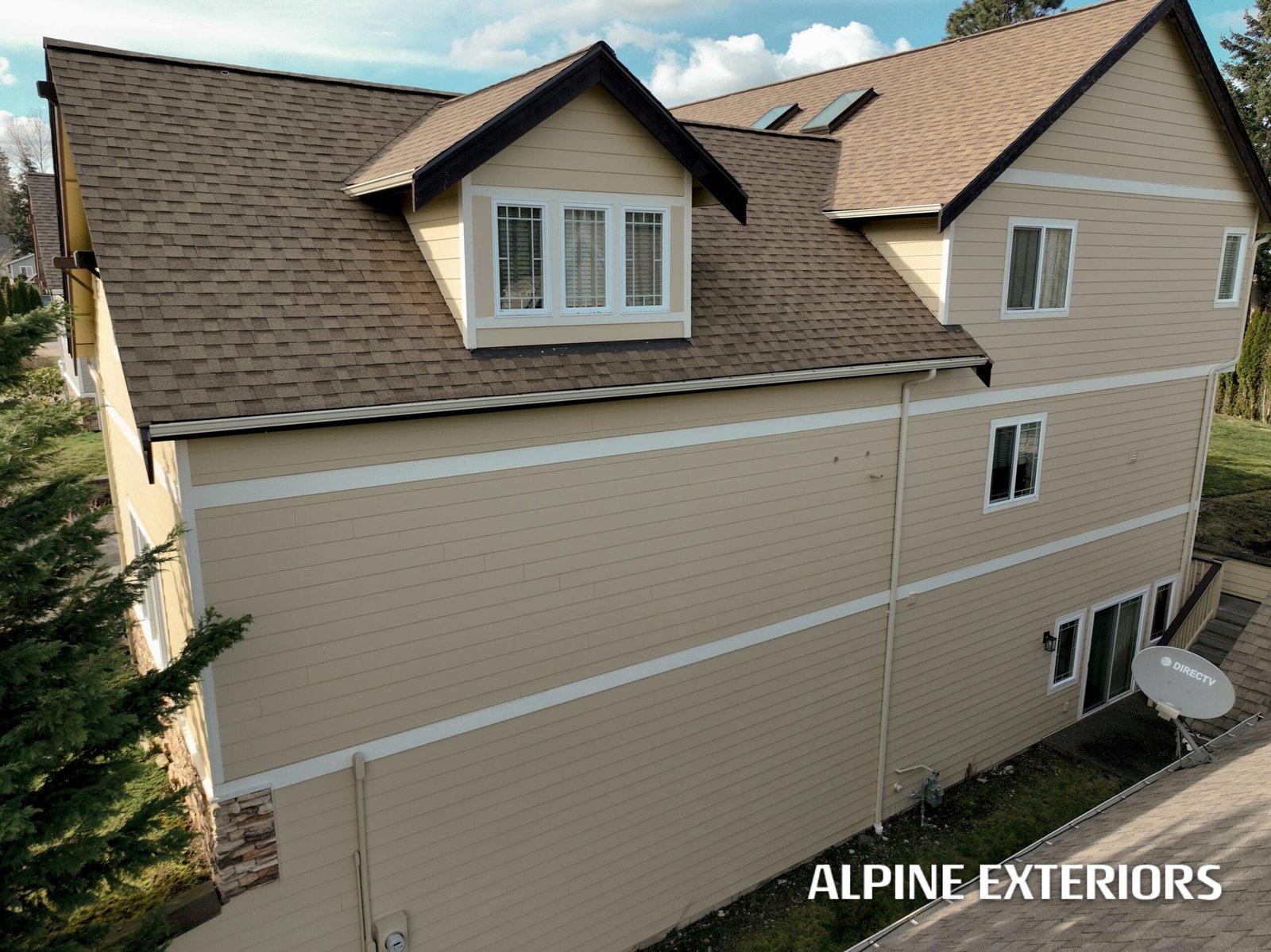
A standard 3-tab composition roof in Skagit, Island, and Whatcom counties typically holds up for 18 to 25 years, while a heavier architectural (laminate) shingle, installed with good ventilation and kept reasonably clean, can reach 25 to 30-plus years. Those numbers sit toward the lower end of what the shingle wrapper promises, because the constant damp of a Pacific Northwest marine climate works harder on a roof here than it does in a drier part of the country.
Every shingle bundle carries a manufacturer's rated lifespan — 25-year, 30-year, sometimes "lifetime" — but that number comes from a lab test, not from a roof sitting under Douglas firs in Sedro-Woolley or facing open wind on Camano Island. Real-world lifespan is set by four things: how the roof was installed, how well the attic underneath it breathes, how much sun and moisture the shingles are exposed to, and how consistently the roof gets basic upkeep. Skip any one of those and a 30-year shingle can start failing in year 15 or 16.
In this part of Washington, moisture is the dominant factor, more so than heat or UV breakdown. Asphalt shingles fail from the top down through granule loss and sun-baking in hot, dry climates. Here, they're just as likely to fail from underneath — sheathing that stays damp too long, felt or underlayment that never fully dries between rain events, and organic growth that holds water against the shingle surface for weeks at a stretch. That's a different failure pattern than what a national manufacturer's warranty language is really built around, which is part of why local experience matters more than the number printed on the wrapper.
Alpine Exteriors has replaced and repaired enough roofs across Mount Vernon, Burlington, and the surrounding valley to say plainly: two identical shingle products on two houses a mile apart can age very differently depending on tree cover, roof slope, and whether the attic was vented correctly when the roof went on.
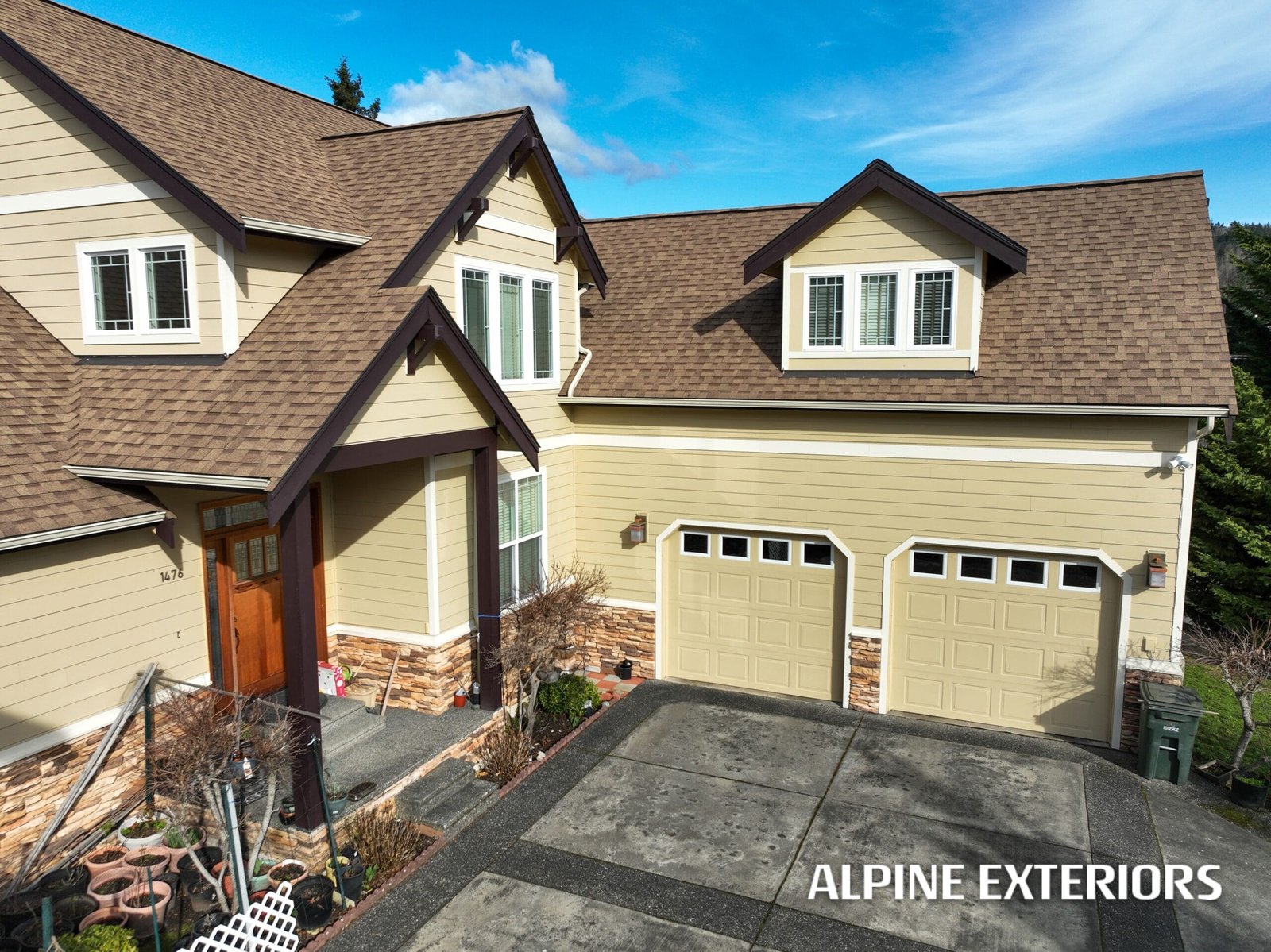
A few conditions specific to Skagit, Island, and Whatcom counties shape how long a composition roof actually lasts, and none of them are the kind of thing a generic roofing article written for the national market will mention.
None of the conditions above mean a composition roof is a bad choice here — it's still the most common and most cost-effective roofing material in this region, and a well-installed, well-maintained one will hit or beat its rated lifespan. The difference between a roof that lasts 18 years and one that lasts 28 usually comes down to a handful of habits:
On cost: a full composition roof replacement on an average single-family home in this region generally runs somewhere in the $9,000 to $18,000 range, with the spread driven by roof size, pitch, number of layers being removed, and how much decking or flashing needs replacing along the way. Homes with steep pitches, multiple valleys, or extensive tree removal work ahead of the job tend to land toward the higher end. Anyone quoting a firm number without seeing the roof in person is guessing.
Not necessarily. Those streaks are usually algae growth, which is common on roofs in a damp climate and is mostly a cosmetic issue rather than a structural one. It's worth having a roofer confirm it's algae and not the early stages of granule loss underneath, but algae staining by itself doesn't mean the roof is failing.
Moss is more than cosmetic. As it grows, it lifts the edges of shingles and holds moisture against the mat underneath, which speeds up granule loss and can eventually let water track under the shingle edge. Left alone for years on a shaded north-facing slope, moss can shave real time off a roof's usable life, so it's worth treating rather than ignoring.
In most cases, yes. Architectural (laminate) shingles are thicker, generally rated for higher wind resistance, and tend to hold up better under the repeated wetting and drying this region puts roofs through. They cost more than 3-tab shingles up front, but the gap in expected lifespan usually makes up the difference over the life of the roof.
Sometimes, if the damage is tied to a specific, sudden event — a windstorm that tears off shingles, or a fallen tree limb, for example. Insurance generally doesn't cover roof replacement for gradual wear, moss damage, or a roof simply reaching the end of its expected life, so it's worth reading the policy's specific language rather than assuming coverage either way.
If you're not sure whether your composition roof still has years left in it or is quietly failing from moss, wind, or trapped attic moisture, an in-person look tells you more than any general timeline can. Alpine Exteriors serves homeowners across Mount Vernon, Anacortes, Burlington, Sedro-Woolley, La Conner, Stanwood, Camano Island, and Bellingham with roofing, window, deck, and gutter work suited to this specific climate — and can walk your roof, explain what's actually going on, and lay out honest options before you spend a dollar on replacement.